
Effective measures to combat black apple canker
Content
Description and reasons for appearance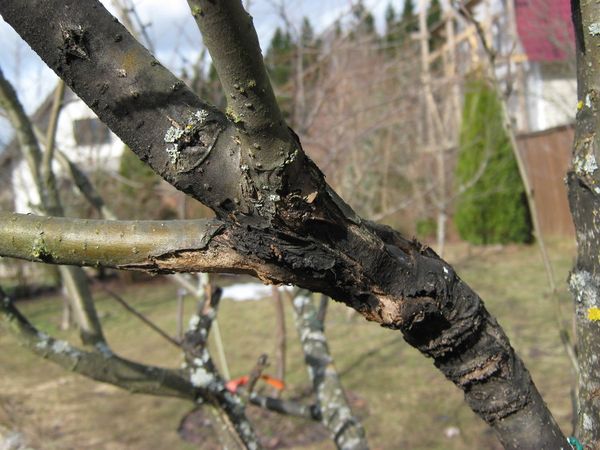
Black canker is a dangerous disease of fruit trees caused by the fungus Sphaeropsis malorum. It typically affects diseased or weakened apple trees, as well as those affected by frost and sunburn. If the fungus infects a healthy tree, there is a high chance of self-healing. Bark, scaffold branches, foliage, fruit, and, less commonly, flowers are susceptible to infection. Infection occurs through spores that germinate in warm, humid air. Spores germinate at temperatures ranging from 3°C to 40°C, and the optimal temperature for mycelium growth is 3°C to 40°C. The optimal temperature for infection is 22°C to 28°C.
Spores can persist in the bark for up to two years, and the development of the disease depends on the condition of the tree. The fungal spores are colorless, but upon maturation, they become russet-brown. Apple canker, like bacterial canker, exploits cracks and wounds not only as entry points but also as weakened areas. Young trees are more resistant to the fungus than older ones. Different varieties are susceptible to apple canker to varying degrees, but with poor care, even the most resistant varieties can be affected. The disease is more common in southern regions than in northern ones.
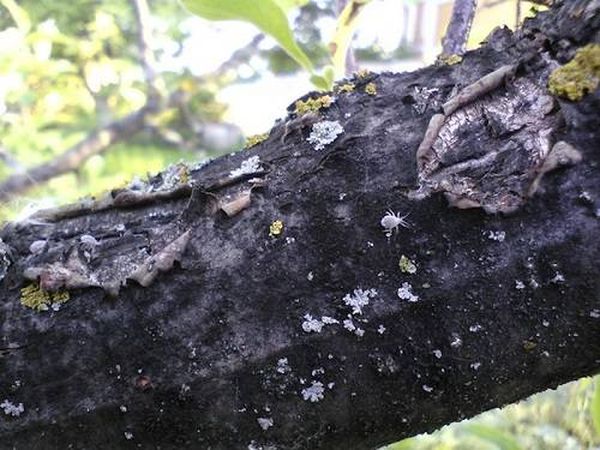
The most dangerous fungal infection is the bark. Infected bark appears scorched, hence the disease's other name—St. Anthony's fire. Initially, brown, pitted spots appear on the bark, which later turn black. Healthy bark begins to crack due to increased tissue growth, becoming covered in nodules, and eventually breaking off in chunks, exposing the wood beneath. The wood appears to be coated in a black film.
On leaves, the fungus manifests itself as brownish-brown spots up to 6 mm in diameter. Black dots later develop on these spots—the sites where pycnidia emerge, where spores mature. On apple fruit, black canker appears as brown spots that enlarge over time. The apple is completely infected, turning black and mummified. An apple affected by black canker resembles fruit infected with monilial rot. Infection occurs at the beginning of harvest or during storage.
What is dangerous for a tree?
Bark cancer on an apple tree can kill the tree in 3–4 years if measures are not taken to eliminate it at the onset of the disease. But if detected early, apple tree black cancer can be cured.
How to save an apple tree
Treatment for black canker begins with carefully but gently removing the fungus-infected bark and branches from the tree, and treating the wounds with garden pitch or oil paint. The stripping is done down to the wood, including adjacent healthy tissue. After stripping, the tree is treated with copper sulfate (1% solution) or another copper-containing disinfectant. The treated areas can also be disinfected with a 3-5% solution of ferrous sulfate. After the disinfectant has dried, the wound surface is coated with garden putty. If the tree has not been stripped, the apple tree is disinfected with a solution of potassium permanganate.
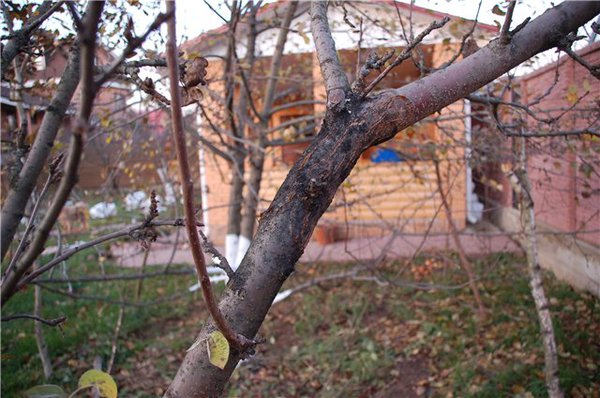
It is better to treat cancerous wounds without cleaning in late autumn or early spring.
Leaves infected with black canker are treated with Bordeaux mixture. Affected branches, leaves, and bark are removed and burned. Further control measures are aimed at strengthening the tree's immunity.
Prevention
To prevent infection of healthy trees, experienced gardeners do not recommend grafting cuttings from infected trees. Although there is no complete immunity to this disease, apple varieties resistant to black canker can be selected for planting. To prevent black canker, the following sanitary and preventive measures should be carried out promptly:
- Fertilizing. Since strong, healthy trees are more resilient to disease, a balanced fertilizing regimen will enhance their resilience. Boron-magnesium fertilizers are applied in the spring, before flowering.
- Bark stripping. In spring and fall, the bark is carefully cleaned with a wire brush. The stripped bark is collected and burned.
- Pruning. Performed annually to remove dry and diseased branches.
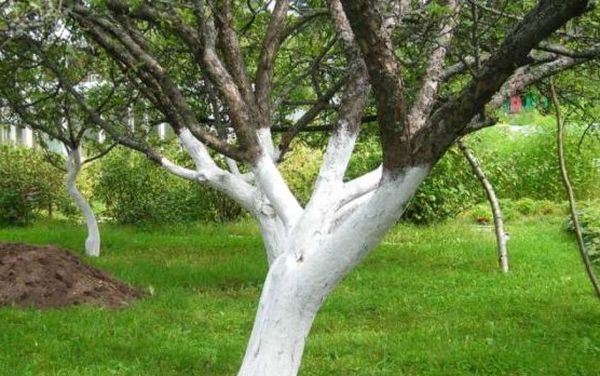
- Protection from damage and disease. Timely whitewashing of the trunk and branch cuts helps prevent infection. It also protects the trunk from early spring burns.
- Pest and weed control.
Video "Black Apple Cancer"
In this video you will hear useful tips on how to fight black cancer.