
Unique characteristics and agricultural practices of the Bogatyr apple tree
Content
History and characteristics of the Bogatyr apple tree
The late-winter Bogatyr apple tree was developed in 1925 by Soviet fruit breeder S. F. Chernenko. Resulting from a hybridization of the Antonovka Obyknovennaya and Reinette Landsberg varieties, the fruit was approved by I. V. Michurin himself.
In 1971, the Bogatyr apple tree was added to the State Register of Breeding Achievements. The variety is recommended for cultivation in the Central, Central Black Earth, and Northwestern regions.
Description of the tree
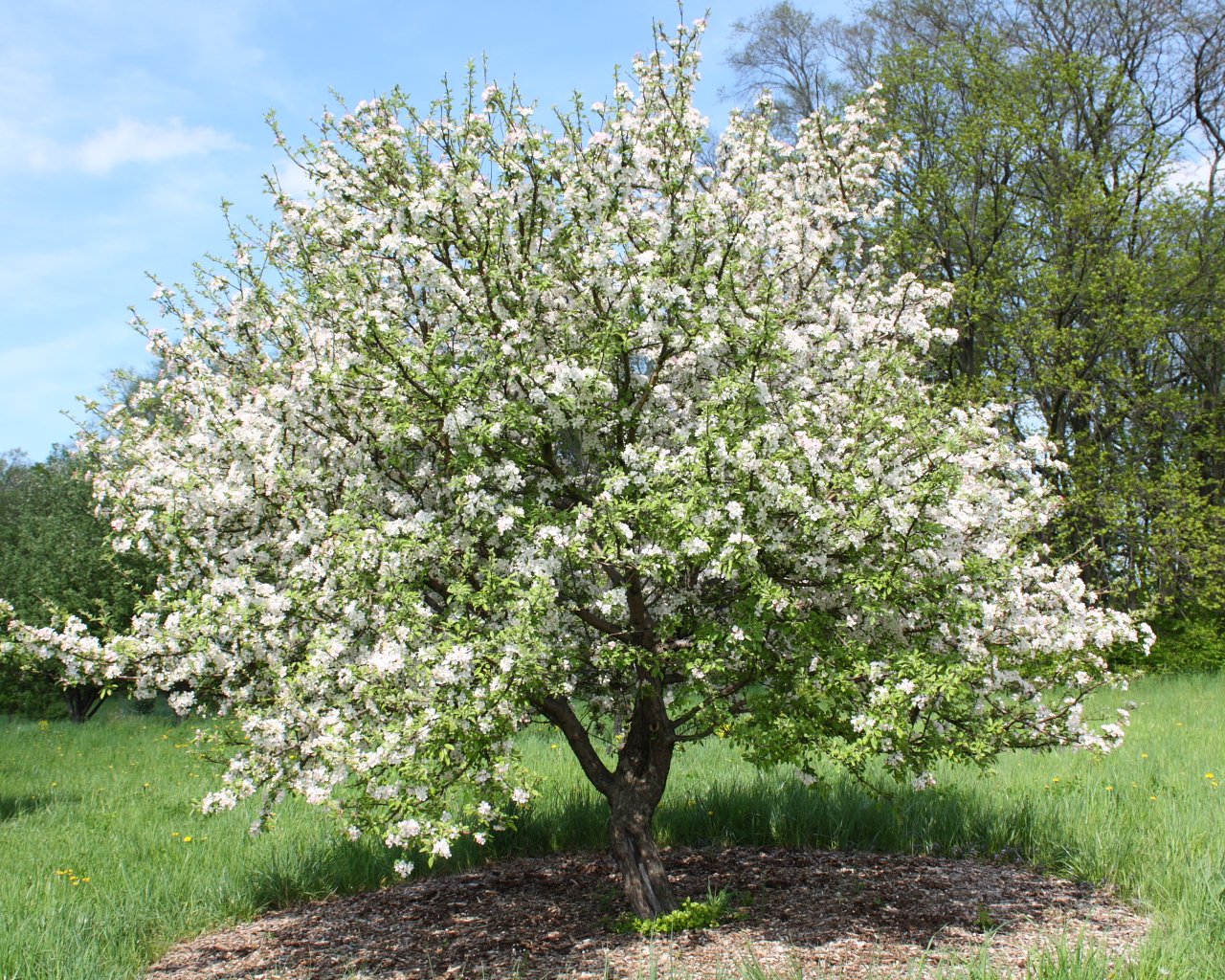
Cultivated on seed rootstock, this apple tree is characterized by vigorous growth. The average height of a mature tree is 5 m, with a maximum crown width of 6 m. In smaller garden plots, the Bogatyr apple tree is grown on semi-dwarf and dwarf rootstocks. The height of such a tree does not exceed 4 m. The crown can be conical or spherical. However, the variety does not tend to produce excessive shoots.
The apple tree's branches are thick, strong, and olive-colored. As the tree grows, the bark turns reddish-brown. The leaves are large, oval, and dark green. The outer surface of the leaf blade is slightly pubescent.
Fruit characteristics
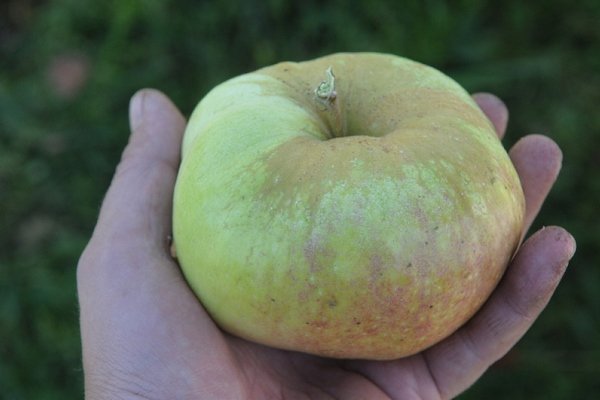
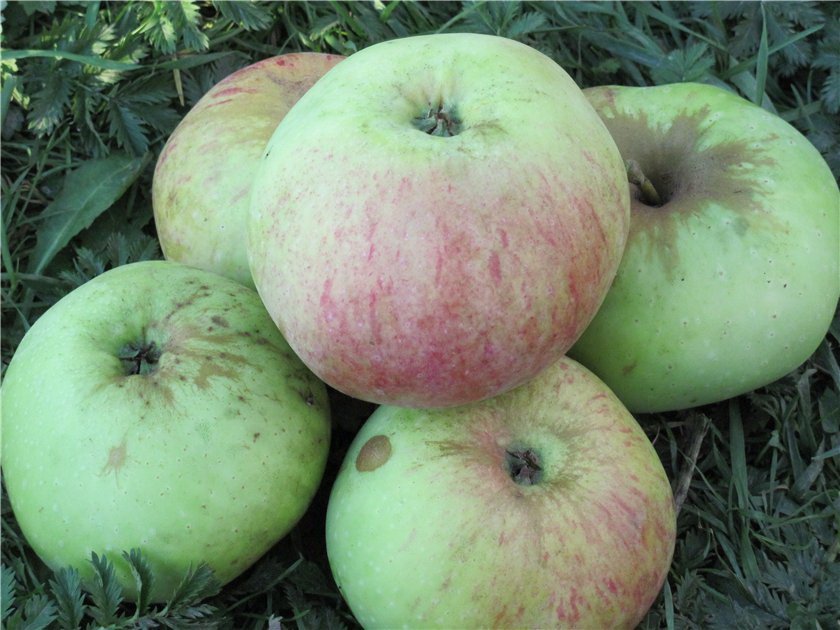
This variety of apples fully lives up to its name—Bogatyr. The average fruit weight is 150 to 200 g, with specimens weighing around 400 g often found. The apple is flat-round, with a wide base and apex. The fruit is characterized by pronounced ribbing and abundant rusting. The apple skin is yellow-green. A blush appears on a few fruits.
The flesh is firm, medium juicy, and finely grained. Bogatyr apples have a pleasant sweet-tart flavor.
Ripening and fruiting periods
Bogatyr is a late-ripening variety. Harvesting begins closer to autumn. The plant is self-sterile. The best pollinators are the Melba, Zhigulevskoye, Streifling, and Severny Sinap varieties.
The variety bears fruit late. The first mass harvest occurs in the sixth year after grafting. Crops grown on dwarf rootstocks begin bearing fruit in the fourth to fifth year.
Productivity and use of fruits
The yield of the Bogatyr apple tree is consistently high. As the tree matures, so does its yield. A 10-year-old apple tree produces approximately 60 kg of marketable fruit. A 20-year-old apple tree's yield increases to 100 kg or more.
Bogatyr is a versatile variety. Rich in pectin and P-active substances, these apples are recommended for fresh consumption. Their high vitamin C content—approximately 13%—promotes a strong immune system. The sweet and sour fruits can be used for home and commercial production of juices, compotes, and fruit drinks.
Advantages and disadvantages of the variety
Before purchasing a seedling, we recommend that you familiarize yourself with the advantages and disadvantages of the fruit crop.
- excellent adaptability;
- high frost resistance;
- increasing yields as the tree grows;
- interesting consumer qualities of fruits;
- universal use of fruits;
- long storage period of the crop (approximately until May);
- good transportability;
- strong immunity to fungal and bacterial diseases.
- late fruiting;
- abundant rustiness of the peel.
Video "Description of the Bogatyr apple tree"
This video describes the key characteristics of the variety.
Agricultural practices for the Bogatyr apple tree
The Bogatyr variety is highly sought after in Russian gardening. Adherence to certain agricultural practices improves the tree's adaptability and increases its productivity.
Selecting a location and timing of planting
This fruit tree requires abundant sunlight. A sunny, south- or southwest-facing garden plot is ideal for planting and growing apple trees. The Bogatyr variety is sensitive to moisture. The recommended groundwater depth is no more than 2 meters below the ground surface.
As for soil, apple trees prefer loose, well-drained, nutritious loam. The soil pH should be neutral. If the pH is high, chemical soil amelioration can be achieved by adding limestone, lime slag, or dolomite flour.
Planting timing depends on the region's climate. For southern regions, autumn planting is preferable, 3-4 weeks before the onset of frost. In central Russia and northern regions, apple tree seedlings are planted outdoors in early spring. The average daily temperature should not fall below 10°C.
Preparing the hole and planting stages
Prepare the planting hole several weeks before planting. The optimal dimensions are 100 x 80 cm (the first dimension determines the depth, the second the diameter). When planting near a fence or house wall, allow a 2-3 m gap.
The bottom of the planting hole must be lined with crushed stone, expanded clay, or broken brick. Drainage depth should be at least 15 cm. If soil fertility is low, add peat, humus, and river sand.
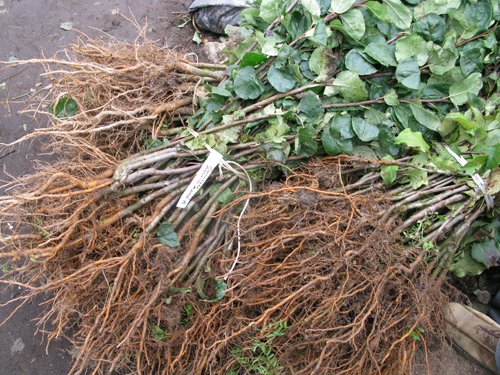
It's best to purchase planting material from specialized gardening nurseries. If the seedling's root system is dry and appears weakened, soak the plant in a growth biostimulant such as Epin, Zircon, or Kornevin. Another way to quickly restore the seedling's root system is to use a clay slurry with a growth stimulant added.
Watering and fertilizing
For the first two weeks, the young tree is watered weekly. Subsequently, the interval between waterings is increased. To prevent excess moisture, follow the drying of the topsoil.
In the first year after planting in its permanent location, 20–30 liters of water are poured under the apple tree. Trees aged 2 to 6 years require 40–80 liters of water.
Apple tree fertilization is standard: nitrogen-containing fertilizers are applied in the spring, and potassium and phosphorus mixtures are applied in the summer and fall. Unlike other varieties, Bogatyr is always fertilized before the cold weather sets in. Late fall fertilization uses wood ash, well-rotted compost, table salt, potassium chloride, or superphosphates.
Crown pruning
In spring, before the active sap flow stage begins, rejuvenating pruning of the crown is performed. Frost-damaged shoots are cut back to healthy tissue, and branches growing inward are removed at the base. Formative pruning of the apple tree crown can be performed using the following diagram:
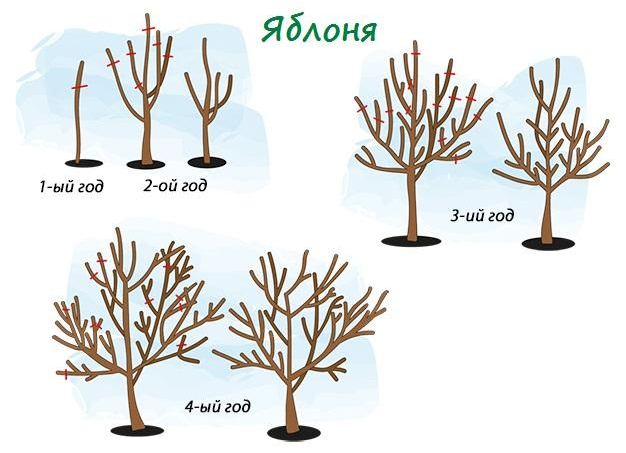
At the end of the growing season, sanitary pruning is performed. Dry and damaged branches are completely removed. The cut areas are sealed with garden pitch.
Wintering of fruit trees
Preparing for winter includes watering, fertilizing the soil, and mulching the area around the tree with peat, dry fallen leaves, hay, or straw. The trunk and skeletal branches should be whitewashed. Whitewashing protects the plant from the sun, harmful insects, and rodents.
As additional protection against hares and field mice, roofing felt or metal mesh is used.
Diseases and pests of the variety
The Bogatyr apple tree is an immune variety characterized by high resistance to scab. However, the fruit tree can be affected by powdery mildew. Fungicides such as Thiovit Jet, Skor, Topsin-M, and Magnikur Star are used to prevent and treat the disease.
In case of damage by insects - codling moth, aphids, apple moth, hawthorn moth, spider mite and fruit bark beetle - use systemic acaricides and insecticides "Apollo", "Aktara", "Aktellik", "Fitoverm" and "Fufanon".
-
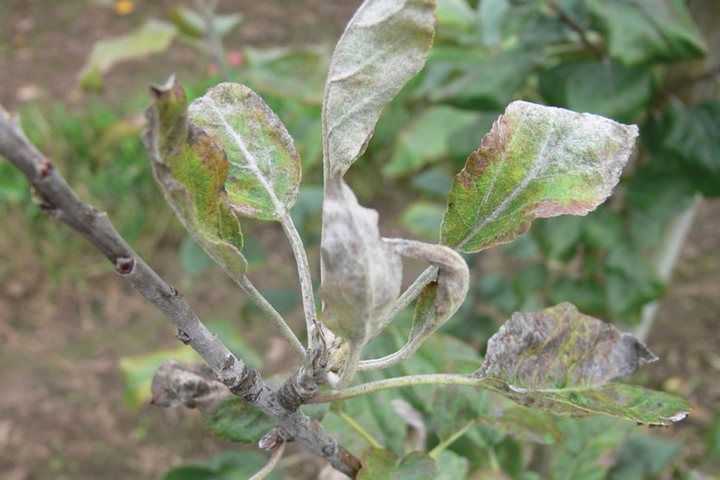
- Powdery mildew
-
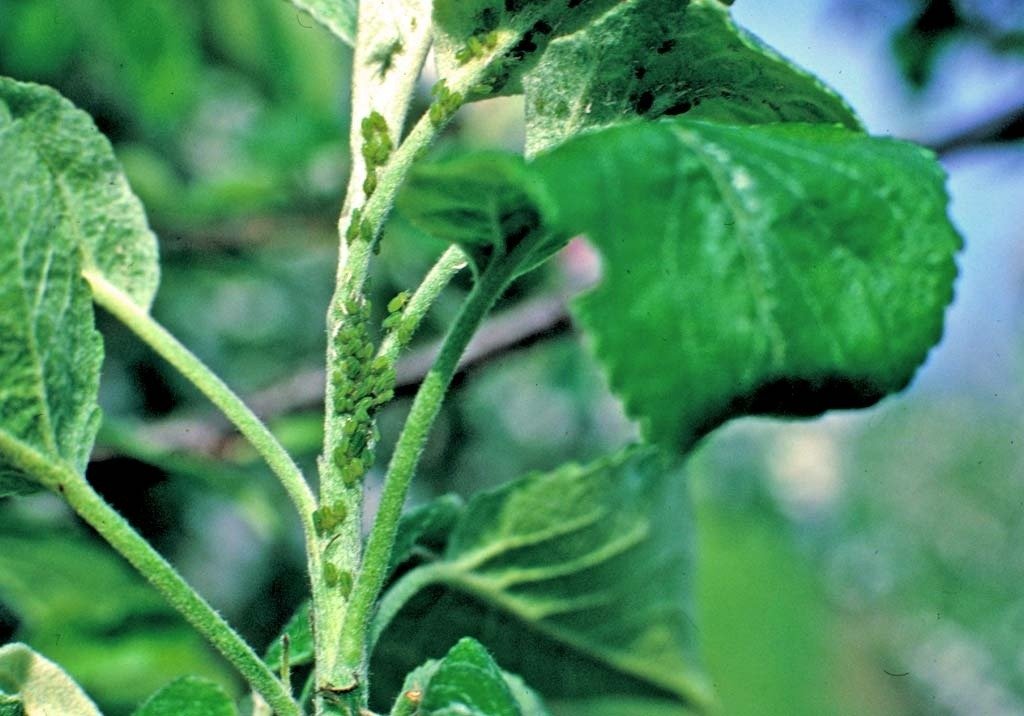
- Green apple aphid
-
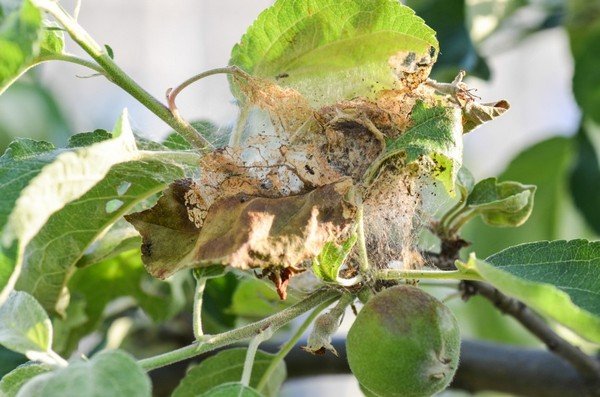
- Spider mite
Reviews from gardeners
"I've been growing apple trees for many years. I've taken a liking to the Bogatyr variety. The plant requires minimal care, tolerates winter well, and produces abundant fruit."
"The harsh climate of our region limits the choice of fruit crops. The exception is the Bogatyr apple tree, which tolerates low temperatures well. In extremely low temperatures, we cover the trees with pine branches and agrofibre."
Among the many apple tree varieties, the Bogatyr hybrid is particularly popular among gardeners. This fruit tree delights with a generous harvest of delicious apples and can also be used for landscaping. Moreover, the plant is characterized by its low maintenance requirements.