
Description and characteristics of the domestic apple variety Berkutovskoye
Content
History and description of the variety
The Berkutovskoye apple tree, a winter variety, was developed in 1970 by Soviet breeders O.D. Berkut and G.V. Kondratieva at the Saratov Horticultural Experimental Station. It was developed by pollinating the American Cortland apple with a mixture of Anise rose-striped and Antonovka pollen. This variety has won numerous prizes and awards, and in 2005 was included in the list of "Golden Fruit Varieties." Numerous reviews from farmers confirm the variety's excellent adaptability to the local climate and the excellent taste of its fruit.
Main characteristics
This tree is quite compact and doesn't take up much space in a plot—its maximum height is only 3 meters, making harvesting quite easy. The crown is not very wide, rounded, and quite sparse. The bark is smooth and grayish in color.
The tree's branches are perpendicular to the trunk, and the shoots are reddish-brown and quite heavily pubescent. The buds are quite small, rounded, and slightly pressed against the shoot. The apple tree's leaves are also small, oval-shaped, with serrated edges. They are wrinkled to the touch and have a matte finish. The flowers are small, with oval petals colored a soft pink.
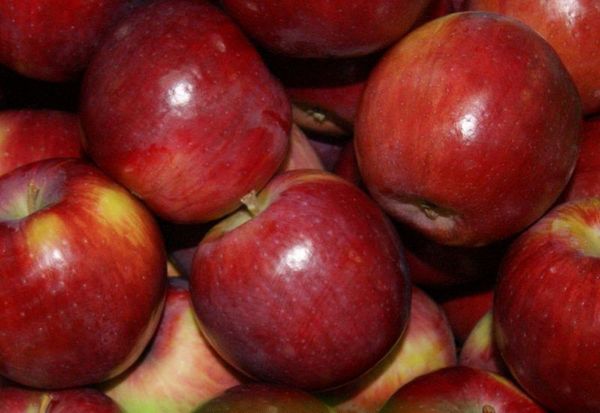
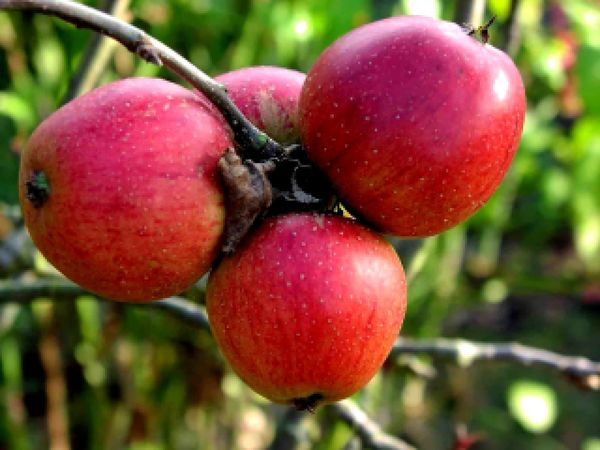
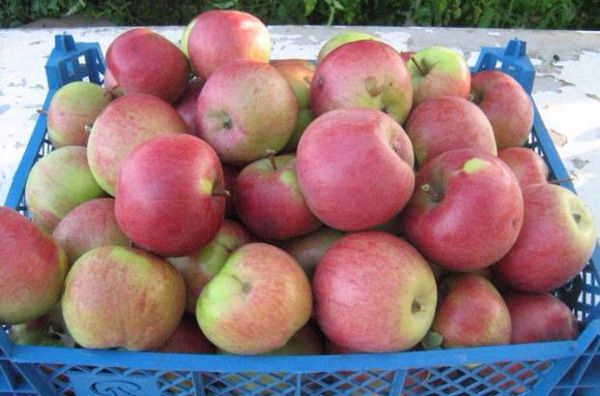
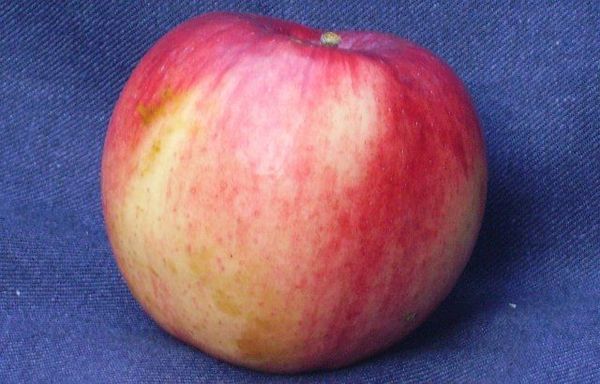
The Berkutovskoye apple variety produces medium-sized fruits, weighing 150–250 g, which is quite good. The fruits are covered with smooth skin, with a distinct glossy sheen and no waxy coating. The fruit is greenish-yellow in color, with a crimson blush. The flesh is white, very juicy, crisp, and fine-grained.
Apple flavor varies depending on growing conditions and region (in southern regions, they are sweeter), but overall, experts rate their taste quite highly—ranging from 4.5 to 4.8 points. Furthermore, the fruit is hypoallergenic and can even be used in baby food.
Growing
To grow this apple tree variety, you need to choose the right location. These plants don't like being near groundwater, as it promotes rapid root rot. Therefore, choose an open, sunlit area with a deep water table or, if that's not possible, provide the tree with adequate drainage.
Seedlings can be planted either in the spring (before the buds open) or in the fall, a few weeks before the first frost. The site should be prepared in advance: for spring planting, this should be done in the fall, and if planting in October, 2-3 weeks beforehand. The planting hole should be approximately one meter by one meter and up to 80 cm deep.
After this, the soil is mixed with fertilizer (humus, wood ash, superphosphate) and left for a while to allow the necessary saturation to occur. After this, the seedling is planted: the roots are spread out and compacted, ensuring that the root collar is a few centimeters above ground level. For the first few years, the tree is tied to a stake to prevent it from breaking in the wind.
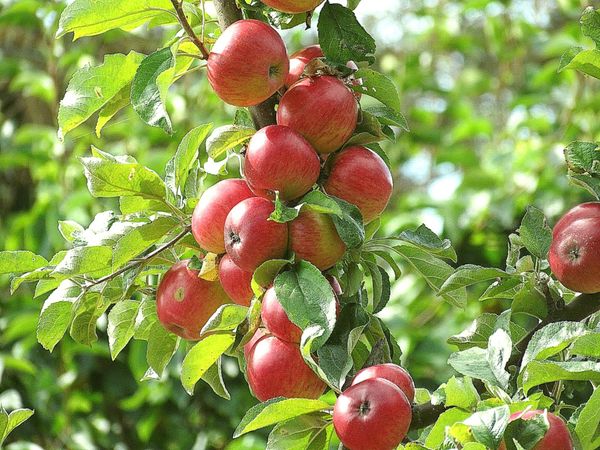
To ensure the seedling's development, regular watering (sprinkler irrigation is recommended in summer) and fertilizing (in spring, summer, and fall) are necessary. It's important to remember that nitrogen-containing fertilizers are required in spring, but their use is contraindicated in fall. Regular pruning is also necessary to promote proper crown formation and remove damaged and dead branches.
Pollinators
The flowers of this plant are cross-pollinated. To ensure cross-pollination, the orchard must be planted with apple trees of a different variety compatible with the Berkutovsky. The Severny Sinap variety is best suited for this purpose.
Pests and diseases
This variety has good resistance to various diseases, but this does not guarantee complete freedom from them.
For example, if a tree grows in high humidity, it's at high risk of developing powdery mildew. This is a rather unpleasant disease that appears as a white coating on the leaves, which later spreads to the inflorescences, causing their death. In this case, treating the plant with a Borsky solution in the spring and sulfur-containing products in the summer can help.
In addition, apple trees can be attacked by various parasites and pests, such as fruit borers, leafhoppers, and mites, for the control of which insecticidal and acaricidal substances are widely used.
To protect the plant from various rodents, it is necessary to tightly wrap the trunk with spruce branches in the winter so that the bark is out of reach.
You can also carry out preventative maintenance by spraying the tree twice with special preparations in the spring. This will protect it from the negative effects of pests and fungal infections.
Pros and cons
Among the advantages of this apple tree are its high and regular fruit production (up to 70 kg per tree), excellent taste, highly praised by experts, good shelf life and ease of storage (up to 200 days under proper conditions), compact size, and frost resistance. Furthermore, one of its characteristics is its very good drought tolerance, allowing the Berkutovskoye to easily withstand even the hottest summers.
One of the disadvantages is that this plant is adversely affected by high humidity. This significantly increases the risk of apple tree powdery mildew.
Video: Apple Tree Care Tips
This video will teach you how to properly care for an apple tree.