
Description of the late-winter apple tree Belorusskoe Sladkoe
Content
Description of the variety
As its name suggests, this variety is native to Belarus. It is also considered a late-winter variety, and therefore has good resistance to low temperatures (down to -35 degrees Celsius). Furthermore, thanks to the efforts of Belarusian breeders, the Belorusskoe Sladkoe apple tree has been given complete resistance to scab.
Main characteristics
These apple trees are not particularly large, reaching a maximum height of 3 meters by the eighth year of the plant's life. Their crown is not very dense, but is rounded, sometimes slightly conical. This crown shape, along with the apple tree's small size, makes it very convenient for efficient harvesting and care. The bark is smooth and brownish, and the leaves are oblong and dark green, with slightly serrated edges.
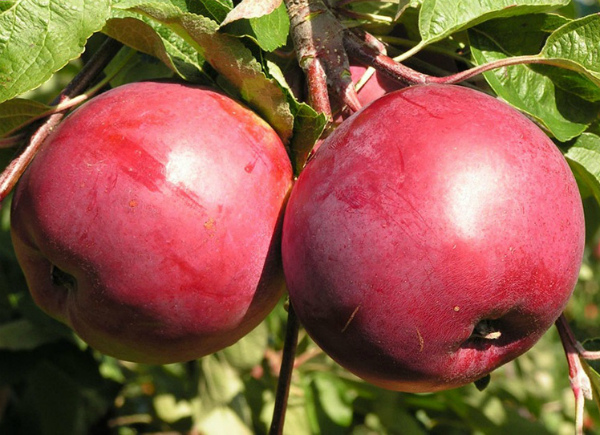
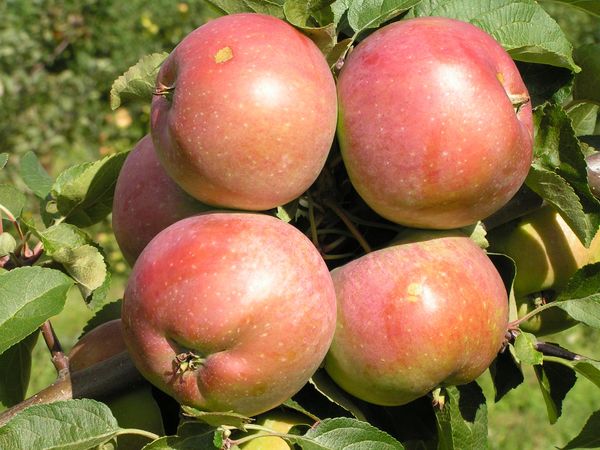
The fruits are quite large, round, without pronounced ribbing. The weight of one fruit ranges from 135 to 200 grams, and individual specimens can even weigh around 250 grams. At harvest maturity, the fruits are greenish in color, and as they ripen, they turn yellow. The skin is a rich red, appearing like a blush spreading across the entire surface of the apple.
The fruit's flesh is white, slightly oily, and not particularly dense. It has a sweet aroma and a delicate flavor, lacking astringency and sourness. Despite this, the variety's tasting score is not particularly high—only 4.1 points.
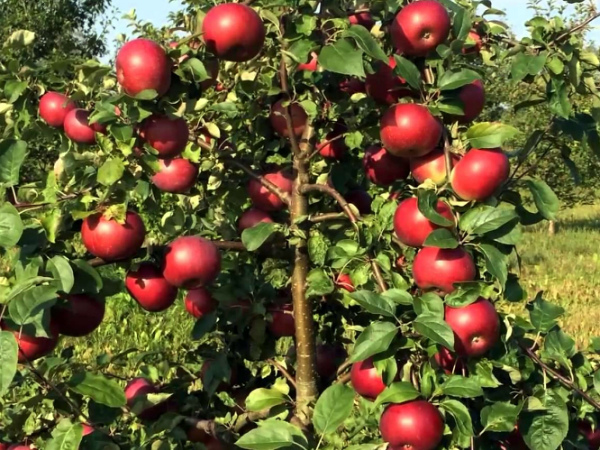
The fruit ripens quite late – typically around mid-November. However, depending on growing conditions, fruiting can begin as early as late October. It's also worth noting the tree's exceptionally early maturity – the first harvest can be obtained in the first year of its life! In subsequent years, the plant bears fruit regularly, with no apparent periodicity, and a single tree can yield 35–50 kg of delicious apples.
Planting and care
The plant's location should be chosen to ensure good light and protection from strong winds. Additionally, care should be taken to ensure that the groundwater level is not too close to the surface, as this can lead to root rot. The planting hole should be prepared in advance—usually 2-3 weeks in advance to allow the soil to settle and absorb nutrients. The hole should be about a meter in diameter and up to 80 cm deep (the dimensions may vary slightly depending on the root system of the seedling).
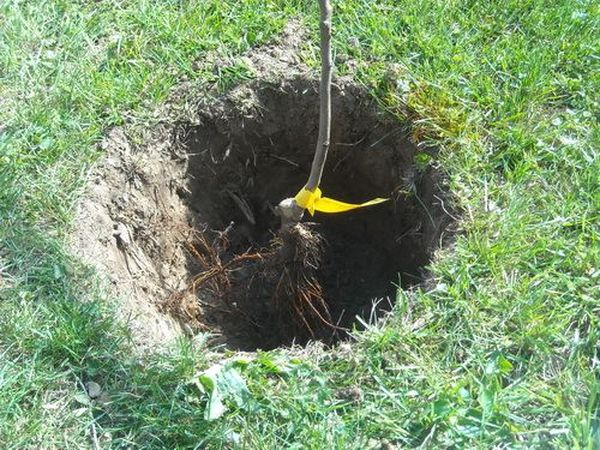
The soil is mixed with fertilizer: superphosphate, wood ash, and humus are commonly used during planting. When it's time to plant, the seedling is placed in the hole, its roots are spread out, and the soil is carefully covered and compacted. Once the planting is complete, the plant will need ample watering, which should be repeated after a week (up to 30 liters of water per tree). The apple trees should be spaced at least 4 meters apart to prevent them from shading each other and competing for nutrients.
Regarding care, the following should be noted. The plant doesn't require frequent watering—in cool summers, once a month is sufficient. However, in high temperatures, the frequency should be increased to twice a month. In the spring (before bud break) and fall (after harvest), sanitary pruning of branches is performed to prevent various fungal diseases. Additionally, whitewash the trunk in the spring. Fertilizing is also important. In the spring, urea is used for this purpose, and before flowering, potassium and superphosphates are used.
In the fall, after the harvest, the tree is fertilized with compost to prepare it for winter dormancy.
Pests and diseases
Preventative measures against fungal diseases are considered good practice. Although the variety is resistant to scab, other dangerous diseases can affect the plant. To prevent this, treat the tree with multi-action fungicides such as Fitosporin and Topaz.
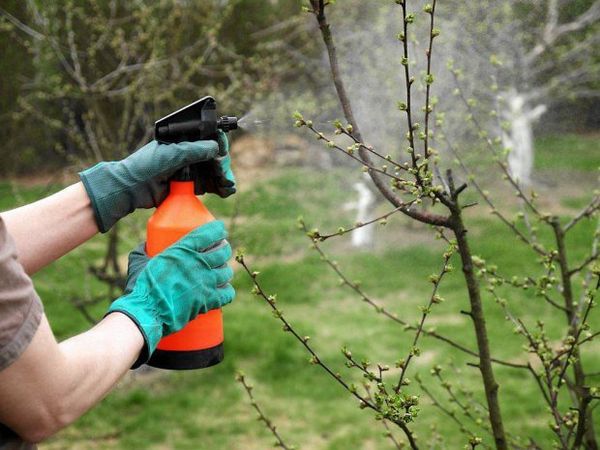
To protect the plant from the harmful effects of insect pests, it is recommended to use various insecticides, such as Karbofors. Also, to protect the tree from rodents, which pose a threat during the winter, it is recommended to wrap the trunk with roofing felt or spruce matting.
Pros and cons
The Belorusskoe Sladkoe apple tree undoubtedly has many advantages over other varieties. Firstly, it is distinguished by good frost resistance, withstanding temperatures as low as -35°C. Secondly, it begins bearing fruit very quickly, producing a harvest within the first year after planting—a practically record-breaking time for such a plant. Furthermore, the yield is quite consistent, and there is no periodicity in fruiting.
Furthermore, thanks to the efforts of Belarusian breeders, the variety has acquired complete resistance to scab, one of the most common fungal diseases affecting apple trees. This tree also boasts a compact size, making harvesting much easier.
The only drawback is perhaps the rather modest expert rating for taste (4.1 points). However, it's worth noting that sweet apple lovers rate Belorusskoe Sladkoe significantly higher. Furthermore, if harvested later than recommended, the fruit's shelf life will be reduced.
Video "Belarusian Sweet Apple Tree"
This video will tell you about the characteristics of the Belarusian Sweet apple tree.