
Description of the long-lasting apple tree variety Alesya
Content
Description and characteristics
The high-yielding, compact apple variety Alesya was created by Belarusian breeders at the end of the last century. The well-known varieties "Banana" and "Belorusskoe Malinovoye" were used for the cross. The new variety combines the advantages of its parents: it is distinguished by winter hardiness, abundant yields, and early fruiting. The tree grows slowly, with a spur-like crown that acquires a rounded shape and is well-drained.
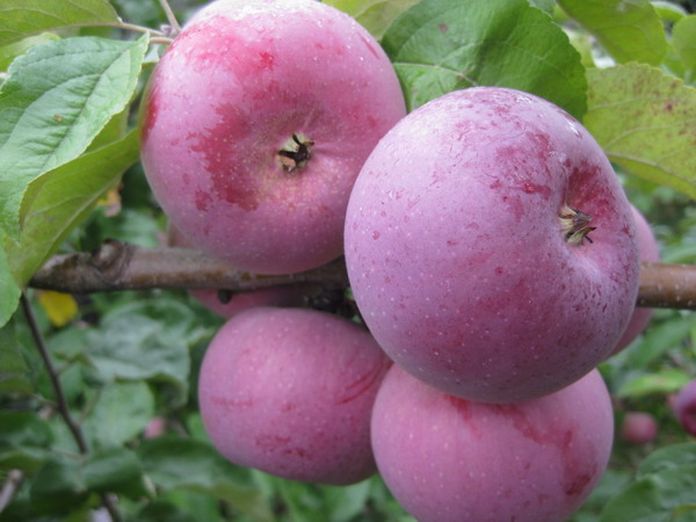
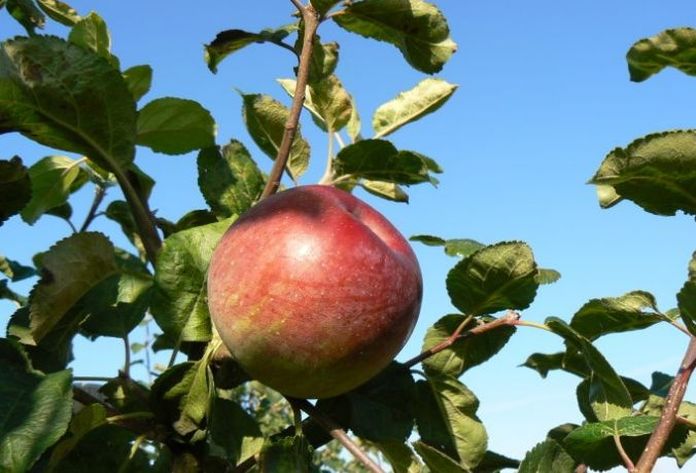
Fruits are formed on the rings; the first harvest can be collected 3–4 years after planting. According to the description, the Alesya apple tree, densely covered with brightly colored fruit, looks very impressive. The fruits, covered in a firm, elastic yellow skin, weigh between 120 and 180 grams. As they ripen, they develop a vibrant raspberry-red blush across the entire surface.
If the variety is grafted onto a dwarf rootstock, the tree won't be able to handle the abundance of fruit, and the fruit will become smaller. Therefore, experts recommend growing the variety on a seedling rootstock. Because of its slow growth, the tree won't grow very tall, will be easy to care for and harvest, and will have enough strength to produce large apples.
Alesya apples have a perfect round shape, slightly flattened at the top and bottom. They are firmly attached to short stalks and do not fall off after ripening. They are recommended for harvesting in October, and are ready for consumption by early December. The flesh is juicy, fine-grained, and creamy in color, becoming crumbly when fully ripe. The flavor is pleasant, sweet and sour; the aroma is delicate, stimulating the appetite.
The fruit is stored in cellars: several kilograms can be placed in plastic bags to enjoy the vitamin-rich, delicious apples until May. There are reports of apples being stored until September without losing their marketable quality. They can be transported over long distances, making Alesya cultivation profitable for commercial purposes.
Planting and growing
Young trees are planted in spring or autumn.
Find a sunny spot where the groundwater level is no closer than 2 meters to the surface. For fall planting, dig a hole a month in advance and plant the apple tree after all the leaves have fallen. Avoid adding fertilizer to the soil to prevent it from stimulating growth during the thaw. It's better to place fertilizer on the surface of the soil in a 60 cm radius around the trunk after the onset of frost. This way, the nutrients will gradually penetrate to the roots as the snow melts.
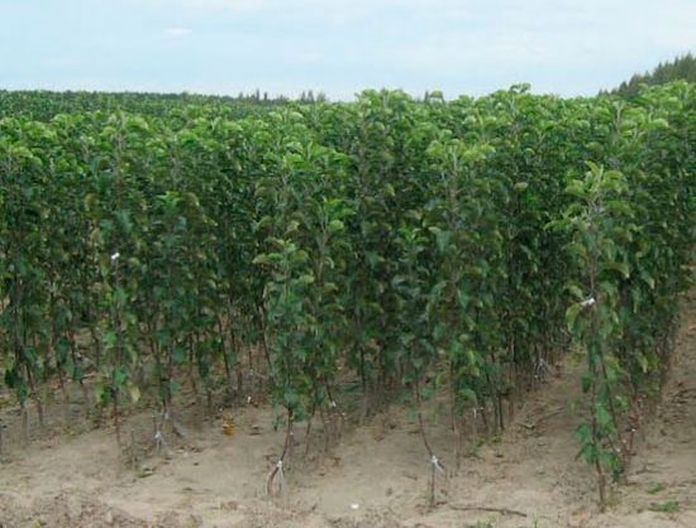
In the spring, the planting hole is filled with soil mixed with mineral fertilizer, with wood ash added to the bottom. The hole is dug 50 cm wide and 60 cm deep, a sturdy stake is driven into the center, fertile soil mixed with ash is placed on the bottom, then a bucket of water is poured in, the seedling is placed, the roots are covered with soil and fertilizer, the soil is compacted, and watered. The seedling is tied to the stake for stability, ensuring that the root collar is 5 cm above ground level, after which the area around the trunk is mulched with peat, rotted straw, or sawdust.
In the spring of the year following planting, all shoots are shortened by a third. The crown does not become overgrown and grows slowly, but annual pruning stimulates growth, extends the tree's lifespan, makes it stronger, and thus helps it resist pest attacks and survive winter frosts. Pruning should be done with a sharp tool, and remember to disinfect it before use. All cuts wider than 1 cm can be treated with garden pitch to prevent infection.
Apple trees respond well to mineral and organic fertilizers, applied dry around the trunk or simultaneously with watering. Watering should be done as needed: trees dislike stagnant water. During hot summers, at least three waterings are recommended, with 3-4 buckets of water per watering. Watering should be stopped during fruit ripening to prevent cracking.
The Alesya variety has high resistance to scab and powdery mildew, but there are other diseases, so it is necessary to strictly follow all agricultural requirements.
Throughout the season, pay attention to keeping the tree's trunk area clean, removing weeds, and avoiding pruned branches and fallen leaves. In the fall, it's a good idea to change or loosen the soil under the tree; a copper sulfate solution is also helpful, and treat the crown with Bordeaux mixture. For the winter, the tree's trunk area should be mulched with peat, compost, rotted sawdust, or straw. This will help the tree survive the winter, and in the spring, meltwater will provide the first nutrients to the roots.
Video: How to Store Apples in Winter
This video will show you how to preserve apples for the winter.