
How to build a warm winter greenhouse yourself
Content
Pros and cons of the best projects
A greenhouse for growing plants in winter is the ideal choice for the modern gardener. Many would probably like to have a green corner in their garden that will delight them during the cold season. First, you need to decide on the design of your future greenhouse. Some farmers prefer classic types (with a gable or mono-pitched roof), while others opt for more unusual shapes (dome or triangular). A key advantage of winter greenhouses is the inclusion of heating and lighting systems.
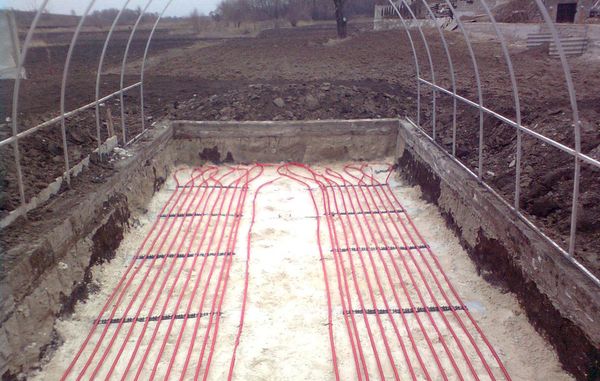
One of the popular types of winter greenhouses is the thermos greenhouse. This structure is advantageous because it is isolated from adverse external conditions and even from the soil. It creates a unique microclimate, allowing for the cultivation of exotic plants. This professional structure is inexpensive to maintain, has excellent thermal insulation properties, and its coating allows for good sunlight transmission.
A DIY winter greenhouse like this one is a viable solution for any gardener living in any climate. However, it's important to remember that even the best winter greenhouse designs are always expensive and labor-intensive. You'll need to invest a significant amount of time and money into constructing such a structure.
Video "Winter Greenhouse"
This video will show you how to build a winter greenhouse yourself.
Important design features
How to build a winter greenhouse yourself requires a step-by-step approach. First, you need to understand the specific features of your greenhouse structure.
The principle of its operation is standard, however, the following points about winter greenhouses should be taken into account:
- The presence of a high-quality coating. Film is generally used only for summer greenhouses. The best solution for a winter greenhouse is glass, as it guarantees optimal thermal insulation. Double-wall polycarbonate can also be used, but keep in mind that this material is slightly inferior to glass, so a high-quality heating system is essential.
- Foundation thickness. While summer greenhouses are often installed directly on the ground, without any foundation, winter structures should be built on a solid foundation—brick, concrete, or aerated concrete block;
- A pitched roof. Whether you choose a single-pitched or double-pitched roof, the pitch should be steep enough to prevent snow accumulation on the greenhouse roof.
- Installation of lighting and heating systems. In winter, you can't do without these auxiliary functions if you want to grow herbs and vegetables;
- The presence of a sturdy frame. Metal profiles or wooden beams are the optimal choice for a winter greenhouse.
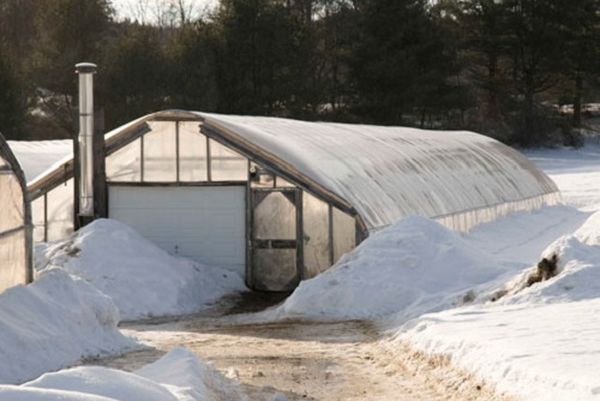
Take into account the features of such structures, and as a result you will get a reliable and warm greenhouse.
Step-by-step instructions
It's not difficult to figure out how to properly build a greenhouse for winter plant growing. The key is to consider all the important points and then purchase high-quality materials. Let's take a closer look at what this labor-intensive process involves to clearly understand how to construct a winter greenhouse.
Design
A winter greenhouse with double-glazed polycarbonate or glass will last a long time if you approach the design carefully. If you have drawings, you can easily determine the required materials. Furthermore, the entire installation process will be straightforward. In your diagram, indicate the optimal building dimensions for your garden plot.
Selection of materials
Once the design for the permanent structure is ready, it's time to start choosing materials. First and foremost, you need a sturdy frame, so it's best to use wooden beams or metal profiles for its construction. Pipes are also used, but they won't be stable enough for a large winter greenhouse.
As for the covering, it should also be chosen in advance. A budget option is polyethylene film, but it's not particularly durable. It's better to choose a polycarbonate structure or glass. This will ensure good results when building a greenhouse.
Laying the foundation
Whether you're building a commercial greenhouse or a home-grown one, a solid foundation is essential if you want to grow vegetables and herbs during the winter. Wooden beams, stone, and brick are all suitable for a foundation. A strip foundation is considered the most reliable option. First, dig a trench around the perimeter of the future greenhouse, then build wooden formwork. A compacted sand layer should be placed on the bottom, on top of which you'll pour concrete.
Heating installation
The heating system is installed at the very beginning of construction.
Most often, gardeners choose to install a stove and run pipes throughout the building in several rows. Stove-heating a greenhouse is the most common option. However, keep in mind that you won't be able to regulate the temperature yourself.
Erection of the frame
A large winter greenhouse should have not only a strong foundation but also a reliable frame. If you decide to build it from metal profiles, the lower parts can be connected directly to the greenhouse base. They are secured with bolts or anchors.
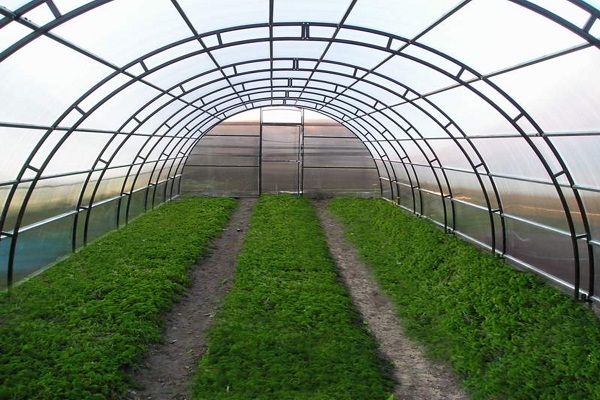
The next step is installing the vertical supports. It's best to use a welding machine for this process, as this will make the frame much more reliable. Next, you'll need to build the roof supports.
Roof and sheathing
Heated winter polycarbonate greenhouses will be the pride of any gardener if implemented correctly. Those who decide to use cellular polycarbonate should first measure the sheets. Then align and mount them to the posts. Another key point: once the sheathing is complete, thoroughly seal all joints from the inside. Don't forget to include vents in the greenhouse.
Lighting and watering
It's clear how to heat a greenhouse. At the final stage of greenhouse construction, you need to decide on a lighting option. If you want to plant herbs, you can safely install standard incandescent bulbs. For growing berries, you'll need LED bulbs. Also consider installing a drip irrigation system. The water container should be heated.
Delivery of soil
Once your greenhouse construction project is complete and all additional features are considered, set up the beds. To do this, the greenhouse must have a layer of good, fertile soil. This will ensure successful growing of herbs and vegetables.