
The benefits and construction of a DIY thermos greenhouse
Content
Advantages and disadvantages of a thermos greenhouse
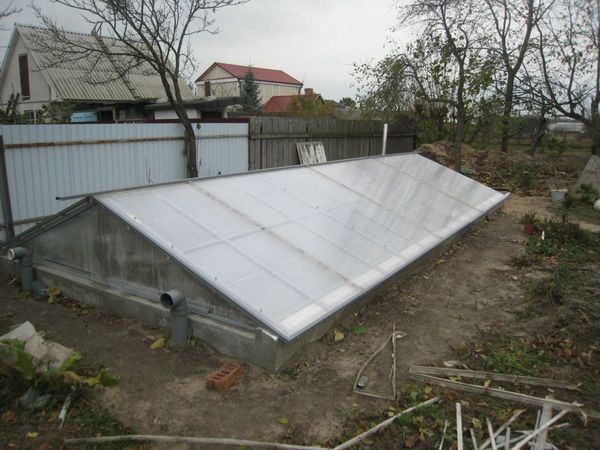
Properly constructed DIY greenhouses offer the following advantages:
- High reliability achieved through the use of modern technologies and materials. The structure is resistant to strong winds;
- long service life;
- no dependence on weather conditions;
- possibility of year-round use;
- Thanks to the polycarbonate sheets used as covering material, light and heat are evenly distributed in the greenhouse, creating optimal conditions for the growth and fruiting of the plants grown inside;
- high thermal insulation properties;
- the possibility of growing a wide variety of vegetable and berry crops, as well as flowers, seedlings and mushrooms.
However, it is worth noting that such a greenhouse also has its disadvantages. Among the significant disadvantages of its design, it is worth noting the high cost of construction, the difficulties in constructing a ventilation system, and the need for sewerage.
When planning to build a thermos greenhouse with your own hands, you need to know all the pros and cons of such a design.
Video: DIY Thermos Greenhouse
This video will show you how to build a thermos greenhouse yourself.
How a greenhouse is constructed
The thermal greenhouse was invented by Anatoly Patiy. Therefore, this type of greenhouse is often called the Patiy thermal greenhouse. Patiy patented the designs and design features of his greenhouse.
The unique feature of his invention is that it requires minimal investment to maintain the required temperature inside the greenhouse year-round. Moreover, this structure allows for the cultivation of various crops even in Siberian conditions.
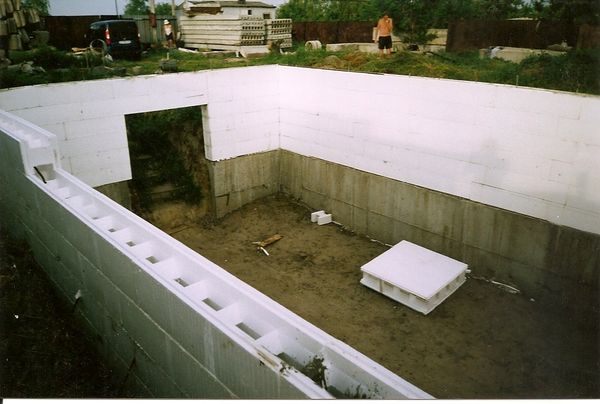
The Patiya winter thermos greenhouse is a next-generation greenhouse constructed on a 2-meter-deep foundation pit. A foundation is poured into the excavated pit to ensure the stability of the entire structure. Thermal blocks are used for the walls.
A rectangular site should be selected for construction. It is recommended to orient the structure north to south. The site should not be shaded by nearby buildings, otherwise it will be impossible to create an optimal microclimate for plants inside the structure.
To maintain a positive temperature inside the greenhouse year-round, a special light-reflecting system is used. For this purpose, the structure has one shaded side, which should face north. The south side, however, allows the light necessary for plant growth and fruiting to pass through.
In addition, when creating such a structure, the following are used:
- Thermal screen. This is a special insulating system. During cold weather, the thermal screen reflects infrared radiation and helps retain heat within the structure. This creates an optimal microclimate for plants in the greenhouse.
- Mirror mesh. It protects plants from harmful UV rays and prevents them from overheating.
Thanks to the unique design of these greenhouses, no additional heating equipment is required for growing a variety of crops. When properly constructed, a thermal greenhouse will maintain a positive temperature year-round.
This type of structure is an excellent winter facility, as it not only maintains the desired temperature year-round but also saves on energy. Therefore, Patiya greenhouses are often used for private businesses.
How to build
A DIY thermos greenhouse is built in several stages. Let's look at each construction step in more detail.
Foundation
When choosing a location for the foundation pit, consider the groundwater level. It shouldn't be too close to the structure, otherwise the greenhouse could flood.
A pit is dug at the selected site, the depth of which depends on the overall area of the structure. The optimal depth for such a structure is 2 m, and the width no more than 5 m. The structure can be of any length.
Your own arm strength isn't enough to dig a hole to the required depth. Therefore, it's best to dig the pit using specialized equipment. Only then will the hole have the desired shape and perfect edges.
After the mechanical work is completed, the corners are manually sanded with a shovel. Then the foundation is poured. A strip foundation, created using concrete and rebar or blocks, is often used. The foundation is poured into a special trench on a sand bed. Once the work is complete, we allow the foundation to dry thoroughly and continue building our thermos greenhouse.
Frame
The frame for such a greenhouse can be built from cinder blocks, bricks, or foundation wall blocks. In the latter case, reinforcement is placed inside the material and then filled with concrete. Thermal blocks can also be used to create the walls.
The height of the structure's walls should be approximately 50 cm higher than the maximum possible snow depth for a particular region.
Once the walls are erected, the roof is installed and the frame is sheathed with polycarbonate sheets. At this point, the winter greenhouse is almost complete. All that remains is to insulate the interior.
Insulation
Once the walls are complete, the inside of the thermal blocks should be covered with a heat-insulating, reflective film. If the greenhouse is being built in an area with very harsh and long winters, this film is applied in two layers.
Operating Rules
Like any structure, the Patiya greenhouse requires proper care and maintenance. Periodic internal disinfection is necessary to prevent the development of fungal and other diseases. This work is best performed between planting new plants in the ground after harvesting from previous crops.
The structure is periodically inspected for damage to the finish. If the polycarbonate sheet is damaged, it is replaced with a new one. In principle, the operating instructions are the same as for other types of greenhouses.
When properly designed, thermal greenhouses allow you to grow absolutely any plant, even exotic ones, in regions with harsh climates.