
Greenhouse Business from A to Z for Beginners and Professionals
Content
How to write a business plan
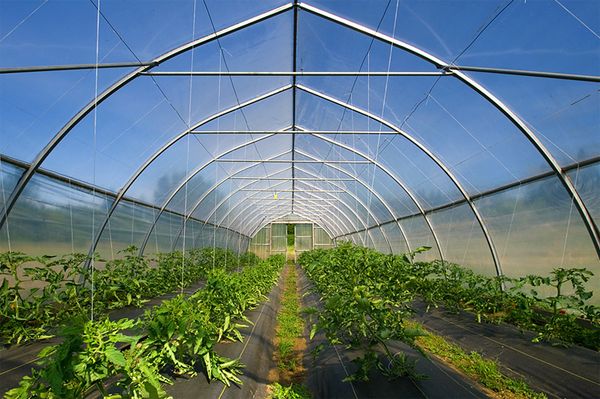
A greenhouse business plan should include several sections and subsections. These sections allow you to consider all the most important aspects and organize your operations properly when starting your business. Samples for this document can be downloaded free of charge from specialized resources. You can also find a sample of each section of the plan on any relevant website.
With a well-written plan, a budding or experienced entrepreneur can count on securing investment and quickly finding partners to launch their business. Let's review all the necessary sections of such a document.
Summary of activities
A greenhouse business plan must include a summary describing the business's activities. It is necessary to start with this section, as it provides a brief description of the entire work.
This section should indicate the focus of crop cultivation. It also specifies the chosen legal structure for the greenhouse. Essentially, this subsection describes the business concept and its implementation format.
Describing the business
This section should detail all the structures that will make up the greenhouse complex. It includes descriptions and diagrams of future buildings and utility systems. This section also includes calculations of water, electricity, gas, and heating consumption. It's also important to specify the equipment planned for use (especially if the greenhouse will also be operating in winter).
We describe products and services
Greenhouses as a business are created for the purpose of growing specific agricultural products and then selling them at retail or wholesale. In this section, you should specify what will be grown in the greenhouse and how the resulting products will be sold. It's also worth noting the specific method of growing the crops. For example, you can use traditional or innovative methods (hydroponics, etc.).
Analyzing the market
To understand how profitable greenhouse farming will be in a specific region, a market analysis is necessary. First, it's important to determine whether the home-based business is planned for a regional, provincial, or district level.
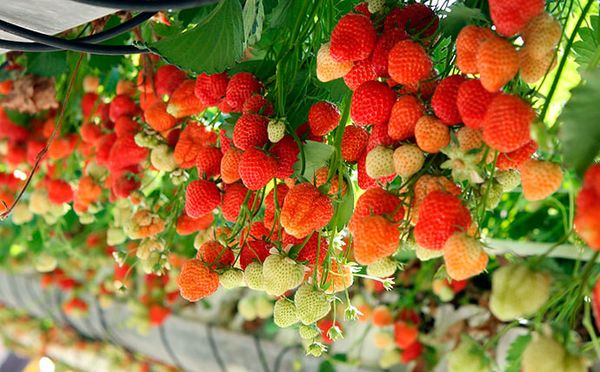
It's also important to analyze what's profitable to grow in a specific location. A greenhouse can be used to grow vegetables, flowers, berries, and so on. The return on investment will vary in each case.
This section should highlight the pros and cons of running a business in a specific location, as well as the prospects for business development in the chosen direction. This will allow the entrepreneur to properly define their operation so they can quickly break even and begin making a profit from their greenhouse operation.
We are drawing up a sales plan
A greenhouse business launch plan must include a sales plan. This requires considering how the product will be sold. Agreements with buyers must be established in advance. These can be retail consumers or wholesalers (stores, supermarkets, and other contractors).
Financial and investment plan
A business plan for a greenhouse growing vegetables or other crops should include sections such as an investment and financial plan. These sections will help determine whether such a business is profitable in a particular region.
To run a profitable business, it's essential to create a sound financial plan. It takes into account all potential expenses and revenues, as well as other indicators. It's essential to accurately forecast costs and profits to assess the profitability of the entire business.
Expenses for the year will be divided into 3 categories:
- One-time expenses. These are made only once. They are necessary to open a greenhouse business. This could include purchasing or building a greenhouse, installing utilities, etc.
- Fixed costs. These arise on an ongoing basis. These include costs for utilities, wages to hired personnel, etc.
- Variables. These are expenses that arise periodically (for example, greenhouse repairs, purchasing fertilizers, etc.).
The investment plan reflects the investment and input scheme at a certain stage of development of the “green” business. For example, the very first investment will be a greenhouse. Its construction or purchase requires start-up capital. You'll also need to spend money on registering the business with government agencies, connecting all the structures to utilities, and so on.
Later, when you can start making money from this business, it's worth considering expansion and reaching the next level. Investments should be included in the ongoing costs that will arise during a certain period of business development. Their occurrence should be preceded by certain conditions (e.g., stable operations, high profits, etc.).
How to calculate expenses
A greenhouse, as a business, whose profitability depends on many factors, can be both profitable and unprofitable. To determine the success of such an undertaking, it's necessary to calculate the estimated income and determine the costs. If expenses dominate over a period of time, the business can be considered unprofitable.
To ensure a profitable greenhouse complex, it's important to accurately estimate costs at the setup stage. When calculating upcoming expenses, consider the following:
- The cost of purchasing a greenhouse. It's possible to build such a structure yourself. However, this option isn't always the most cost-effective. This is because construction may entail unexpected expenses;
- How many greenhouses are needed for farming?
- business registration costs;
- what modern equipment should be installed;
- payment of utility bills;
- payment of wages to hired personnel;
- purchase of seeds and seedlings for growing plants, as well as fertilizers and means of protecting plantings from diseases and pests.
This is a list of basic expenses. However, as you set up your greenhouse, unexpected expenses may arise. It's important to be aware of these and always have a reserve fund.
Video: "How to Make Money Growing Vegetables in Greenhouses"
This video will show you how to start a greenhouse business and get rich.
Choosing a greenhouse
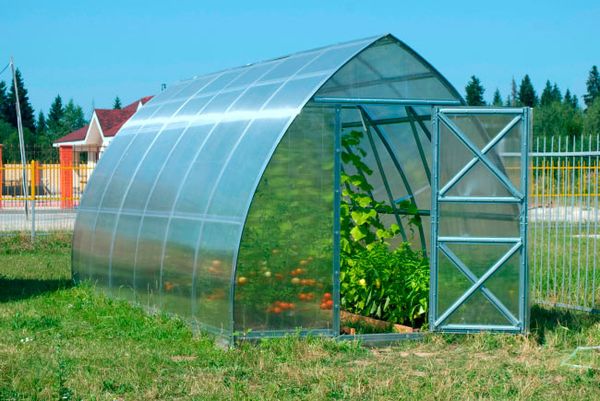
When planning a greenhouse business, it's important to decide right from the start what kind of greenhouse you need. The choice of structure directly depends on the crops you plan to grow. Currently, there are two types of greenhouse structures:
- Summer. These are used only during the warm season and are suitable for growing most vegetable and berry crops;
- Winter or year-round. They allow you to grow exotic crops even in winter in Siberia and other harsh regions of our country.
It's worth noting that a winter greenhouse is more profitable as a business than a summer one. This is because it allows for year-round operation without seasonal downtime.
Selecting a crop and making a plan
You can grow vegetables, flowers, berries, exotic crops, and mushrooms in a greenhouse. The best approach depends directly on the product most in demand in a given region. Flowers and mushrooms, along with exotic crops, are often the most profitable.
To successfully grow a particular crop, it's necessary to develop an appropriate plan. A combined cropping scheme, tailored to the specific climate of a particular area, is recommended. In this case, the growing plan might look like this:
- spring – growing flowers;
- early summer – planting tomatoes;
- the second half of summer – planting cucumbers;
- Winter – growing greens.
You can also choose other planting patterns that will meet your wishes and market demand.
What income can I expect and what are the risks?
The income a greenhouse will generate depends on many factors. Therefore, profit calculations must be made on a case-by-case basis. With proper management, greenhouses will begin to generate profits within a few months.
To properly calculate everything when drawing up a business plan, you should take into account the possible risks typical for this field of activity:
- Selecting crops for cultivation. The resulting products must be in demand in your region;
- Product distribution. Due to varying shelf lives, agricultural products should not be stored but delivered immediately to contractors;
- When growing plants year-round, the possibility of increasing utility tariffs should be factored into the costs;
- Features of business registration and much more.
If these risks are not taken into account, a “green” business may turn out to be unprofitable.
Business registration
Registering a greenhouse business is mandatory. This type of business can be registered as follows:
- Medium-sized greenhouse. Individual entrepreneur registration is not required, but a Taxpayer Identification Number (TIN) and Primary State Registration Number (OGRN) are required. Registration is completed with the tax office.
- A large enterprise. Registration is carried out as a sole proprietorship or LLC. The latter option is more expensive and has several disadvantages. Therefore, it is best to register as a sole proprietor. To do this, you need to submit the necessary documents to the relevant government agencies. A list of documents is available on the relevant resource.
As we can see, greenhouse farming isn't the easiest business to set up. To succeed, it's important to consider many factors that can impact its profitability. Therefore, before starting your green venture, it's essential to develop a proper business plan.