
What types of greenhouses with opening roofs exist?
Content
Features of greenhouses with opening roofs
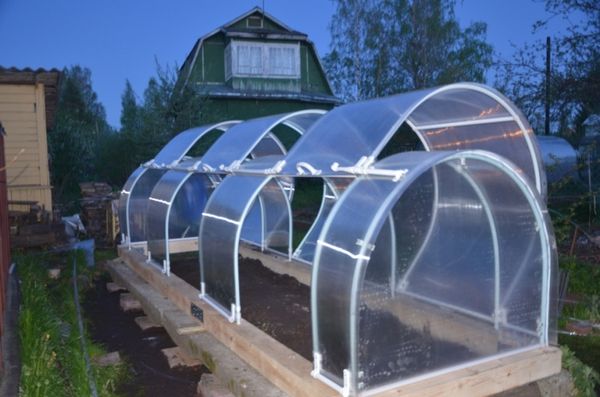
In summer, a greenhouse with an opening roof provides plants with ideal ventilation and light. The roof can also be automated, opening and closing at specific temperatures, for even greater convenience.
If you don't intend to use the greenhouse as a winter greenhouse, you can simply remove the cover after harvesting. This will protect both the cover and the walls from snow loads. Furthermore, the snowdrifts will apply equal pressure to the walls from the inside and outside, reducing wear and tear. The snow accumulated in the greenhouse over the winter will provide ample soil moisture in the spring and prevent the loss of beneficial microorganisms essential for healthy plant growth.
There are greenhouses with removable roofs, in which different sections of the roof can be opened independently of each other, allowing crops with different temperature and lighting requirements to be grown simultaneously.
In most cases, such greenhouses are made of polycarbonate—this material is lightweight, which is important for moving parts, yet it is 200 times stronger than glass. Its flexibility makes it suitable for covering arched structures.
Video: "How to Assemble a Greenhouse with a Sliding Roof Yourself"
This video will show you how to build a greenhouse with a sliding roof yourself.
Main types
There are several types of polycarbonate greenhouses with opening tops. Let's look at the most popular ones.
Cabriolet
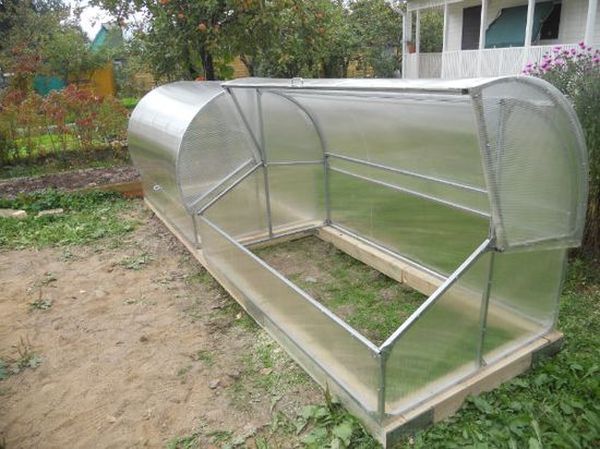
A greenhouse with a hinged, fixed roof. Some models in this group have a roof that slides down along profile grooves. It can be retracted completely or to a desired distance. Some models are designed like a breadbox.
In such a greenhouse, the entire roof, individual sections of it, or the entire arched segment can open.
When closed, the roof is secured with clamps.
Butterfly
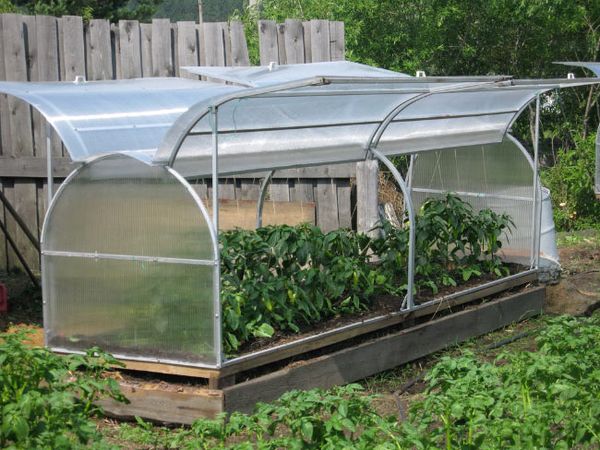
This is an arched structure. Each half of the roof in this greenhouse is integrated with the wall and rises with it, truly resembling butterfly wings. A rigid beam runs along the center of the structure, to which the "wings" are attached using hinges.
In small greenhouses, each side can be raised completely; for longer structures, it's more practical to divide them into several segments. The movable section of the wall can extend all the way to the ground or have a threshold.
Because the raised walls allow access to the plants from both sides, butterfly gardens can be extremely compact: they often have no entrance or internal workspace. Some can even fit on a table.
Matryoshka
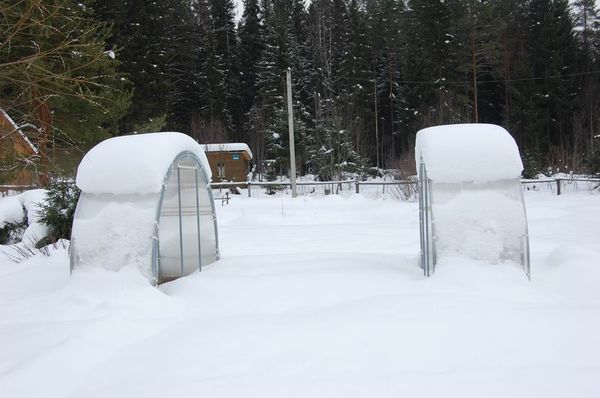
This retractable greenhouse also has an arched design, where the roof is one with the walls, but in this case the segments do not rise up, but slide to the sides: they are easily lifted and installed on adjacent sections or fixed ends (based on the principle of a folding telescope).
This sliding design makes it possible to either completely open the interior of the greenhouse or open a small section for ventilation.
Brand-name models fit into a car when folded. A foundation is not required.
How to build
Beginning gardeners often wonder whether it's possible to build a greenhouse with an opening roof themselves. Fortunately, with the right tools and skills, it's not that difficult.
To begin, as with building a regular greenhouse, you need to choose a suitable location. It should be level, sunny, and warm, protected from northerly winds. Large trees nearby are undesirable: they not only block the light but also draw nutrients from the soil, depleting it. The greenhouse should be located on a slight rise or at least not in a low-lying area, as stagnant water is harmful to plants.
If necessary, build a foundation. For a lightweight greenhouse with a retractable roof, a wooden one is best.
Oak or larch are recommended, as these woods are resistant to rot. The beams are pre-treated with preservatives or iron sulfate. They are then joined with corners to form a rectangle corresponding to the greenhouse perimeter and laid in a pre-dug trench. If horizontal alignment is required, sand can be added or wooden planks can be placed underneath. For greater stability, a hole can be drilled through each beam and rebar can be driven into it.
Next, assemble the greenhouse frame. This procedure may vary depending on the type of structure chosen.
As an example, let's look at how to make a polycarbonate greenhouse with a sliding roof using the "butterfly" principle.
First, two blind ends are made. They can be simple arches or have internal crossbars for strength. They are then connected by a central beam, which will hold the "wings," and lower crossbars, which will house the threshold. The structure is then installed on the foundation.
Next, the rounded base of the "wings" is welded together: essentially a rectangle with internal crossbars for strength. A pipe bender can be used to bend the metal to the desired shape. Note that the curves of the "wings" must precisely match the arcs of the ends. They are attached to the top beam using hinges.
The cellular polycarbonate is cut to size with a circular saw and secured to the frame with screws and thermal washers. The joints are sealed with silicone sealant.
Finally, supports are installed on the sides of the greenhouse, with the help of which the segments can be held in an open position.
You can also make a convertible-style greenhouse with a sliding top with your own hands.
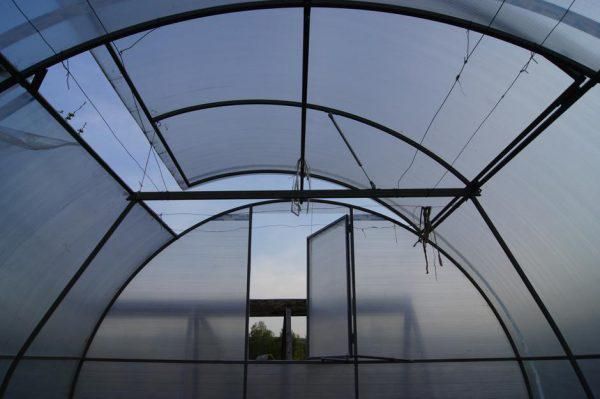
The frame is assembled and covered with polycarbonate, as for a conventional arched structure, but the top is left open. Plastic caps are attached to the rafters near the ends, and narrow polycarbonate strips are applied over them to create grooves. A polycarbonate sheet, which will serve as the roof, is inserted into these grooves.
A greenhouse with an opening roof, built by yourself, will serve just as well as a factory-made one – the main thing is to carefully approach all stages of construction.
Operation and maintenance
A greenhouse with an opening roof requires little maintenance. Simply monitor the moving parts for proper operation and make adjustments as needed, carefully cleaning out clogged grooves and lubricating and tightening the hinges.
In the fall, greenhouses with retractable roofs require a thorough cleaning. Dig out and remove plant debris, replace or disinfect the topsoil with potassium permanganate, and wash the walls with a soapy solution (note that many chemical cleaners contain harsh chemicals that can damage polycarbonate). Pay special attention to seams and joints, as these are where harmful microorganisms and parasites (or their egg clutches) often accumulate. Use only soft cloths or sponges for cleaning.
If the roof is completely removable, it is taken indoors in the winter to protect it from stress and allow snow to “refresh” the soil inside.
In greenhouses of the "matryoshka" or "convertible" type with a roof that drops down, the top is left open.
A carbriolet greenhouse with a hinged roof or a butterfly greenhouse, on the other hand, needs to be kept closed for most of the winter. In the former case, snow will accumulate on the sash and can break it, while in the latter case, it will accumulate in the space between the raised sections, deforming them. Snow is cleared from these greenhouses as needed, just like from regular arched greenhouses.