
How to build a greenhouse with a pitched or gable roof yourself
Content
Advantages and disadvantages of lean-to greenhouses
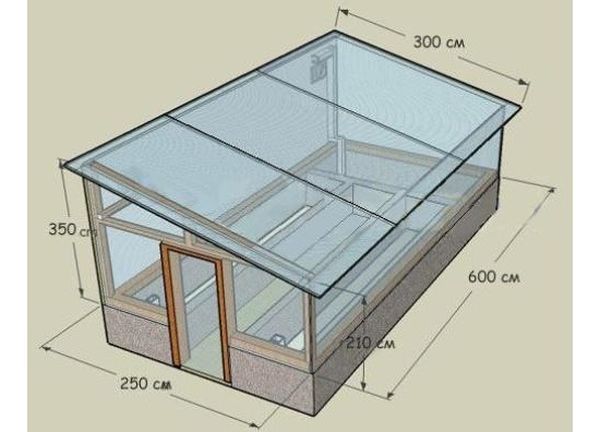
Before we figure out how to build a lean-to polycarbonate greenhouse yourself, let's discuss their advantages and disadvantages. Let's start with the advantages.
- Compactness. A lean-to greenhouse won't take up much space, but rather allows you to make the most of your outdoor space.
- A simple start. This greenhouse won't be large, meaning it will only accommodate a few plants, making them easier to care for. A lean-to greenhouse is perfect for a beginner.
- It's easy to find a use for. Once you've built a larger greenhouse, a small greenhouse against the wall won't go unused either, as you can grow seedlings in it.
- Minimal costs. A DIY greenhouse with a pitched roof is easy to build and requires minimal construction materials and labor.
- A sturdy structure. A wall-mounted greenhouse rests on the exterior wall of the house.
- Heating. A wall-mounted greenhouse will be partially heated by heat that penetrates the wall from the house. And if you build the greenhouse on the south side, it will be less exposed to frost.
The disadvantages of a lean-to greenhouse cannot be overlooked. First of all, it is very small. Also, some experienced gardeners believe that such a greenhouse rarely receives enough sunlight. Another disadvantage is that the greenhouse will be built next to the house, so there is always the risk of accidentally damaging the utilities.
Video: DIY Greenhouse
This video will show you how to build a high-quality greenhouse yourself.
Advantages and disadvantages of gable roof greenhouses
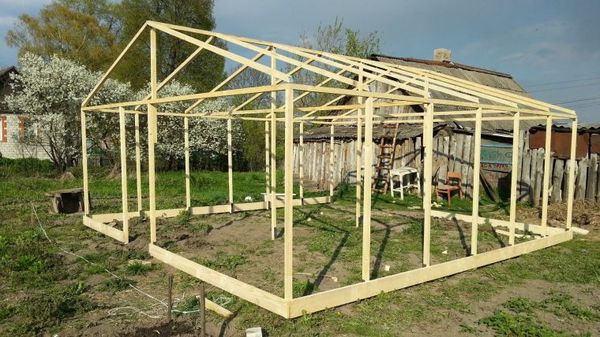
Now let's talk a little about greenhouses with gable roofs. The advantages of this type of greenhouse are considered to be:
- the ability to easily build it yourself;
- snow does not linger on the roof, which helps prevent damage to the roof;
- the vents are simply installed;
- a large selection of coating materials.
Now let's discuss the disadvantages of a greenhouse with a gable roof.
- in most cases a solid foundation is required;
- the structure is difficult to expand during operation;
- lots of fastening parts.
However, as you have already noticed, the advantages completely justify all the disadvantages, especially if you want to build a truly reliable and durable greenhouse.
Materials for the frame
Whether you've decided to build a lean-to greenhouse with a pitched roof or a full-size gable greenhouse, you'll need to decide on the frame material. Three materials are commonly used: plastic, wood, or galvanized metal (profiles). Wood is probably considered the worst choice today due to its vulnerability to environmental damage. Metal profiles or plastic profiles are the best choice for the modern gardener.
Selecting a coating
The covering must allow sunlight to pass through well while retaining heat inside the greenhouse. The most cost-effective covering material is polycarbonate. It produces a strong yet lightweight structure. Its cost is reasonable, especially compared to glass.
True, the latter covering has the highest light transmittance. However, this material is fragile and heavy. Glass greenhouses are usually built by those with old window frames. Polyethylene film is used for summer greenhouses. This covering is inexpensive, but it also needs to be replaced annually.
How to make a project
Single-pitched
Before you begin construction, you need to develop a design for how you'll build a greenhouse with a pitched roof. It should include the following points:
- choosing a place for construction;
- choice of design;
- greenhouse size;
- necessary materials.
When choosing a location, choose the south side of the house; if that's not possible, then the east. Decide on the design—will it be a winter or summer greenhouse? After all, the structure itself is broken down into several other elements: the foundation, the frame, the rafters, the sheathing, etc.
When drawing up a plan, consider the dimensions in advance. The length and width of your greenhouse will depend on the type and quantity of crops you want to grow and, of course, the amount of material. Note that the height of a wall greenhouse is limited by the height of the wall it will be adjacent to. When choosing materials, consider your budget and your expectations for the greenhouse.
Gable roof
Now let's discuss the data we need to create a drawing of a polycarbonate greenhouse with a gable roof. The optimal dimensions of the future structure are: length – 5–7 m, width – 2.5–3 m, height at the ridge – 2.5 m. It's best if the greenhouse extends from west to east. If your garden plot already has a building for storing garden tools, place the greenhouse somewhere nearby.
Installation of the foundation
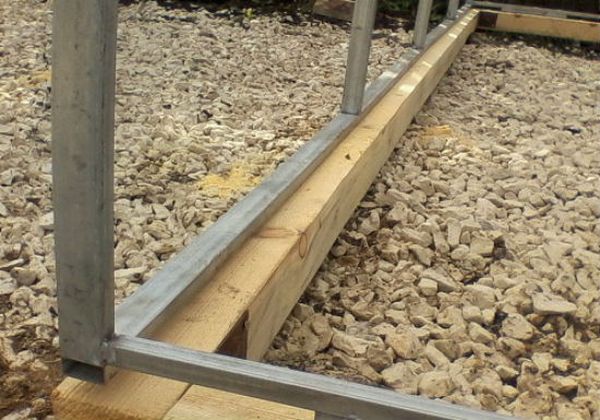
A gable-roof greenhouse requires a columnar foundation. The columns should be 12 cm in diameter and 3 meters long. A total of six columns are needed, driven into the ground to a depth of half a meter. Four columns are installed at the corners of the future rectangular structure, and two in the center. The supports are then poured with concrete.
Frame and sheathing
A greenhouse with a heavy gable roof must be strong, so its frame must also be taken care of. The foundation columns are essentially the main part of the frame, to which the horizontal beams are attached, and on top of them, the rafters are installed, which will serve as the foundation for the roof. When constructing the frame yourself, don't forget to provide space for windows and a door.
Once the frame is fully erected, you can begin covering it. Since polycarbonate is the most suitable covering, we'll discuss its installation in more detail. The covering is secured with screws, and rubber spacers are also used. The sheet should be installed with the protective layer facing outward; the factory markings will help you determine which side to install.
It's best to stretch the film as a single piece. For glass installation in each opening, use quarter-slots.