
How to Build a Year-Round Dome Greenhouse
Content
Advantages and disadvantages of dome greenhouses
A round dome greenhouse will become a source of pride for you as a gardener.
The point is that such a structure has many advantages, among which the following points are worth highlighting:
- The primary advantage of a domed greenhouse is that it's a stable structure. It doesn't require additional supports, so this shape truly pays off during installation. This is because the weight load is evenly distributed across the main parts of the structure.
- This type of greenhouse has good aerodynamics. The structure is not affected by strong winds, as they flow smoothly around it;
- If you live in a region prone to seismic activity, a round greenhouse is the best option for you. It maintains its stability despite frequent tremors.
- The building's aesthetic appeal is another plus. It resembles a space satellite or a giant honeycomb. This structure is sure to impress.
- If you thought through the installation of heating systems and properly insulated the building during the construction of the greenhouse, you can grow vegetables and herbs here even in severe frosts;
- The dome-shaped greenhouse is designed to accommodate a large water tank in the center. It will heat up during the day and release the heat at night.
- Cost-effectiveness is one of the key advantages of this type of greenhouse. Its construction requires significantly fewer materials than a gable-roofed structure.
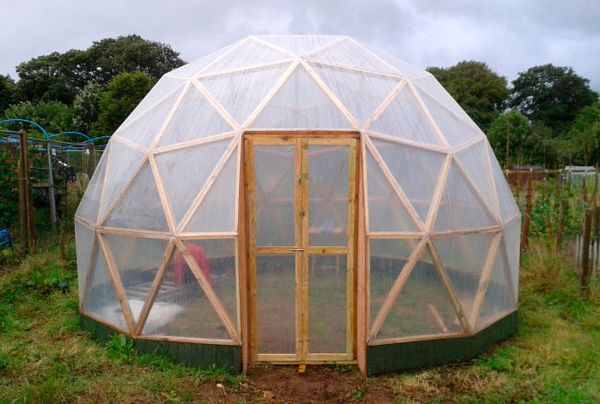
A spherical greenhouse does offer a number of advantages. However, it's also worth considering some of the negative aspects of the structure before starting construction. For example, during installation, you'll encounter numerous cracks and joints that need to be carefully sealed.
Such a greenhouse requires numerous components and fasteners, all of which must be taken into account during the building planning stage. Another point: a round greenhouse structure shouldn't be too small, otherwise, the gardener simply won't be able to work properly in it. Consider all these nuances before purchasing the necessary components.
Video "Dome Greenhouse"
This video will show you how to build a dome greenhouse yourself.
Project
A dome greenhouse will serve you for quite a long time if you approach its construction correctly. First, you'll need to create a plan that will guide the subsequent construction work. This will be much easier for modern gardeners. While calculating the dimensions and number of parts used to be quite difficult and had to be done manually, it's now easier to simply use a surveying calculator. Specify the required detail and even determine the length of the wooden beams you'll connect to create the frame. Once the construction plan is clear, it's time to begin building the greenhouse.
Preparation of materials
A polycarbonate dome greenhouse is built in stages, and the first step for a gardener is purchasing the tools and materials needed for the job and carefully preparing them. For example, it's advisable to treat the wooden beams that form the frame with preservatives to protect them from moisture and mildew. Alternatively, you can build the frame from metal beams. You should also decide on the covering material for the greenhouse in advance. This could be glass, polycarbonate, or another type of flooring.
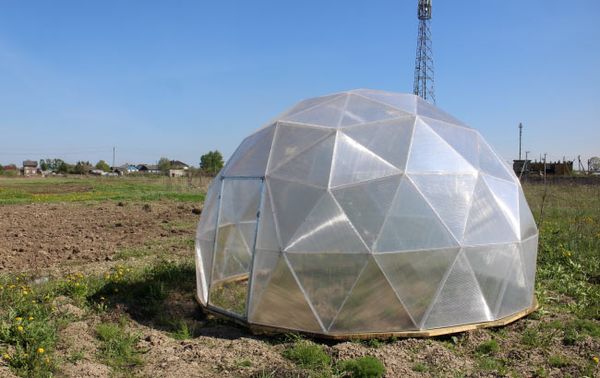
Be sure to purchase fasteners separately: screws, steel strips, washers, wood screws, etc. It's also a good idea to buy foil or another shiny material. You'll use it to cover the north side of the dome. Once you have all the components for the dome greenhouse, you can begin assembling the structure.
Step-by-step instructions
Dome greenhouses suitable for year-round use are constructed step by step.
First, select a site for the greenhouse, level it thoroughly, and then cover it with geotextile to prevent weed growth. Mark out the area and add gravel. The next step is to assemble the frame. Fasten all the necessary parts together with metal arches or staples.
According to the geodetic calculator, all key frame components must be assembled, starting from the bottom tier and ending with the top tier. Don't forget that the top tier must have vents for natural ventilation. The covering material is cut and then secured into the cells. Once the round indoor greenhouse is built, all that remains is to equip it with everything necessary for the interior.
Interior design
After assembling the frame and installing the roof, seal the inside of the dome on the north side with foil. Place a water tank in the center of the structure, which can be used both to heat the room in the summer and to water the plants. If you plan to grow vegetables and herbs in the winter, be sure to install a heating system. Using a year-round geodome is also advantageous because it allows for several tiers of garden beds to be attached to the structure. Assemble the round greenhouse yourself according to the plans and arrange its interior carefully to ensure your herbs and vegetables grow quickly and produce a bountiful harvest.