
Design features and assembly of the "Kapelka" greenhouse
Content
Advantages and disadvantages
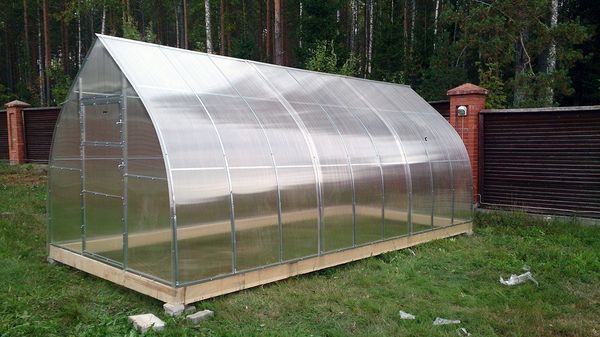
Despite the abundance of greenhouse structures from various manufacturers, types, and sizes, polycarbonate greenhouses are popular among agronomists. Why, you ask, is such a strong interest among gardeners in such structures? Let's explore the pros and cons of the "Kapelka" polycarbonate greenhouse using an example.
Advantages:
- durability and high wear resistance thanks to the polymer and anti-corrosion coating of the frame;
- stability and extreme strength of the structure;
- due to the teardrop shape, snow does not linger on the roof of the greenhouse;
- the frame dimensions are optimized to fit the parameters of a standard polycarbonate sheet;
- If necessary, the greenhouse can be extended using additional 2-meter inserts, which are included in the factory kit, while the presence of steel partitions allows for the intelligent zoning of the interior space;
- the end sections are equipped with vents that allow you to regulate the air temperature inside the room and make it much easier to maintain the greenhouse;
- Suitable for growing various fruit and vegetable crops.
Flaws:
- Despite the detailed step-by-step instructions and a complete set of all necessary elements and accessories, assembling the "Kapelka" greenhouse requires a lot of time and effort;
- poor sealing on the ridge;
- Low quality wooden beams for the foundation.
Please note that the "Kapelka" greenhouse is one of the ten most popular and sought-after greenhouse structures installed in various regions of Russia, including areas with harsh weather and climate conditions.
Video: Installation of the Kapelka Greenhouse
This video will show you how to properly assemble the "Kapelka" greenhouse yourself.
How the structure is arranged
Let's take a closer look at how the "Kapelka" greenhouse is constructed. While agronomists in southern regions can choose a greenhouse of any shape, size, and strength, in northern regions, where snowfalls are frequent and accompanied by strong and gusty winds, gardeners should consider the strength and stability of the structure.
The "Kapelka" greenhouse is extremely durable and was developed with the weather and climate of Russia's northern regions in mind. It is a unique, strong, and durable structure. The designers at the "Ready-Made Greenhouse Factory" designed the greenhouse frame as a pointed-arched structure, preventing snow from accumulating on the roof. In the event of heavy snowfall, the main pressure of the snow load falls not on the roof, but on the vertical supports.
The greenhouse is 1.7 m high, allowing gardeners to work on the beds without having to hunch over.
The advantage of this greenhouse is that all prefabricated frame elements are made of ultra-strong galvanized steel, which prevents corrosion. All components are connected using screws, self-tapping screws, and bolts included in the kit.
Polycarbonate sheets were used for the cladding. This material is considered the most suitable option for covering greenhouse structures. It retains heat and moisture well, is durable, highly wear-resistant, and poses no risk to the human body.
Today, the "Kapelka" greenhouse is presented on the market in two modifications, differing in the width of the structure (2.4 and 3 m).
Assembling the greenhouse
Each delivery kit includes a drawing and detailed installation instructions for the "Kapelka" greenhouse. Experts note that the instructions are intended for gardeners with no practical experience assembling this type of structure. Before beginning installation, we recommend carefully reviewing the step-by-step instructions. This will help avoid any missteps during assembly and save significant time.
In northern regions, it's best to place a greenhouse on a foundation. First, you need to decide on the location of the structure, remove the topsoil, and level the surface. Then, mark the perimeter and dig trenches 30–40 cm wide, into which wooden formwork will be laid and concrete poured.
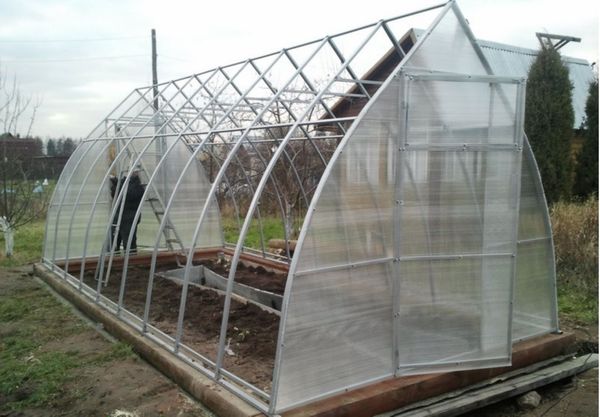
The next step is to assemble the greenhouse frame. First, install the end modules, and only then can you begin installing the side supports and roof. Follow the assembly instructions. As the manufacturer notes, all modules must be secured not only to each other but also to the foundation.
Once the greenhouse base has been installed, the structure can be clad. Polycarbonate sheets are laid vertically and can only be sewn across the stiffeners.
To improve the thermal insulation of the finished greenhouse, it is recommended to cover the panel ends with a special tightening tape, on top of which a flat profile is installed.
Operating Rules
The longevity of a greenhouse depends on the proper installation of all structural elements and subsequent maintenance of the flooring and cladding. For example, the "Kaplya" greenhouse, as many gardeners complain, requires considerable effort and time for complete installation. According to reviews, many agronomists spent at least a week mastering all the intricacies and nuances of assembling and securing all structural elements.
However, don't neglect the manufacturer's recommendations outlined in the instructions to avoid wasting time on reassembly later. Don't forget to regularly check the strength and tightness of the fasteners. Tighten the bolts and nuts if necessary.
To clean the polycarbonate sheets used for greenhouse cladding, use a soapy solution and water. Avoid using abrasive cleaners, as they will damage the UV coating and negatively impact the strength of the cellular polycarbonate.