
Types and construction of greenhouses made of arches with covering material
Content
Advantages and disadvantages of greenhouses made of arcs
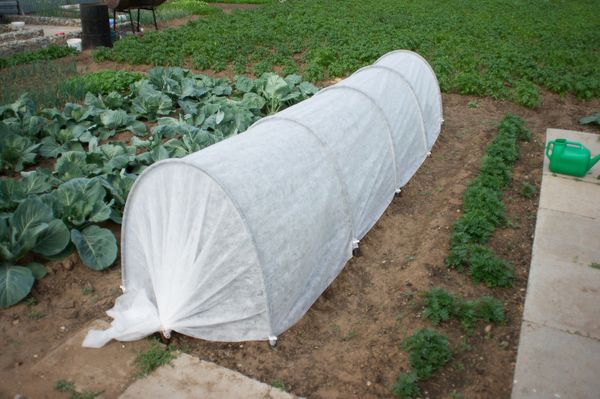
A greenhouse made from arches and covering material has the following positive operating aspects:
- mobile and practical design;
- Simple and easy installation. Such structures do not require a foundation;
- Quick disassembly for winter. When folded, these structures are very compact;
- The model is much cheaper than stationary greenhouses.
The disadvantages here include the following points:
- the covering material is not durable and needs to be replaced frequently;
- strong winds can damage the integrity of the lightweight structure;
- There is no possibility of installing lighting and heating devices inside the greenhouse.
When planning to build such a structure on your property, you need to first find out its design features.
Video: "Build a Huge Greenhouse Yourself"
This video will show you how to build a large, budget-friendly greenhouse yourself.
Design Features
Greenhouses of this type have an arched structure, each segment of which is an arch. A non-woven covering material is stretched between the arches. The height of these structures can range from 0.5 to 1.3 meters. This variable height makes them suitable for growing a variety of vegetable crops. The width of the arches themselves varies from 0.6 to 1.2 meters. The length can be customized. This determines the number of arches used during assembly. The most common lengths of these greenhouses are 4.6 and 8 meters.
Existing models
Today, greenhouses made from arches come in a variety of designs. Let's take a closer look at the most popular options.
Greenhouse "Dayas"
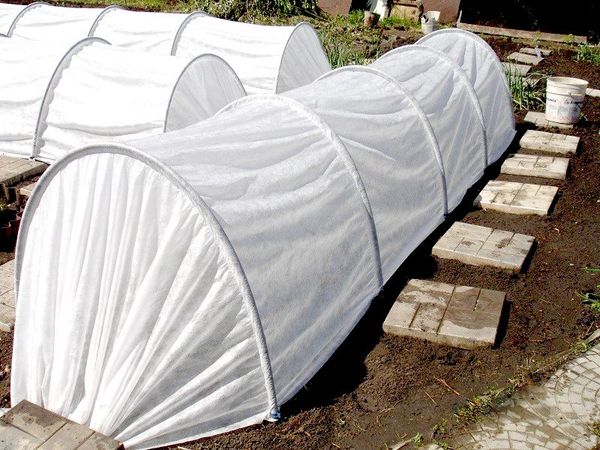
The structure is based on a plastic arch. For ease of installation, the frame elements are equipped with special 20-cm-long pegs. The covering material is secured inside the greenhouse. Plastic clips are included with the greenhouse for this purpose.
The structure is 2 meters long and has a 20 mm cross-section. Thanks to its sectional design, Dayas can be 4 to 6 meters long. Its width and height remain constant (1.2 meters and 0.7 meters, respectively).
Greenhouse "Agronom"
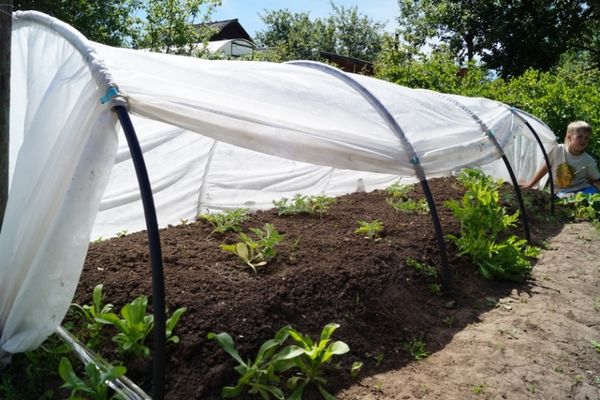
This model shares many design features with the "Dayas." It also uses 20mm plastic pipes and 20cm pegs as the frame.
When finished, the "Agronom" is approximately 0.7–0.9 m high. This height depends on the arch type. The length can vary from 4 to 6 m. Agrotex 42 fabric is used as the covering material.
Greenhouse "Snowdrop"
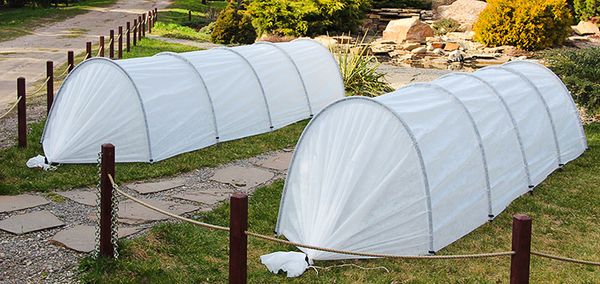
A very popular model. It is available in four sizes: 8, 6, 4, and 3 m. The frame is made of 20 mm PVC tubing. A covering material called "SUF-42" or spunbond is stretched between the arches. Its main feature is its high resistance to ultraviolet radiation.
Greenhouse "Quickly ripened"
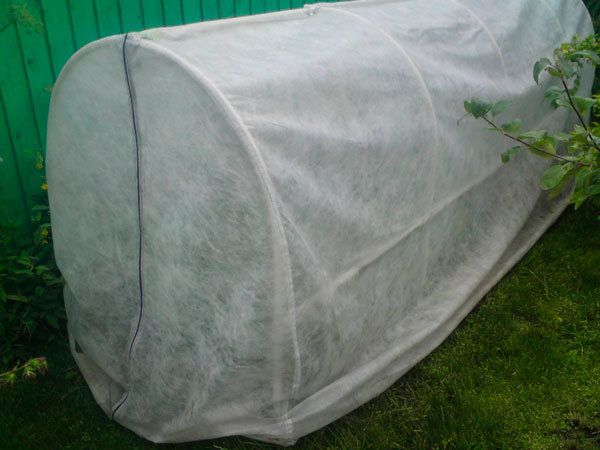
This model offers a wide variety of arches. The arches are made of metal and coated with PVC. The arches are connected with special crossbars. The covering material is secured with pegs and clamps. The width, height, and length of the structure depend on the model type. Typically, they are 1.0–1.1 m, 1.2–1.6 m, 3 m, and 5 m, respectively.
Greenhouse "Cucumber"
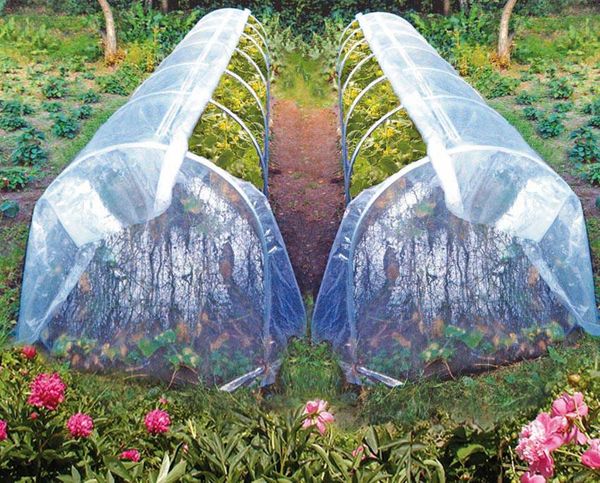
The frame of this model is assembled from pipes (measuring 1 x 1.1 x 5 m) and galvanized profile. Either film or polycarbonate can be used as a cover. All parts necessary for assembly are included.
Greenhouse "Hawk"
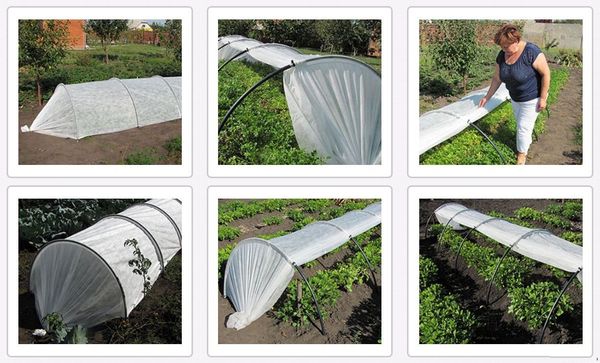
This model's greenhouse arches are made from HDPE pipes, 1.2 meters wide and 6 meters long. During assembly, the arches are bent to the required radius. They are then driven into the ground and covered with film or polycarbonate. The "Yastreb" is used for growing vegetables and heat-loving crops.
Types of arches and choice of material
Arches for this type of greenhouse can be made from the following materials:
- Metal. These greenhouse arches are highly durable. They're easy to work with and resistant to adverse environmental factors. Metal arches are the most widely produced. Therefore, finding these types of arched greenhouse structural elements is easy. The disadvantages include high cost, significant weight, and susceptibility to corrosion.
- Plastic. To become resistant to external factors, arches need to be painted with special paints. Such greenhouse arches are inexpensive and durable;
- Wooden. The advantages of this material include strength, reliability, and eco-friendliness. The main disadvantage is that the wooden frame elements must be treated with an antiseptic before installation.
It's worth noting that you can make a DIY greenhouse from arches using materials you have on hand (for example, an old garden hose). Anything that can be used to make greenhouse arches is acceptable.
Selecting a covering material
The selected arches are covered with material. The following products can be used as the outer covering in such structures:
- Films of varying thickness. They have the lowest strength;
- reinforced film;
- Polycarbonate. The most durable and practical to use;
- Any non-woven material. It's important to note that sewing a greenhouse cover isn't possible, as it would compromise the integrity of the entire structure.
In this case, your choice should be made based on the positive and negative aspects of using one or another external coating.
How to build a greenhouse from arcs yourself
You can quickly and efficiently build a greenhouse with covering material using the following diagram:
- Work should begin with creating a drawing. At this stage, it's necessary to calculate the number of stiffening ribs and the spacing between arches. These parameters are calculated based on the dimensions of the future greenhouse, as well as the vegetable crops grown in it. It's especially important to determine the optimal height and length of the structure;
- We make greenhouse arches ourselves. As noted above, they can be made from scrap materials (for example, by cutting a barrel into an arch, knocking together one from wooden planks, etc.). When assembling this type of structure yourself, remember to be skilled enough to create arches of uniform size. You can also purchase a ready-made kit. Each model will have its own name, making it easier to choose.
- It's best to make arches from water pipes (20 mm cross-section). This will create a practical and durable frame;
- Once the arches are finished, you can begin installing them. The distance between the arches should be uniform. To ensure the frame elements are strong, they should be firmly embedded in the ground. To ensure stability and prevent damage to the garden beds if they fall, the arches can be further supported with internal braces.
This is how the frame for the future greenhouse is constructed. Once the structure's strength has been tested, the covering material can be installed. It should be secured to the arches using special clips or clamps. It's important that the covering material isn't damaged during installation. Otherwise, the structure won't be airtight, which will negatively impact the plants growing within.
First, the outer covering is attached to the arches. It's important to note that the covering should be extra (40-50 cm). This extra space must be left on each side of the greenhouse. After this, it is secured to the ground. In this case, bricks or plastic bottles filled with water can be used as anchors. A wooden plank can be nailed to the edge of the material. This will make the structure easier and more convenient to use.
If the arches were covered with film, it must be replaced periodically due to its low durability. This is usually done each season when the structure is installed after winter.
As we can see, greenhouses made from arches have their advantages and disadvantages. However, they are considered the easiest and fastest to build, making this type of greenhouse the most popular among gardeners in our country.