
How a Beginning Farmer Can Build a Wooden Greenhouse
Content
Pros and cons of wooden greenhouses
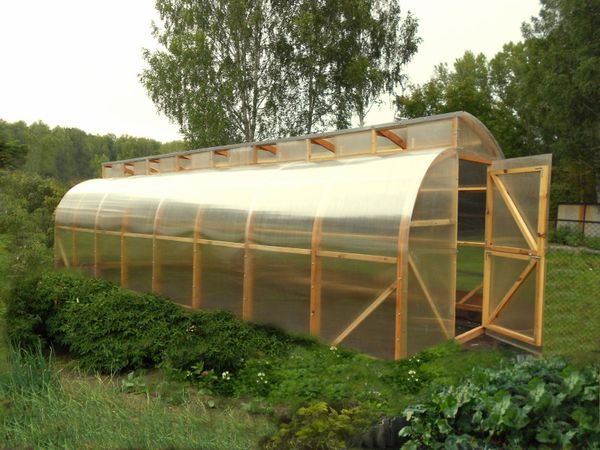
A wooden greenhouse has a number of advantages that make it more popular than a metal or plastic greenhouse. The advantages of wood include:
- low cost – wood is relatively cheap compared to other materials and is easy to obtain;
- ease of working with the material – to build a structure from wooden beams, no special tools are required, other than those that are already available in every household;
- easy repair – greenhouses made of timber are easy to repair if any part is damaged;
- eco-friendliness – wood is a natural material that can be recycled;
- variability – the ability to create a structure of any size and shape;
- lightness of the frame – this property allows you to install the structure yourself;
- ease of maintenance – the wood does not require any special maintenance measures;
- the ability to customize your greenhouse by adding shelves, lighting, a thermal drive, and other equipment.
However, a wooden frame also has some disadvantages. Firstly, wood is a less durable building material than metal. Secondly, wood requires special treatment both initially and during subsequent use. However, the most significant disadvantage is the material's flammability, which is why using a greenhouse requires strict adherence to fire safety regulations.
Video: Building a Greenhouse from Wood and Film
In this video, a specialist will demonstrate a master class on building a greenhouse from wood and film.
Review of popular models
A do-it-yourself greenhouse made from wooden beams can be built using various technologies. You choose the building shape and technology based on your needs and skills.
The most popular and simple wooden greenhouse to build yourself is the standard design. This common construction option features a gable roof, polycarbonate walls, and a concrete foundation.
Another type of greenhouse resembles standard greenhouses, but has a different roof shape. This roof is constructed using Mittlider's technique, which, to improve ventilation, proposed creating slopes of varying heights, with vents installed between them to allow air flow.
You can also build a wooden greenhouse yourself using a third method, which differs from the first two in the shape of the roof—in this case, it's straight. The instructions for building this type of roof recommend using perforated film instead of polycarbonate, which will allow moisture to pass through inside the building, thereby preventing the roof from sagging due to accumulated snow or rain.
A portable greenhouse can be a successful project for a large plot with multiple crops. To strengthen such a structure, a sand and gravel foundation is needed rather than a concrete one, as this type of foundation is easily excavated for dismantling. Concrete blocks installed around the greenhouse's corner beams provide additional reinforcement.
Greenhouse design
This step-by-step guide to building wooden greenhouses suggests starting the design process with a drawing and adjusting the structure to the required dimensions. Once you've decided on the technology, all that's left to do is determine the shape and size of the structure.
As for the shape, it can be anything. In addition to the aforementioned gable-roof structures, greenhouses with oval and round roofs are also possible. A flat roof was also mentioned, but it must be installed with care.
When building a greenhouse, it's important to choose the optimal dimensions for your garden plot. Most commonly, the size is 5–6 m long and 2.5–3 m wide. This configuration allows for up to three beds inside, with aisles approximately 40 cm wide. As for the height of the building, it should be comfortable for human height—180–200 cm.
Remember that building too tall or too wide will make it more difficult to heat, ventilate, and repair the space. Therefore, choose the maximum dimensions while minimizing your needs.
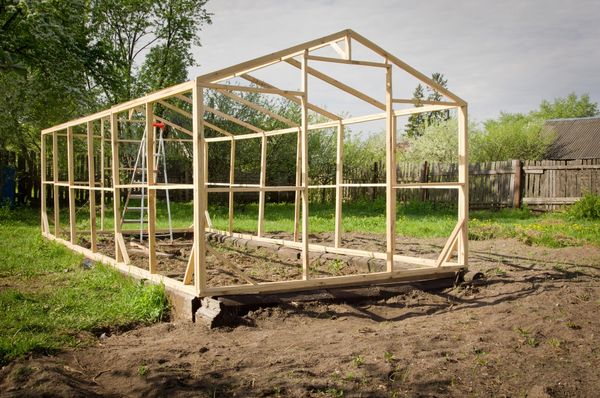
As for the dimensions of the boards and beams, they are as follows (the length is determined based on the height and width of the building):
- beams of foundations and posts – 10x10 cm;
- intermediate beams – 10x5 cm;
- rafter beams – 5x5 cm;
- lathing boards – 10x3 cm.
Site preparation and foundation
When building a wooden greenhouse, the location is crucial. A well-lit, flat area is ideal. It's best to locate the greenhouse away from tall trees or other buildings that would shade the beds on any side.
Also, try to install the structure in an area close to water sources—man-made or natural. However, avoid building the greenhouse in low-lying areas where water drains, as this can lead to constant flooding of the beds.
Once the site has been selected, a strip foundation must be constructed. To do this, a trench 40–60 cm deep is dug at the markings for the future structure. The bottom of the foundation is reinforced with a sand cushion (approximately 20 cm), then horizontal reinforcement bars are installed around the perimeter of the foundation and filled with concrete. Metal corners are also poured into the concrete, to which a wooden box-like foundation is attached.
Necessary materials
When building a homemade greenhouse, you need to decide on the materials and tools. Since we're building a wooden greenhouse ourselves, oak, larch, or pine are the best woods to use.
As for thermal insulation, glass, polycarbonate, or film can be used as a base for the walls. Roofing felt may also be needed.
The foundation will require concrete, brick, and a sand-gravel mixture. Rebar will be used for reinforcement.
When building a greenhouse yourself, you'll need to treat the wood against moisture and fungus. This can be done with preservatives, bitumen, and paint.
To secure the joints between the beams, a sealant is used.
Assembling the frame
The frame assembly should be carried out in calm weather. Installation begins with the vertical base beams, and the angles are constantly adjusted using a level. Brackets and screws are used as fasteners.
Continue installing the frame by installing vertical posts spaced 1 meter apart. The resulting frame is then attached to the base frame, after which the horizontal boards are installed and the door location is selected.
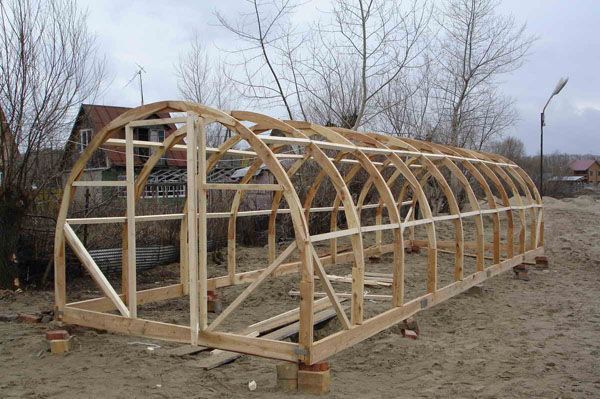
The frame installation is completed by creating a truss around the top of the structure, after which the roof can be installed. The final stage is sheathing and interior fittings.
Sheathing and interior design
The final step involves covering the walls with the chosen material. Polycarbonate and film are installed on the exterior of the walls. Some gardeners prefer to attach the film inside as well, but this reduces the amount of light in the room. The film is attached with nails, and the polycarbonate sheets are secured with screws and rubber washers.
After the walls are sheathed, the edges and joints are sealed with sealant. Interior fittings are complemented (if needed) with a thermal actuator, lighting, shelves and drawers for household items, and a watering and spraying system.