
Which of the 4 main types of foundation should I install for a greenhouse?
Content
The Importance of the Foundation
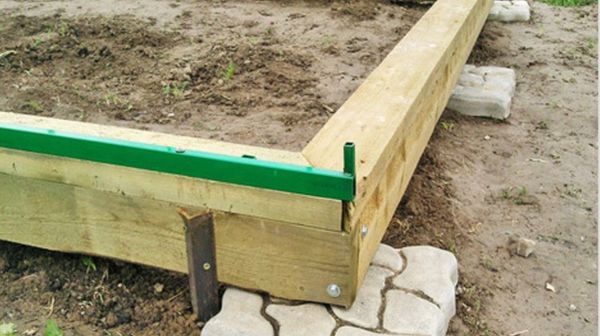
Why do you need a foundation for a polycarbonate greenhouse? A strong and properly poured foundation increases the stability of the entire structure. However, it's worth noting that not all greenhouses require such a component. Ground-level arched greenhouses don't require a foundation. Portable structures made of polypropylene pipes and metal profiles also don't require a foundation. A permanent, year-round greenhouse, however, requires a solid foundation for a number of reasons:
- protection of frame elements from the harmful effects of moisture that accumulates in the soil;
- making the greenhouse heavier, which minimizes the risk of it being blown away by strong gusts of wind;
- protecting the interior of the greenhouse from the penetration of parasites living in the soil (larvae of the May beetle, mole cricket, etc.), moles and weeds;
- the possibility of using the structure in winter.
In addition, a high-quality foundation, which has been additionally insulated, prevents heat loss and increases the energy efficiency of the entire greenhouse. Remember that a warm greenhouse is the key to the rapid ripening of vegetables in it.
Video: "Pouring the Foundation for a Greenhouse"
This video will show you how to pour a foundation for a greenhouse.
Which material to choose?
The foundation for a greenhouse made of glass/film/polycarbonate can be made from the following materials:
- Wood. It's easy to work with, but it's characterized by low strength. Therefore, it's best used for lightweight construction;
- Concrete. It is reliable and durable, and can withstand moisture. A concrete-brick foundation is often used. However, it is complex to build and requires considerable capital investment;
- Blocks. They are easy to install and inexpensive. They have good resistance to external factors. The downside of blocks is that they are weak and do not retain heat well.
- Pillars. This material is strong, reliable, and durable. However, installing such a foundation is complex. Furthermore, the base must have a rigid frame and an insulated base.
- Piles. They are easy to install and move. Their disadvantages are similar to those of pillars;
- Slabs. They are strong and durable, creating a stable structure on any type of soil. Slabs are excellent thermal insulators. Disadvantages include expensive installation, significant weight, and the need for additional insulation. In this case, drainage must also be provided in the greenhouse and the microclimate must be monitored.
Each gardener decides for themselves which specific foundation to choose for a greenhouse, based on their financial capabilities.
Main types and installation instructions
Today, there are four types of greenhouse foundations available for use in gardens and vegetable plots. Each foundation has its own construction requirements, which we'll discuss below.
Ribbon
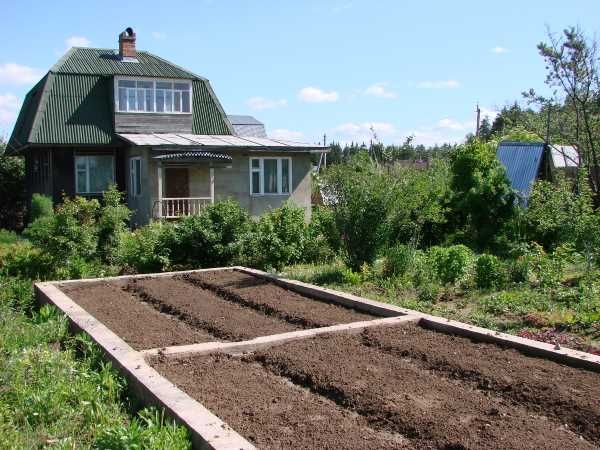
Strip foundations are the most common type of foundation. The key to success lies in properly pouring the foundation. This type of foundation is built in three ways:
- shallow. Laid on solid soil after the top layer has been removed;
- recessed. The required installation depth is no more than 70–80 cm. Groundwater should be located much deeper;
- Deepened. The minimum depth is 30 cm from the ground freezing level. The optimal depth is 70 cm.
A strip foundation can be made from cinder blocks, concrete blocks, regular bricks, rebar, and cement. Crushed stone, clay, rocks, etc. can also be used.
The greenhouse foundation should be constructed with the height exceeding the width of the structure's cross-section. A 2:1 ratio should be maintained.
After construction, the foundation must dry. After this, the frame can be erected and prepared for painting and subsequent finishing with polycarbonate (cellular type).
Columnar
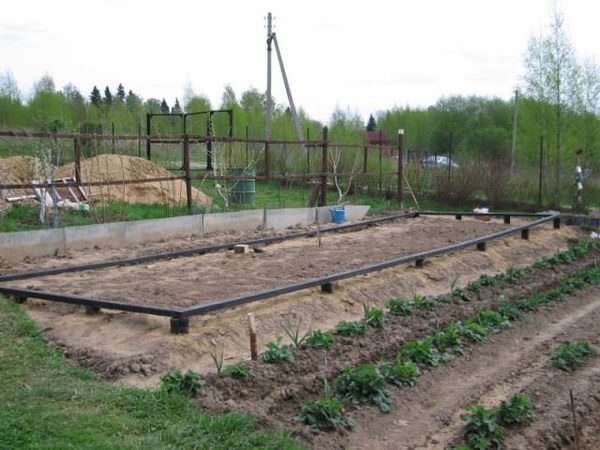
A columnar foundation is an inexpensive, simple, and quick option. Each column should be buried to a depth of up to 80 cm. The distance between columns should be at least 150 cm.
The following materials are suitable for creating a columnar foundation: concrete T-shaped posts, rubble stone or ordinary brick, natural stone, wooden stumps, cinder blocks, metal pipes filled with asbestos-filled cement mortar.
After the posts are erected, it's important to ensure high-quality insulation for the interior. Otherwise, heat will leak and cold air will seep into the greenhouse through the gap at the bottom.
A frame is built on top of the insulated posts and the entire greenhouse structure is erected.
Pile
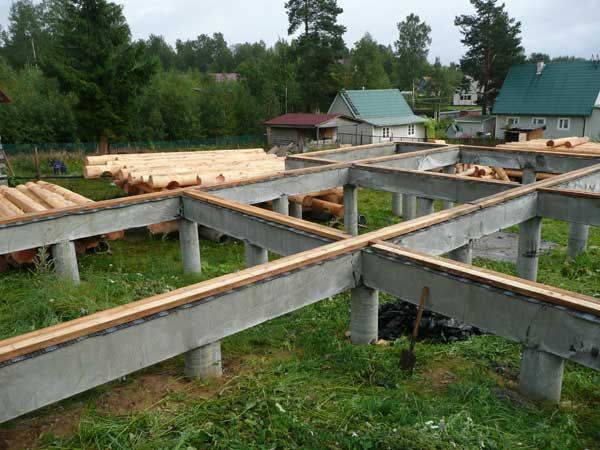
Piles are used to create foundations on marshy ground, as well as on uneven surfaces. Piles are installed at a depth of over 30 cm below the frost line.
Today, pile installation is performed using the following methods:
- Screw-type. In this case, the posts are equipped with special blades. This is done using circular motions performed by a special device (such as a drilling rig), as it's unlikely that a single hand would be able to accomplish the task.
- Driven pile driving. Here, the appropriate equipment is used to drive the pile into the ground, as well as materials (channels, sleepers, profiles, rebar, pipes, etc.) to strengthen the supports.
Greenhouses built on screw piles are much more common. The distance between adjacent supports should be no more than 2 meters. The structure is secured after the foundation cap is poured. This also provides strength to the structure.
Slab
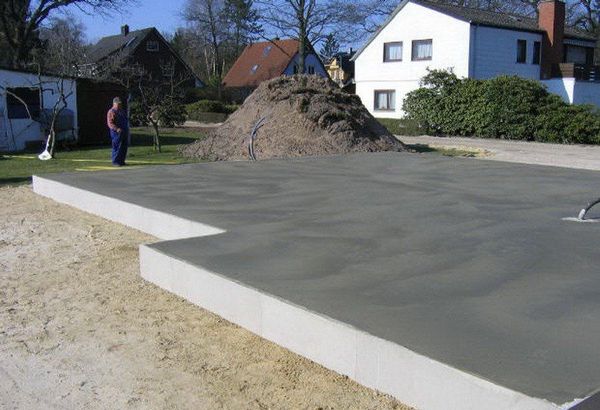
It is advisable to construct a slab foundation in places with a special soil composition (for example, a certain groundwater level, amount of sand, etc.). Such a foundation can be floating on the ground surface or with rigid elements (the concrete strip and monolithic slab form a single structure).
A major advantage of this greenhouse foundation design is that it eliminates the need to enclose the structure around the perimeter. First, a pit (70 cm deep) is dug. The lower foundation is made from a cushion (crushed rock, sand, and geotextile).
There are several options for constructing this type of foundation. The depth of the foundation varies depending on the type. It's best to fill the pit with concrete.
Knowing how to build a foundation for a polycarbonate greenhouse or any other type of finish allows you to easily construct such a structure on your property and grow your own plants.