
Which of the 5 types of covering material should you choose for a greenhouse?
Content
The importance of making the right choice
Greenhouse covering material must be chosen with particular care. Of course, gardeners first consider the foundation of the future structure, determining what material to use to build a sturdy frame, and only then consider the choice of covering fabric. However, this step is no less important, as the quality of the greenhouse cover will largely determine the quantity and growth rate of your vegetable or berry crops.
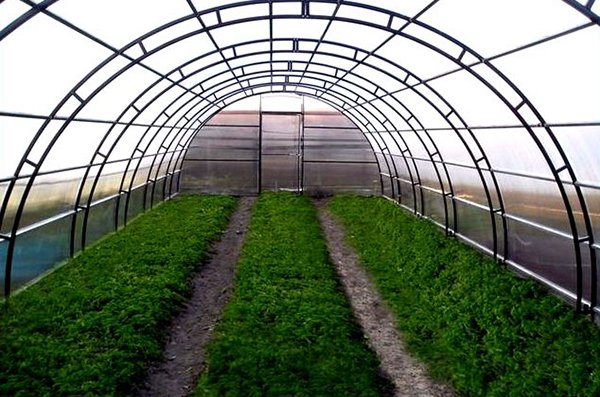
Furthermore, greenhouse fabric will vary in price depending on the materials used in its construction. To ensure that the covering material for your home greenhouse is reliable and perfectly suited to your structure, consider the following characteristics:
- The material's light transmittance. If it's high, plants will be well-saturated with solar energy, and you won't need to provide additional lighting during the spring and summer;
- Durability. Many gardeners primarily invest in building a sturdy foundation and installing the frame. However, the greenhouse cover's ability to withstand mechanical damage is also crucial. Remember that your greenhouse needs a covering material that can withstand low temperatures and extreme weather conditions (strong winds, hail, rain, etc.).
- Thermal insulation. The greenhouse covering material should retain heat within the structure. This will allow you to use radiators or other heating systems sparingly. In fact, you can even eliminate them altogether during the summer.
- Weight and flexibility. The clear advantages of covering material include its ease of installation, flexibility, and moderate weight (otherwise, installation would be more difficult).
Knowing what to cover a greenhouse with will make your structure reliable and allow you to use it for quite a long time.
Now is the time to consider the most common types of greenhouse covering materials and determine which ones are the highest quality. This will help you decide what to cover your greenhouse with.
Video: "Testing Materials for Greenhouses and Hothouses"
In this video, experts will discuss new materials for covering greenhouses and hotbeds.
Film
Russian gardeners began actively using fabric greenhouse covers back in the mid-20th century. They offer numerous advantages and are considered the most cost-effective greenhouse covering option. While they aren't particularly durable, you can replace them almost every year if you wish.
What's most notable about this material is that it retains heat well in the greenhouse and protects plants from precipitation. While this type of covering isn't particularly durable, you can opt for a more durable, reinforced film. This material will last a long time.
Among the key disadvantages of this type of film, the membrane effect is particularly noteworthy. This means that this coating prevents fresh air and moisture from penetrating into the greenhouse. Furthermore, condensation will accumulate on the inside. However, if you're looking for an affordable and accessible covering, film is the best choice.
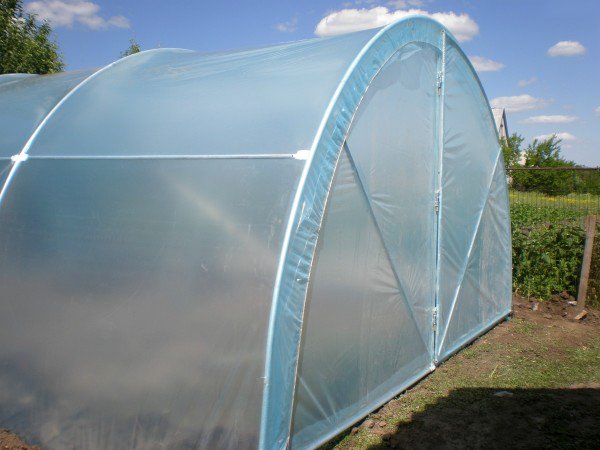
Or just buy a greenhouse with film
Cellular polycarbonate
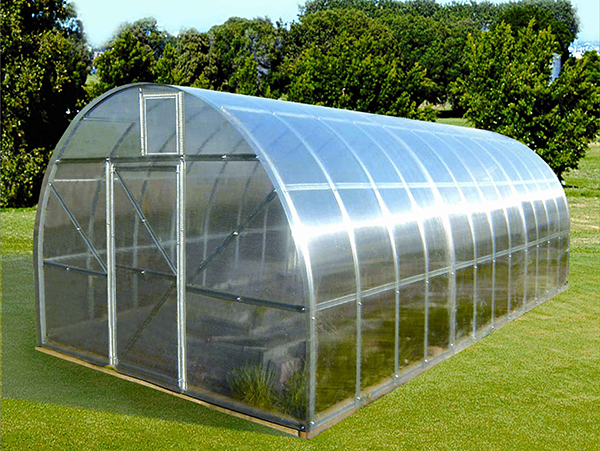
Among the much more expensive materials for home greenhouses, cellular polycarbonate stands out. It combines the key advantages of polyethylene and glass. These include the following characteristics:
- high thermal insulation;
- good light transmittance (up to 84%);
- protecting greenery from exposure to ultraviolet rays;
- resistance to mechanical damage (impacts and atmospheric phenomena).
Covering a greenhouse with polycarbonate is the optimal choice for a gardener. Use 6 mm thick sheets because they can bend. This will give you more flexibility when building your greenhouse. However, this material also has its drawbacks: it's expensive and not the easiest to install.
Glass
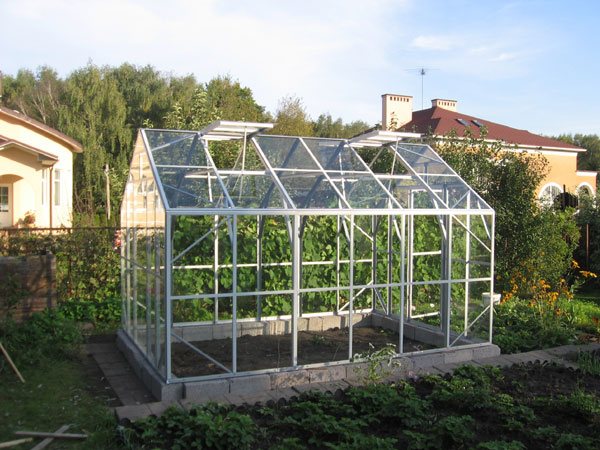
Glass can also be used as a covering for home greenhouses. This is a classic material, but nowadays it is mostly used for covering industrial greenhouses rather than private buildings. The main advantages of glass include its reliability and excellent light transmission.
However, before purchasing it, consider that this type of covering is quite fragile and quite heavy. This makes installation significantly more difficult, so you'll need professional help.
Agrofibre
Non-woven material can also be used to cover a greenhouse. Agrofibre is considered one such material. It contains polymer fibers, making it much more durable than film. Among the most common types of this covering are spunbond, agrotex, agrospan, and others. The main advantages of agrofibre include the following:
- light weight;
- reasonable price;
- creating a diffused lighting effect for greenery;
- easy installation – the material can be sewn together using regular fasteners;
- moisture permeability.
However, there's also a significant drawback. Agrofibre has poor thermal insulation, making it unsuitable for growing herbs and vegetables in winter.
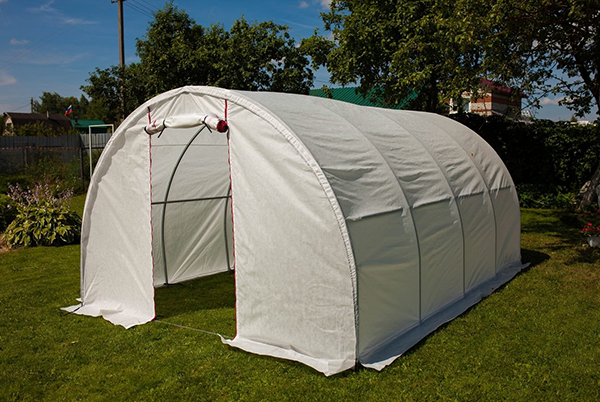
Spunbond
Spunbond stands out among modern greenhouse covers. Like fiber, it is made from polymer fibers. Although Russian gardeners began using this type of cover only recently, its popularity has grown significantly, thanks to the following advantages:
- plants are in optimal light conditions;
- an average level of humidity is maintained in the greenhouse;
- You can water the greens even through the covering;
- spunbond can withstand temperature changes;
- The material does not tear and is considered resistant to chemical reactions.
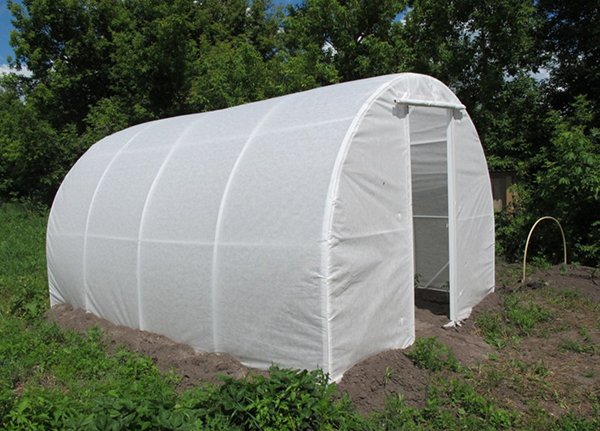
As for the downsides of spunbond, one is its moisture permeability. This means you'll need to cover the greenhouse with polyethylene during rainy seasons.