
Stages of preparation and maintenance of a polycarbonate greenhouse in winter
Content
Autumn preparation
Preparing your greenhouse for winter in the fall is essential, as its future effectiveness depends on it. By taking good care of your structure and learning how to winterize it in advance, you'll not only preserve it until spring, but also be able to grow your own vegetables there for years to come. Every gardener building a greenhouse should thoroughly understand the specifics of this entire process.
Cleaning the greenhouse from plant debris
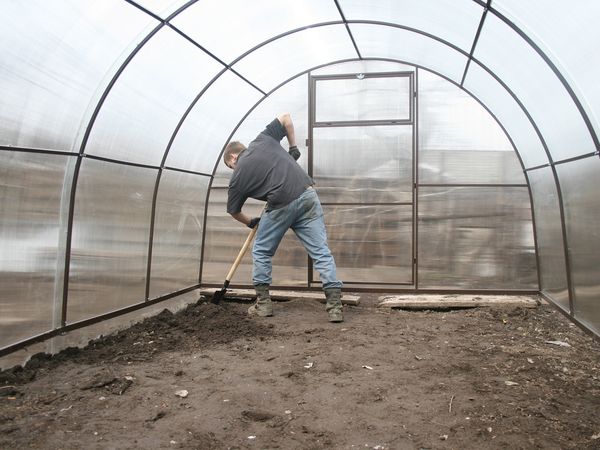
Preparing a polycarbonate greenhouse for winter in the fall should begin with removing excess vegetation. First, remove any plant debris from the greenhouse. Then, clear the structure of any debris, which should simply be disposed of. Bags used to store vegetable or herb sprouts should not be left in the greenhouse. It's also a good idea to remove containers and pots used for rooting seedlings.
What to do with all these plant remains is entirely up to you. You can throw them away or dig a compost pit in your garden and then collect all the weeds there. This way, you'll both properly prepare your greenhouse for winter and stock up on fertilizer for the coming spring season.
Soil cultivation
Proper preparation of a home greenhouse for winter should definitely include soil treatment. Soil treatment in a polycarbonate greenhouse is essential if you want to improve its fertility. The optimal choice for a gardener is to use bactericidal preparations. However, if you don’t want to buy chemicals for processing, there is an alternative method – watering the soil with boiling water.
Fertilizers and green manure
Winter maintenance of a polycarbonate greenhouse is unthinkable without the addition of nutrient mixtures and green manure. Even though you likely enriched the soil with the necessary nutrient mixtures during the growing season, it still becomes depleted by fall. Therefore, the substrate in a home greenhouse will definitely require supplementation with microorganisms and mineral components.
Experienced gardeners know how to prepare a polycarbonate greenhouse for winter. First, add a comprehensive mineral fertilizer to the soil. If desired, enrich the soil with humus, but be careful not to overdo it: over-saturating the soil in the greenhouse can cause plants planted there the following spring to rot.
Additional soil fertilization tips include adding a layer of turf. This is no less beneficial than regular fertilization, as this substrate contains beneficial microorganisms and components. In addition to adding fertilizer to the soil, you can also sow green manure crops (peas, mustard, or rapeseed) in the greenhouse. These also significantly enrich the soil.
Disinfection of structures
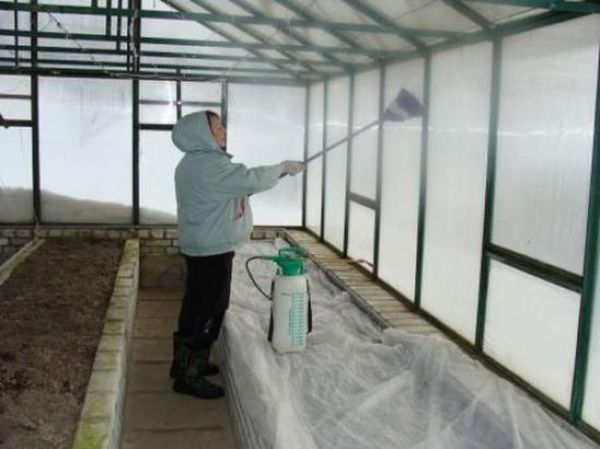
The best way to clean a polycarbonate greenhouse in the fall is with disinfectants. Generally, it's recommended to clean not only the soil but the entire structure by then.
To remove dirt from polycarbonate material, you can safely use regular dishwashing detergent. Apply it to a sponge or soft cloth and then wipe away any dirt and dust from the greenhouse.
After completing the first stage, it's crucial to treat cracks and other hard-to-reach areas of the greenhouse to combat small pests. Dilute your chosen product with water and spray the affected areas with a spray bottle.
Preservation of premises
Preparing a polycarbonate greenhouse for winter is a crucial step for any gardener. It's necessary not only to dig and fertilize the soil, but also to strengthen and clean the frame and its covering. Preserving the structure is equally important.
Proper greenhouse maintenance during winter depends largely on the strength and reliability of the structure. Be sure to check all door hinges and latches, and close the vents tightly. Don't forget to inspect the foundation—if any cracks appear, they need to be repaired as soon as possible, otherwise they will widen over the winter.
Video: "Maintaining a Polycarbonate Greenhouse in Winter"
This video will show you how to care for a polycarbonate greenhouse during winter.
Features of winter care
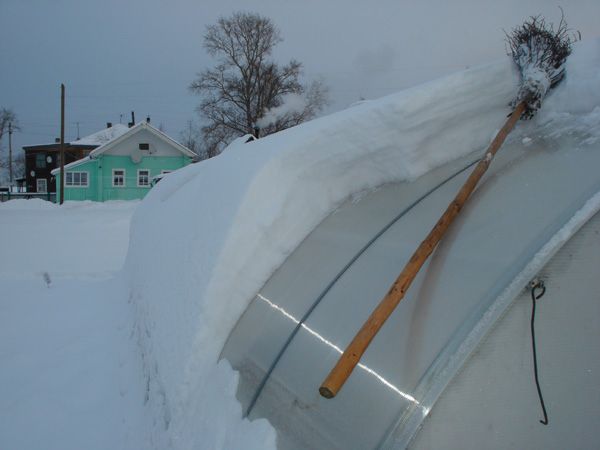
The more thoroughly we prepare our greenhouse for winter, the easier it will be to maintain it later. During winter, snow piles pose a particular threat to your greenhouse, as they can topple the fragile structure. That's why it's important to consider providing adequate support.
It's crucial to place a brick or other sturdy foundation underneath them. This is necessary to prevent the supports from sinking into the ground. Periodically, try to remove snow from the surface of the greenhouse structure. Sometimes it freezes solid; in this case, scraping it off may damage the surface.
Knowing the general rules for autumn cleaning and preparing your greenhouse for the next season will help you keep your structure intact.
What not to do
If you want to use your greenhouse in future years, remember that the following is strictly prohibited:
- move and place the building in autumn/winter near large fences or houses, otherwise it may fall apart;
- wash polycarbonate with aggressive chemicals;
- do not use brushes that are too hard during cleaning.
Prepare your greenhouse properly in the fall. Wash the frame and covering, fertilize the soil, keep the building clean, and by spring, you'll have a structure ready for planting.