
Installation and operation rules for thermal drives for greenhouses
Content
Why are greenhouses ventilated?
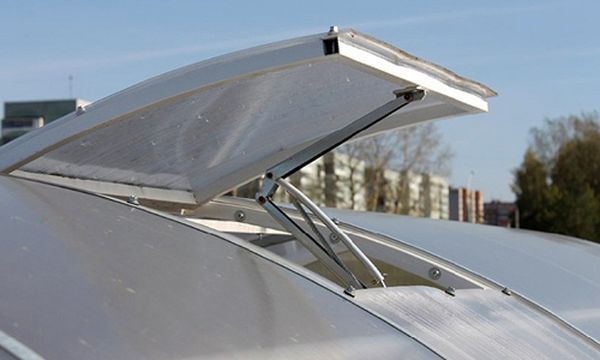
Greenhouse ventilation is essential for the ripening of a high-quality harvest, as plants require access to fresh air and pollinating insects. This procedure prevents excess moisture from accumulating inside the structure and effectively reduces the air temperature. This prevents overheating of crops grown in the greenhouse.
If ventilation is not properly organized, the risk of pathogenic microflora appearing inside the building increases significantly, as high humidity and temperature provide optimal conditions for their reproduction.
Plants need an influx of fresh air to carry out photosynthesis. At high temperatures, the plantings begin to dry out and will soon die.
As we can see, ventilation of a garden greenhouse is the key to a high-quality harvest that will ripen on time.
Video: Installing a Thermal Drive for a Greenhouse
This video will show you how to properly install a thermal actuator in a greenhouse.
General characteristics and operating principle of the thermal drive
The greenhouse ventilation system consists of windows and doors. However, in modernized greenhouses, it includes a thermal actuator. This is a special small device that automatically moves transoms, doors, and vents when a specific air temperature is reached in the greenhouse.
This device allows for automatic ventilation of the room. This ventilation of any greenhouse is carried out without human intervention, allowing the gardener to focus on more important matters. This automatic ventilator operates autonomously, meaning it doesn't require electricity or batteries.
How does this device work? The device has a specific mechanism that operates according to the following scheme:
- it contains a liquid that, when it reaches a certain temperature level, begins to melt and expand;
- it fills a special chamber inside the device;
- As a result, the liquid presses on a special rod, which sets the window or door in motion;
- When the temperature drops, the liquid contracts and the piston retracts. As a result, the door or other opening closes.
For such a device to operate automatically, a system of springs and counterweights is required.
This type of ventilator for a garden greenhouse has the following advantages in use:
- automatic operation without additional energy source;
- high reliability;
- long service life (about 10 years);
- simple and quick installation.
As we can see, using such a device has many positive aspects.
How to install the device
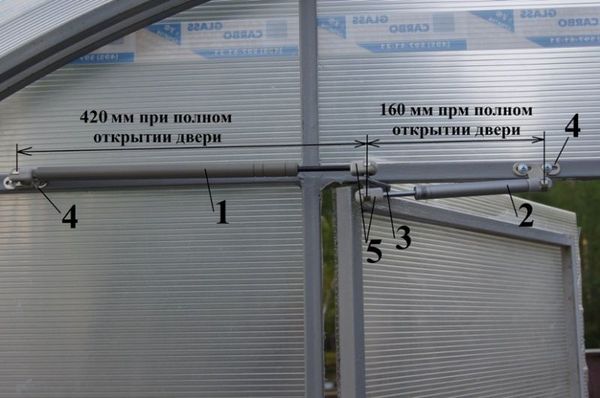
Automatic ventilation for any greenhouse using the drive described above is organized as follows:
- First, you should check how easily (without effort) the doors and windows in the greenhouse open/close.
- Use a marker to mark the location of the bracket on the sash. It should be able to move 8-10 cm during installation. Drill a hole along the marks and install the bracket using two screws.
- Next, install the brackets in the same manner for the other openings. Remember that when fully open, the distance between the centers of the supports should be 44 cm. One bracket should be attached to the wall, and the other to the frame. The drive components should not rub against the door frame or window frame.
- Next, we attach the clamps to the gas spring. After that, we secure the actuator (the longest part). It is installed on the side opposite the opening being opened. The chrome rod should be facing downward. Before installing, the gas spring should be placed in the refrigerator to allow it to shrink.
- The ball joints on the bracket must be secured with clamps. These are found on the gas spring and the thermal actuator.
All that remains is to check the functionality of the installed device.
How to make it yourself
These days, it's quite easy to set up a DIY greenhouse ventilation system using any type of shock absorber. There are several ways to make a thermal actuator for any greenhouse. Let's look at three of the most popular options for making this type of device.
From the top hat of an office chair
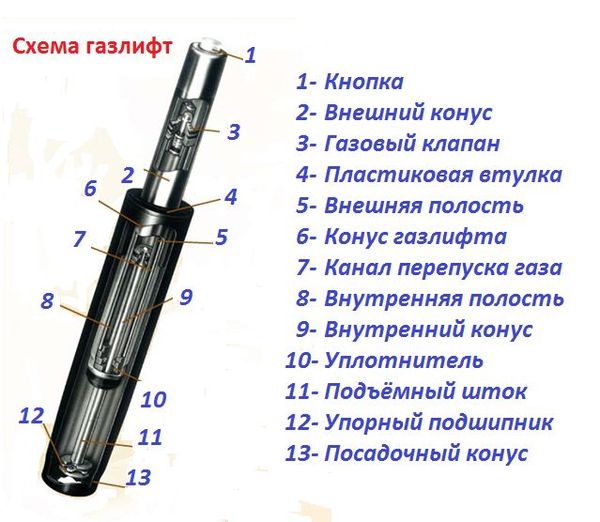
Here you'll need a cylinder taken from an office chair. It has a steel rod on one end and a plastic rod on the other.
The end of the cylinder with the plastic rod should be clamped in a vice and pulled out. A metal pin will be visible inside. Clamp the 8-millimeter rod in a vice and pull it out. It should protrude 6 cm. Place the cylinder on this rod. This relieves the pressure exerted when pressed.
Next, we cut off the cylinder with an angle grinder and press out the steel piston rod. Be careful not to damage the cylinder seal or the ground surface. Then, thread the piston rod. The seals are removed, and the sleeve is returned to the cylinder. The piston rings must be removed from the aluminum piston. All components are washed in gasoline to remove any metal shavings from their surfaces.
From a gas shock absorber
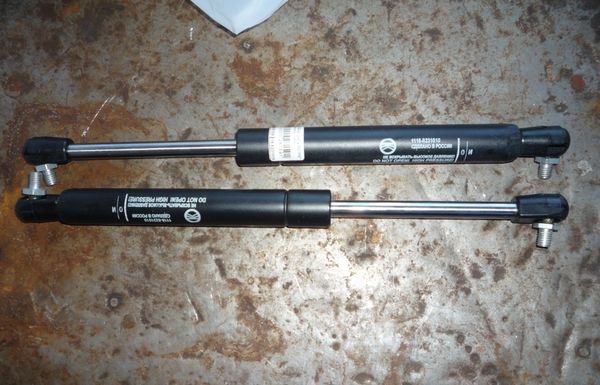
Many people make their own thermal actuator for greenhouses from a gas shock absorber as follows:
- A 1-meter-long metal pipe is threaded. Then, it is connected to a tee and capped at the ends.
- The shock absorber stud is removed.
- We drill a hole in the brake hose bolt and plug it. We connect them to the tee.
- We pour oil into the metal tube. We secure the piston rod at the bottom and release the air from the prepared shock absorber. We replace the plug by hand.
That's it, the system is ready.
From a hydraulic cylinder
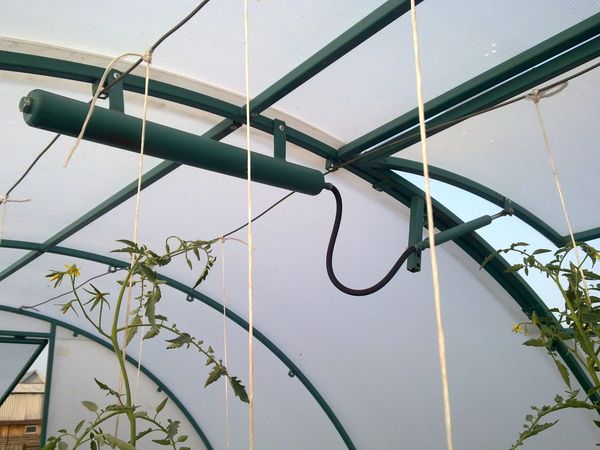
Here the work is done as follows:
- A hole is made in the hydraulic cylinder body and gas is released.
- Then a 10x1.25 thread is made.
- We connect the brake hose to the hole and secure it with a bolt.
- Then the receiver is made. It is clamped by a lathe operator.
- Air is removed from the system.
Once you're done, you'll have a homemade ventilator. The key is to assemble your device correctly and install it on the openings and frames.
How to care for and extend service life
To ensure a long service life for your homemade thermal actuator, follow these rules:
- it needs to be lubricated with oil every year;
- Frequent disassemblies are not recommended;
- during the cold season it is removed from the openings, as frost can damage it;
- the thermal closer must not be fixed in the closed position;
- openings and frames must not have locks, latches, etc.;
- It is prohibited to open a door/window with such a device using significant force.
As you can see, you can build an automated greenhouse ventilator yourself, allowing you to upgrade your existing greenhouse without breaking the bank.