
Requirements for the quantity and quality of greenhouse equipment
Content
The role of equipment
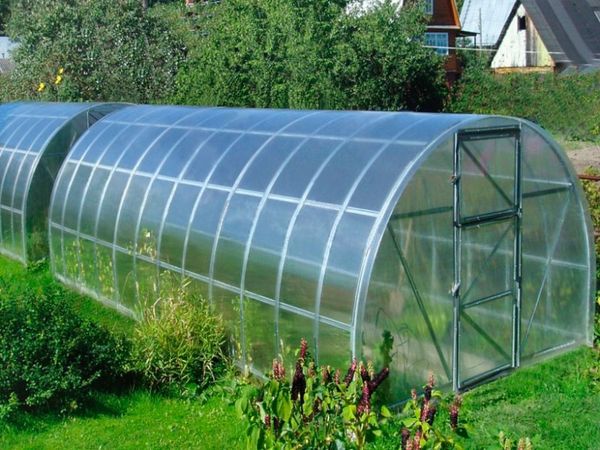
Today, the market offers a wide variety of greenhouse accessories that can significantly simplify gardening. The role of all equipment installed inside greenhouses boils down to the following:
- maintaining an optimal temperature for plants inside the structure;
- Effective ventilation of the room to prevent sudden increases in humidity and temperature. Heat and high humidity create a greenhouse effect, which is ideal for the development of diseases and the appearance of insect pests;
- timely watering of plantings;
- automation of some aspects of plant care (for example, an automatic watering system or opening windows for ventilation).
As a result, with full and high-quality technical equipment in a greenhouse, human work in caring for the grown plants will be reduced to a minimum. As a result, gardeners can focus on other important matters: weeding, choosing the best varieties, fertilizing plants, etc.
Video: "Automatic Ventilation and Automatic Watering in a Greenhouse"
In this video, an expert shares his impressions of automatic ventilation and automatic watering in a greenhouse.
Thermoregulation devices
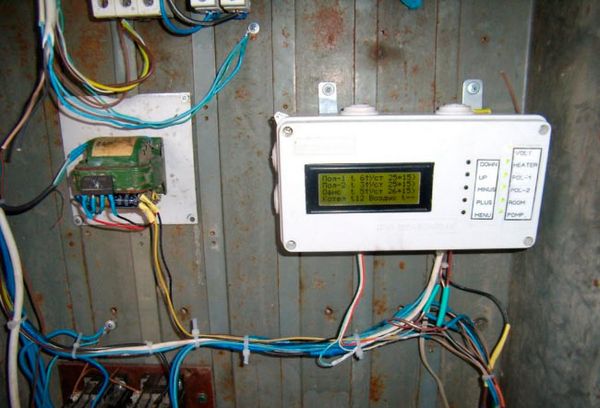
Thermostats, special climate control systems for greenhouses and hothouses, are used to regulate temperature. Currently, there are three main types of this type of equipment:
- Electronic. It is equipped with a liquid crystal display that displays information about the room temperature;
- Touch-sensitive climate control unit. Allows you to set a specific operating program for more effective temperature control at a specific time of day;
- Mechanical units. These are the simplest devices that allow you to monitor soil temperature. They allow you to set a temperature once, which can be easily adjusted later. An excellent choice for small greenhouses.
Thermoregulation devices can be combined with a greenhouse heating system. This will automate the process of maintaining the desired temperature, while reducing heating costs during the cold season.
Equipment for organizing lighting
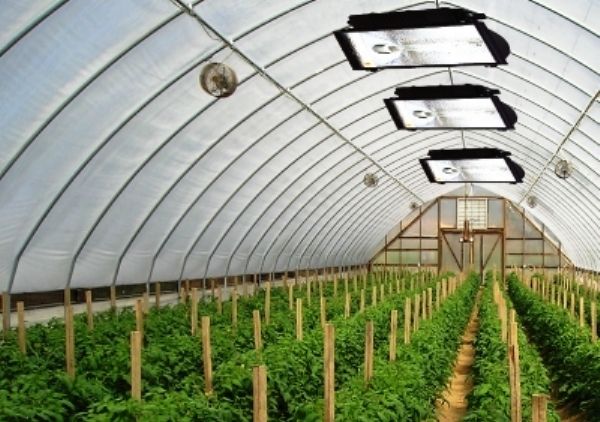
To ensure a high-quality harvest, plants require additional lighting. Therefore, lighting equipment is installed in greenhouses made of polycarbonate or any other material. Specialized phytolamps can be used, or you can create your own lighting with standard lamps. However, installing these lamps requires specialized greenhouse fittings. It's worth noting that the fittings are selected specifically for each type of lamp.
Lamps are installed directly above the beds to ensure the plants receive the required level of illumination. The following types of bulbs can be used as light sources:
- Fluorescent lamps. They are durable and inexpensive. The downside is insufficient heat output;
- High-pressure sodium light sources. Characterized by excellent energy efficiency and good light output, they are capable of creating a monochromatic yellow-orange light field, which is beneficial for the development of greenhouse crops;
- Metal halide lamps. These are an ideal option because they are inexpensive and produce a light that closely matches sunlight;
- LED products are expensive, so their use in greenhouses is considered impractical.
Incandescent lamps should not be used, as they emit infrared radiation, which is harmful to seedlings. High-pressure mercury vapor lamps are also unsuitable.
Watering and irrigation equipment
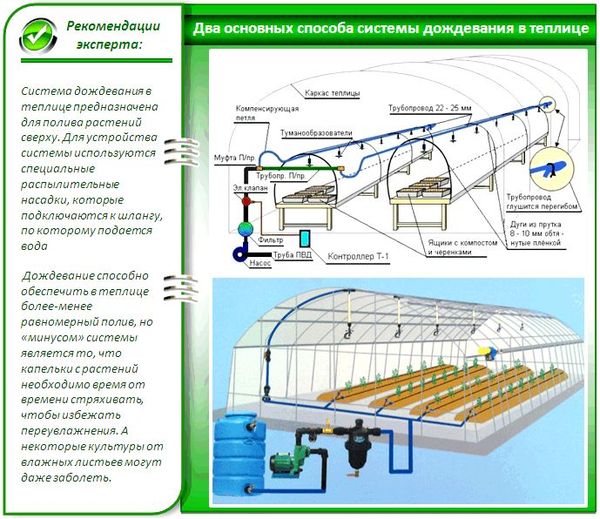
Today, greenhouses can be equipped not only with heating devices, maintaining optimal temperature conditions and lighting, but also with irrigation/watering systems.
The choice of irrigation system depends on the type of soil used to grow the plants. If the substrate is coconut coir with additional components, then a sprinkler system is suitable. When planting seedlings in regular soil, drip irrigation is best.
The system itself comes in two types:
- Mechanical (drip) irrigation. This requires a barrel filled with water and a system of pipes to be installed in the room.
- Automatic. It will cost several times more than a manual system. The system automatically delivers water according to a pre-set schedule.
Each gardener decides for themselves which irrigation method to choose. It's important to note that the irrigation system cannot be used to apply liquid mineral or organic fertilizers. Otherwise, it may become clogged. Fertilizers are best applied using a watering can.
Ventilation
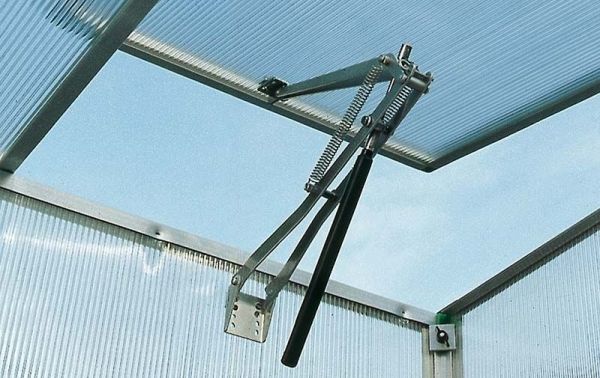
A good ventilation system is essential for efficient cooling of the room and removal of excess moisture.
For full air exchange, it is sufficient to have one entrance door and a couple of vents on the roof or at the ends of the building.
If the greenhouse is large, an additional ventilation system is necessary. By purchasing special equipment, the ventilation process can be automated. The vents will open when the temperature inside the structure reaches a certain level.
As we can see, greenhouse equipment is diverse. To ensure maximum efficiency in growing crops within such a structure, the technical equipment must include all of the above-mentioned installations and devices.