
How to install drip and automatic irrigation in a greenhouse
Content
Features of drip irrigation
A drip irrigation system for a greenhouse is the ideal choice for any modern gardener. By installing one in your home greenhouse, you'll provide the best possible care for your greenery and significantly accelerate its growth. This system delivers water in small amounts, directly to the plant's roots. This allows for more efficient water use and directs it to the precise area of the soil where the plants absorb nutrients and vital moisture.
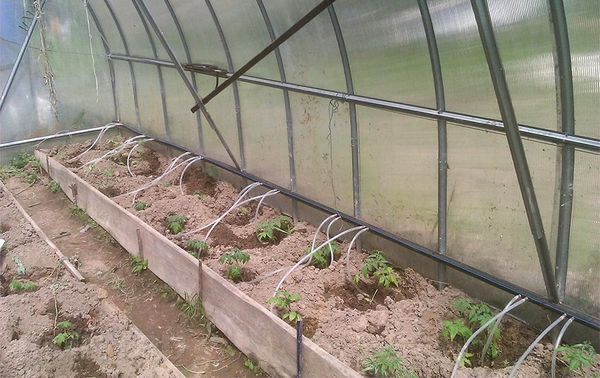
Drip irrigation in a greenhouse can be either surface-based or subsurface. Decide immediately how this system should function in your specific greenhouse: will water simply fall on the top layer of soil or will it flow directly to the plant roots?
Micro-drip irrigation in a greenhouse can also differ depending on the type of operation. Such systems can be either forced or gravity-fed. For the former, a special pump is installed to control the water supply. For the latter, the gardener installs a faucet or digs a well.
For those wishing to install a gravity-fed irrigation system in a home greenhouse, another key point is important: to ensure the pressure reaches at least two atmospheres, a pressure reducer must be installed in addition to the pump. This device regulates water pressure. This ensures the system itself operates efficiently and continuously.
Video: "DIY Automatic Watering System for a Greenhouse"
This video will show you how to set up automatic watering in your greenhouse.
Automatic watering
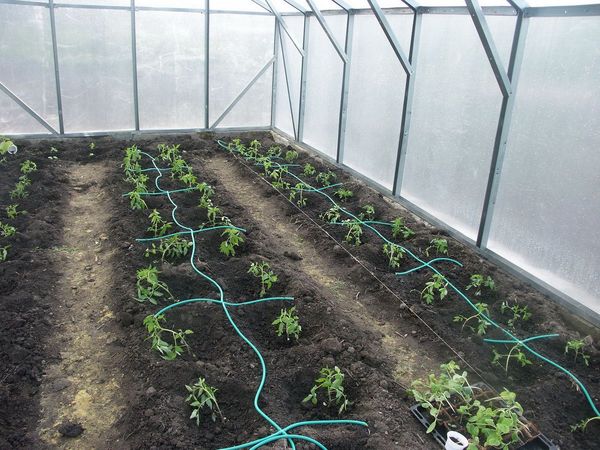
It's great if a gardener can independently operate drip irrigation equipment. However, it's not uncommon for them to only visit their own garden plot temporarily, unable to care for their greenhouses themselves. In this situation, the best solution is to install an automatic irrigation system in the greenhouse, which will operate without any intervention on your part.
When installing such a unit, you should pay attention to the main pipe, creating optimal pressure inside it. This way, water will flow to your greenery in large volumes at specific times, with the intervals you set yourself.
Overview of irrigation systems
Greenhouse irrigation systems can last for quite a long time if properly installed. However, before designing such a system, research the most common units installed by gardeners to ensure continuous soil moisture. This will help you understand what additional features you need to add to your greenhouse.
Drip irrigation "Beetle"
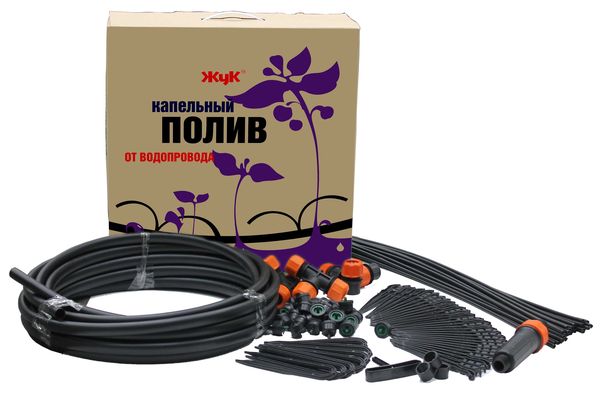
A DIY drip irrigation system for a greenhouse is a practical and reliable system. If you want to create an optimal microclimate in your greenhouse without constantly moistening the substrate, the "Zhuk" drip irrigation system is sure to meet your expectations. It's quite functional and inexpensive.
Before purchasing such a unit, consider that it comes in two different configurations: "Greenhouse" and "Hothouse." The assembly principles of these systems, as well as the area they cover, are roughly the same, but in the former case, water is supplied either from the tap or from a main tank.
Automatic system "AquaDusya"
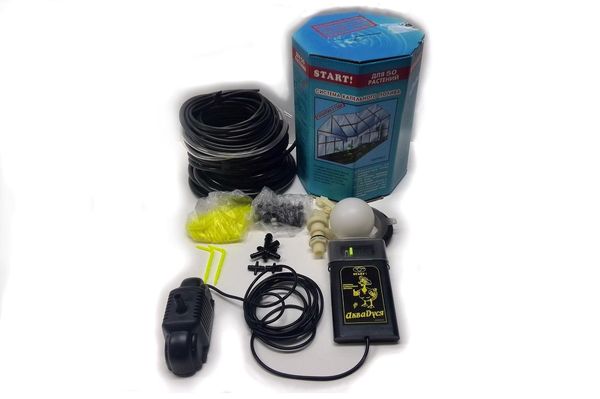
The AquaDusya greenhouse substrate irrigation kit is designed to water 50–60 plants, but its coverage area can be slightly increased if needed. This unit is manufactured by a Belarusian company. This system can be controlled manually, semiautomatically, or automatically.
Installation of drip irrigation
Installing a drip irrigation system for a greenhouse using a large barrel or professional equipment isn't as difficult as it might seem at first glance. Study the instructions, consult with experts, and get started! The main thing is to test the performance of your unit after installation.
The system itself consists of tubes containing special sleeves that allow for regulating the water flow. These are connected to each other to create a main line. This system is then connected to a water supply or a large water tank.
It is recommended to equip drip irrigation with additional devices – filters that will purify the water supplied to the plants.
How to make it yourself
Even a beginner can set up a practical drip irrigation system in a greenhouse. The most important thing is to study the entire process step by step in theory. This way, you won't encounter any unnecessary difficulties in practice. Let's take a closer look at what this multi-layered process involves.
Scheme
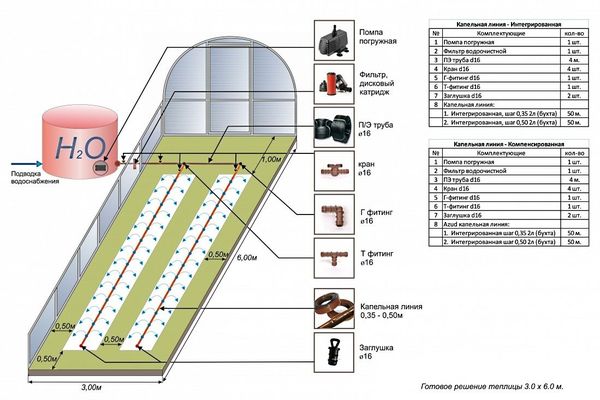
Before constructing irrigation equipment for your greenhouse, start creating drawings. First, determine the operating principle of your future unit. Then, draw a schematic of all the components. This will help you understand the features of your chosen system and clearly identify the tools and materials you'll need.
Materials
A hydroponic system includes a water container (such as a barrel) or a water supply (depending on where the water will be supplied). You will also need the following tools:
- tape measure for taking measurements;
- self-tapping screws and pipe cutters;
- aluminum staples;
- adjustable wrenches;
- plug;
- special scissors for cutting plastic pipes.
All this is enough to assemble a simple-to-use structure. If you want to add some moisture to the unit, you'll need more materials.
Instructions
A pumping station is connected to the water tank. A separate valve is then installed. The irrigation system should be equipped with a hydrocyclone—a filter that removes sand and other small particles from the water. Next, a controller and other filters must be installed. After they are installed and the valves are secured, the main line is installed. Finally, drippers must be added.
Automation
Hydroponics will operate automatically if you add a dedicated controller to your greenhouse setup. This is essential if you want to set the desired irrigation schedules and intervals. With the controller, you can transform drip irrigation into a smart system that can supply plants with water without any hassle.