
How to get rid of whiteflies in a greenhouse once and for all
Content
Signs of pest presence
Whitefly control in greenhouses is facilitated by the fact that the affected crops are confined to a confined space. However, this confined space also facilitates the pest's rapid and easy spread. Favorable conditions for crop growth and fruiting (warmth, humidity, and light) created in the greenhouse also facilitate the emergence and reproduction of the pest.
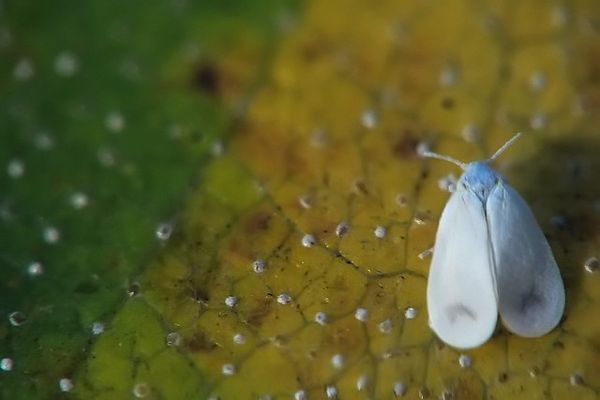
It is also worth considering the fact that it is very difficult to detect whiteflies due to their small size and location on the leaf. Of course, if you notice swarms of small white flies rising from the leaves as you move, whiteflies have already established themselves in the greenhouse. However, you can spot the pest much earlier—at a stage when it can still be successfully controlled. Pay attention to the following:
- The leaves become covered with a sticky coating, which appears as a result of the larval secretions clogging the pores of the leaves, which in turn interferes with photosynthesis. The leaf blade turns yellow and dries out;
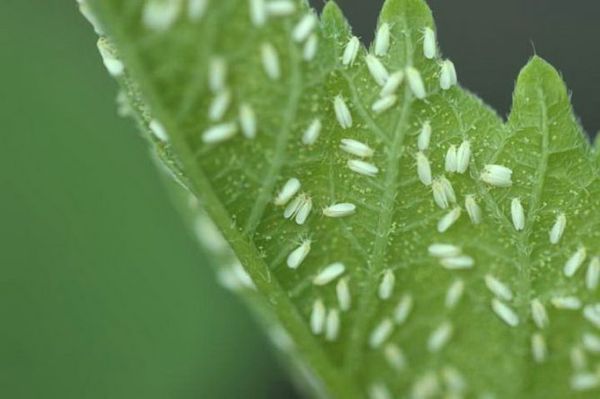
- the underside of the leaf is covered with small white dots and possibly large black spots (spores of sooty mold carried by whiteflies);
- leaf blades are deformed, twisted, yellow spots with unclear borders appear;
- the leaf structure becomes bumpy (the bumps are colonies of larvae);
- When touched, you can feel the waxy scales of the parasite;
- manifestation of chlorosis or yellow mosaic;
- fetal necrosis.
Video: "Getting Rid of Whiteflies in a Greenhouse"
In this video, an expert will share methods for eliminating whiteflies in a greenhouse.
What danger threatens the harvest?
Those unfamiliar with growing fruits and vegetables may not understand why the question of how to eradicate whiteflies in a greenhouse is so pressing. The problem is that the pest particularly favors the microclimate of greenhouses and hothouses, as its natural habitat is South America. Furthermore, the parasite reproduces very quickly—more than 10 generations per year—and it is impossible to eradicate it in its later stages with treatments.
A temperature drop to +10°C prevents the reproduction of whiteflies, but does not kill them – the pest tolerates the cold well and even overwinters in the upper layers of soil or in uncollected organic matter.
Already in the second stage of nymph development, the pest is resistant to insecticides thanks to the waxy secretion that covers the larvae. If the insect is not eliminated in the first stage, the plant will die: the larvae suck the sap from the leaves, and the adults consume the rest.
In addition to causing damage, the insect also carries spores of pathogenic fungi, and the specific sugary secretion it produces provides an ideal environment for these spores to thrive. Therefore, the methods chosen for controlling whiteflies in a greenhouse must be not only effective but also timely.
Chemical methods of control
This isn't a new problem, so there are many different treatments available for whitefly in greenhouses. Removing whiteflies from a greenhouse requires a comprehensive approach. First and foremost, preventative treatment should be carried out immediately after harvesting in the fall. This involves removing all organic debris, treating the frame with bleach, and digging up and disinfecting the soil.
If possible, all removable parts (coverings) should be removed, washed and treated with a chemical agent.
Today, there is a wide selection of insecticides that can combat this pest. It's important to remember to change them frequently to prevent the risk of resistance. The most effective are Actellic, Confidor, Rovikurt, and Fosbecid.
Folk methods
If the pest hasn't yet spread, you can try tried-and-true folk remedies. An infusion of garlic, yarrow, and dandelion works well. These safe remedies are best used as preventative measures, as dealing with an existing pest is very difficult due to its rapid spread. Greenhouse vents should be covered with gauze or mosquito netting.
In areas where there's the highest risk of whitefly attack (depending on the crops grown that attract the pest, such as peppers, tomatoes, cucumbers, etc.), you can periodically wash the leaves with a soapy solution. Another excellent way to eliminate whiteflies from a greenhouse is to use baited traps and vacuum the insects.
Biological control methods
Now we'll talk about how to get rid of whiteflies in a greenhouse in the fall. This problem is easier to solve. Once the harvest is complete, you can freeze the room and use chemicals without fear of negatively affecting the plants and fruit. However, during the ripening period, it's better to use biological control agents. This includes not only bioinsecticides but also the use of natural enemies of whiteflies—ladybugs and lacewings—which destroy the pest's larvae.
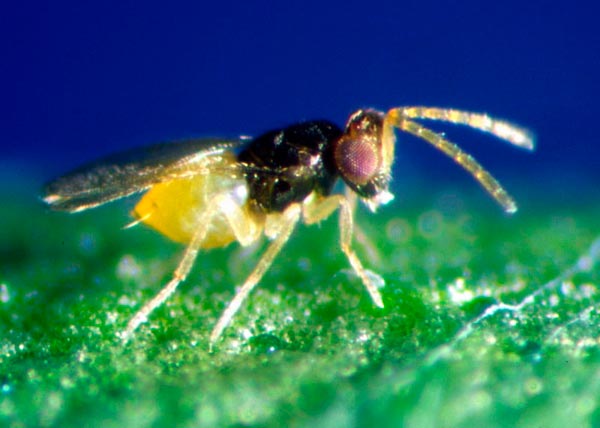
The parasite Encarsia can effectively control whitefly larvae and caterpillars, destroying them in a matter of days. For nightshade crops, the predatory mite Macrolophus is an optimal whitefly control agent, killing over 2,000 pests per month. Surprisingly, the parasitic fungus Verticillium is another helpful tool, penetrating the whitefly's body and secreting a toxin that kills them. Moreover, the fungus is effective at all stages of the pest's development.
All of the methods presented have proven effective in combating whiteflies. The choice is yours, but always remember that preventative measures will help prevent the pest's appearance and save you hassle.