
Advantages and disadvantages of infrared heaters for greenhouses
Content
Benefits of using infrared heaters
Infrared lamps are popular among modern farmers looking to grow herbs and vegetables in greenhouses for year-round harvesting. However, many don't realize the full benefits of this device.
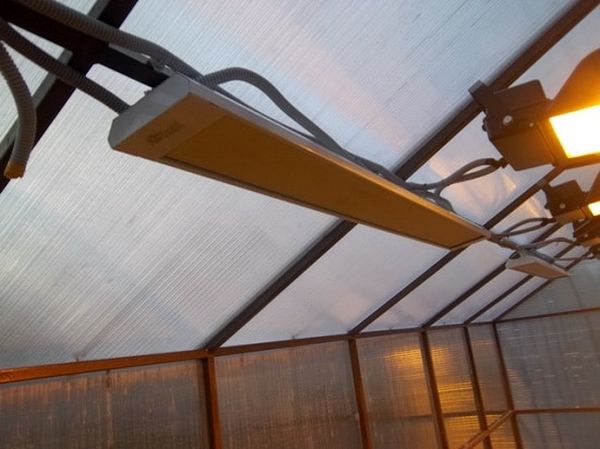
Let's take a closer look at the advantages of energy-saving heaters:
- The heat isn't directed to a single point; it's evenly distributed throughout the entire greenhouse. Many gardeners still use convection heating systems. However, in reality, they direct hot air upward, while cool air flows downward. With IR lamps, this doesn't happen. Plants will receive the heat they need in sufficient quantities.
- No drafts. Sometimes a polycarbonate greenhouse isn't completely protected from cold air coming through the cracks. However, this microclimate isn't optimal for plants. That's why it's a good idea to install infrared lamps. Place them directly near the windows, significantly reducing heat loss in your greenhouse.
- Energy savings. It would seem that in one greenhouse you should only grow plants that require the same heating intensity. However, with this device, you can easily divide the greenhouse into zones with different temperature settings. By carefully positioning the heating devices, you can not only grow vegetables and berries together but also significantly save energy.
- An optimal environment for plants. These heaters don't dry out the air and won't harm your plants;
- An infrared heater kills bacteria and pathogens. Use it, and your greenhouse will be protected from harmful external factors;
- This product is characterized by its high practicality. This heater is a versatile option for a home greenhouse. It has a beneficial effect on the intensity of plant growth while reducing energy costs.
Heating a greenhouse with an infrared heater is an excellent choice for a gardener who wants to grow vegetables even in winter.
Video: "Infrared Heaters in a Greenhouse"
This video will show you the benefits of using infrared heaters in your greenhouse.
When is infrared heating necessary?
Infrared lamps have been used for heating industrial greenhouses for quite some time. They are considered energy-efficient while also having a positive effect on the plants themselves. If you're planning to build a greenhouse in your backyard, these devices will be a great help.
However, remember that no matter how energy-efficient they may be, such devices still require constant power to operate continuously. As soon as the bulbs are turned off, the temperature in the greenhouse immediately drops.
Types of infrared heaters
Greenhouse heaters (energy-saving) are notable for their ability to accelerate plant growth. They are installed to minimize human presence in the greenhouse. However, their effective use requires careful selection of the right type. Let's look at the most common types of IR bulbs to help you make an informed choice.
Ceiling
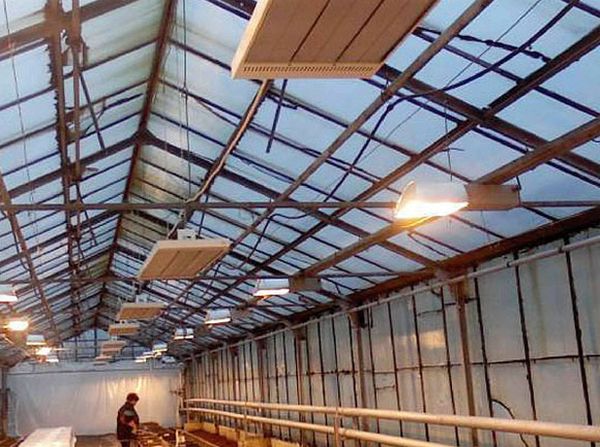
A gas infrared heater for a greenhouse is often mounted on the ceiling. This is appropriate when the greenhouse is no more than 4 meters long, and the distance from the lamps to the surface of the beds is approximately 1 meter. This type of device is an optimal choice for structures with high humidity, a microclimate that often occurs indoors. The operating principle of ceiling-mounted equipment is simple: gas infrared lamps heat the ground, from which the heat is then distributed.
Ground
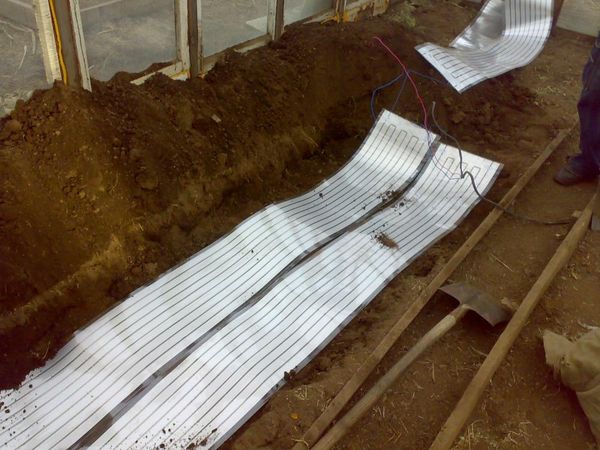
Heating a greenhouse structure isn't limited to ceiling-mounted heating. Modern gardeners often use special infrared film embedded directly into the soil. It can be installed either vertically or horizontally. In the former case, the film is laid around the perimeter of the structure, while in the latter case, it's placed under at least 50 cm of soil. This method of heating a greenhouse is preferable if it's permanent and you won't have to dig it up later.
Features of choosing a heater
Infrared ceiling or ground heaters for greenhouses require careful consideration if you want to ensure that your year-round greenhouse will quickly yield fruitful results. To do this, you need to consider all the important factors that affect the efficiency of these devices. These lamps come in two categories: long-wave and light. It's essential to consider their features.
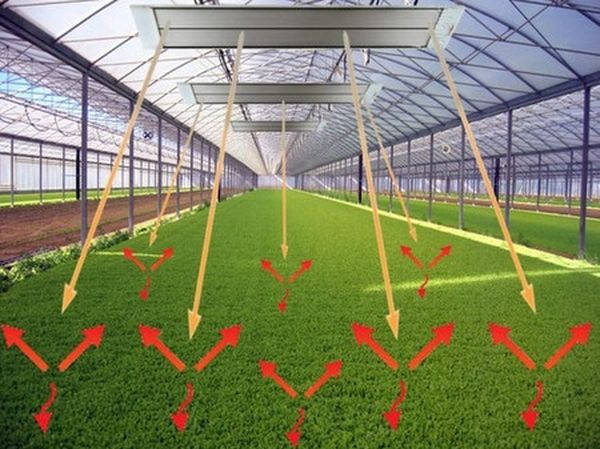
By wavelength and heating temperature
For those looking to optimally heat a small greenhouse, a long-wavelength lamp is a suitable option. It doesn't generate excessive heat, making it ideal for a compact greenhouse. Its output is sufficient to adequately heat the plants being grown.
By heating element type
The light-based electric heater reaches temperatures of up to 600°C. Its heating area is quite large, making it the ideal solution for those looking to build a large commercial greenhouse. Modern greenhouse and farming operations often prefer this system because it can handle heating large spaces.
Heating organization
To ensure proper operation of IR lamps in greenhouses with film or polycarbonate coverings, the devices must be installed properly. Therefore, it's important to follow these recommendations:
- the heater should be placed at a height of about 1 m from the surface of the bed;
- the further the bulb is from the plants, the less heat it directs onto the greenery;
- When the seedlings begin to grow actively, adjust the height of the IR lamps so that the distance does not change;
- These devices are not installed in the center of the room, but closer to the walls, where there are more drafts and, accordingly, the temperature is lower;
- the distance between the lamps should be about 1.5 m;
- Depending on the size of the greenhouse, you must determine the required number of devices.
Installing such equipment isn't particularly labor-intensive. The key is to select the optimal units for the greenhouse structure and distribute them correctly throughout the structure.