
How many times in its life does an apple tree bear fruit?
Apple trees begin to bear fruit on average 5–8 years after planting. Dwarf varieties begin to bear fruit slightly earlier, as early as 3–4 years. The less time it takes for the plant to develop its root system and crown, the sooner it will begin to produce fruit. Varieties such as Wellspur, Goldsupr, and Narodnoe can produce fruit as early as 3 years. Some tall varieties, such as Red Delicious, don't begin to bear fruit until 10–12 years. If the tree is grown from seed, an additional 2–3 years should be added to this period.
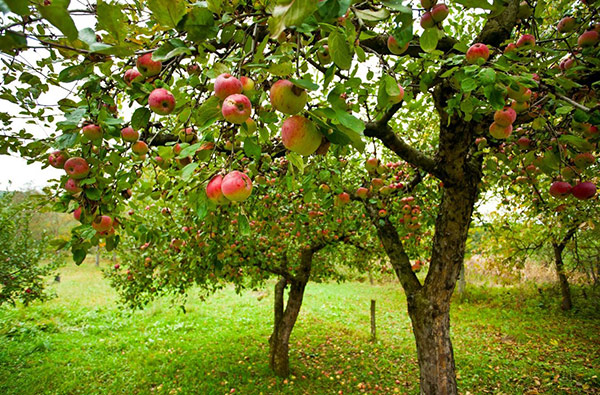
Initially, the tree develops a strong root system, and its crown grows rapidly. The productive period can be accelerated through agronomic practices, such as grafting a tall variety onto a dwarf rootstock. Techniques that slow growth and accelerate fruiting are also used: bending branches, girdling (cutting off bark and applying the back of the graft to the wound), scarifying (making cuts above a bud), etc. The number of years after planting before an apple tree begins to bear fruit also depends on proper crown formation and care.
Fruiting time begins earlier if the seedling is growing during a period of dry and hot weather. Damp and cloudy weather, especially if it persists for two years in a row, can delay the productive age.
Once the plant begins bearing fruit, depending on the variety, it can produce fruit either annually or intermittently (every 2-3 years). Some gardeners achieve annual fruiting even from varieties that aren't predisposed to this, but experts recommend not disrupting the natural cycle and allowing the tree the necessary time to recover. If space permits, it's best to plant several varieties so they alternate.
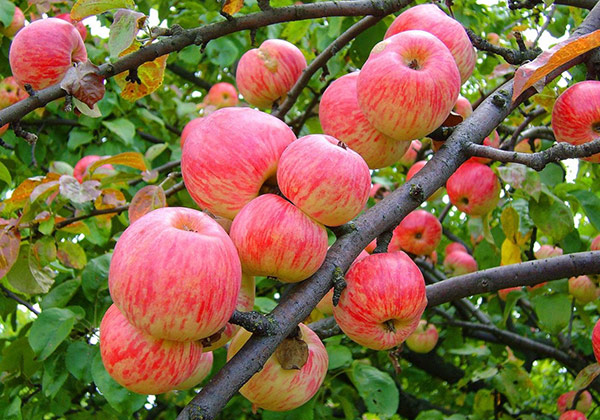
The number of years an apple tree bears fruit depends on the variety: the later the fruiting period begins, the longer its lifespan. On average, it lasts from 10 to 50 years. With proper care, some varieties can live for 120–200 years.
As an apple tree ages, first small branches, then progressively larger ones, and even skeletal branches begin to die off. Living shoots produce fewer fruits, and suckers—strong vertical shoots—form near the base.
If a fruiting plant has become less productive, the cause may be improper pruning or care. If it produces no fruit at all, the problem may be due to improper planting. Varieties grown in an unsuitable climate may produce few fruits or even be completely sterile.
Video: "What to do if apple trees don't bear fruit?"
In this video, you will learn about methods that will help stimulate tree fruiting.