
How long does it take for a watermelon to fully ripen?
Watermelons and melons are incredibly tasty and aromatic summer treats. Every adult and child probably eagerly awaits the last month of summer to savor their flavor. No matter how many watermelons you eat, it's never enough.
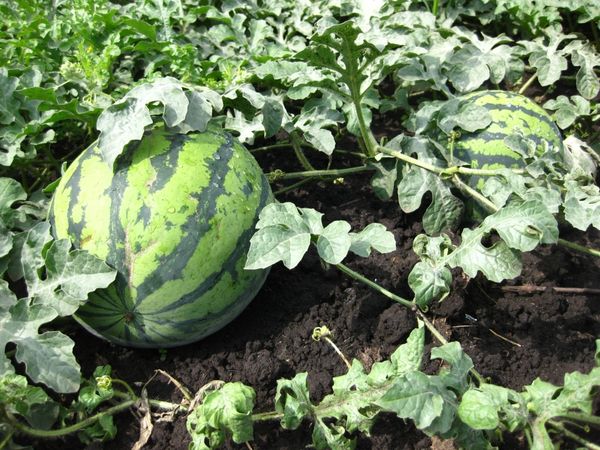
Unfortunately, growing melons isn't a simple process. Any gardener who's ever grown melons will confirm this. Watermelons grow best in warm and sunny regions. The climate of central Russia isn't suitable for these plants; it's unlikely you'll be able to grow a good harvest of melons outdoors. Meanwhile, the southern part of the country is ideal for growing watermelons and melons. It's precisely in the south that all the necessary conditions for growing melons are created. After all, watermelons won't thrive in areas with little sun, low temperatures, and frequent rainfall.
The next factor that influences the ripening speed of watermelon fruits is the variety. How many days does it take for watermelons to fully ripen? The ripening speed of the berries depends on the type of seed used for sowing. Early varieties will need about 60–65 days, late varieties – at least 90 days. To ensure ripe watermelons, don't rush the harvest. Beginning growers often ignore the characteristics of the variety they're planting and harvest the fruit before the allotted time. The length of time a watermelon takes to grow from flowering to full ripening depends on the variety being grown.
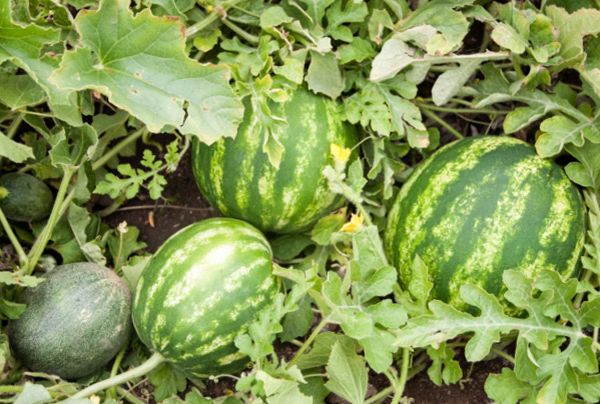
Most beginning gardeners also wonder: what can be done to make melons grow faster? We'll share some tips with you. Now you'll learn how to speed up the growth of melons and how to increase your harvest:
- fertilizing with mineral and organic fertilizers helps accelerate fruit growth;
- monitor the condition of the soil - melons do not like too dense soil;
- inspect plants every day for signs of insect pests;
- remove weeds that clog the soil with their roots;
- To ensure that melons bloom and don't grow, don't overwater them (for the same reason, frequent watering is not recommended).
Experienced melon growers note that watermelon formation is considered one of the most important stages in melon cultivation. The number of melons formed on a bush and how many of them ripen depends on how correctly the pinching procedure is performed. Bushes can be formed when the ovaries have reached the size of a medium apple. Smaller ovaries should be removed. Removing barren branches also promotes accelerated fruit growth.
For a good harvest, it is enough to leave no more than 4–6 ovaries on one plant.
As you can see, the main reasons why the quantity and quality of the watermelon harvest does not meet expectations are unfavorable weather and climate conditions, as well as errors in the care of melon crops.
Video: "Planting a Watermelon the Proven Way"
This video will show you how to best plant a watermelon in your garden.