
Is a watermelon a berry, a fruit or a vegetable?
Everyone has probably wondered at least once whether a watermelon is a berry, a fruit, or a vegetable. Even among farmers and researchers, there have been many debates. Today, the fruit of this crop is considered a berry, although not all gardeners agree.
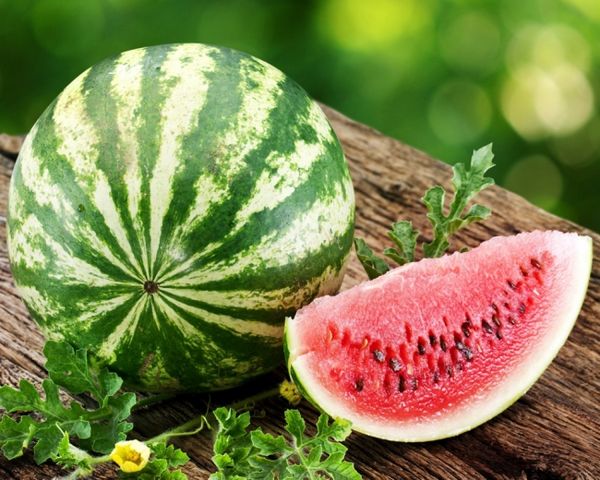
Let's take a closer look at all the existing assumptions.
First version: watermelon is a vegetable.
Proponents of this theory argue that this crop is a member of the melon family. Watermelon, or kavun (a name originally found in Ukraine and later widely spread to other countries of the former USSR), is a prominent member of the Cucurbitaceae family. Depending on the cultivar, the plant can be annual or biennial. It has a highly branched root system that penetrates the soil to a depth of more than a meter.
Positive characteristics include active vegetation and quickly forming ovaries. The first fruits are formed 40–60 days after the appearance of the ovaries. If we ignore the taste qualities, and only consider the crop in terms of its characteristics and growth habits, then the theory that we have a vegetable in front of us would be justified, since the plant grows on the ground, which is typical for most vegetables.
Second version: watermelon is a fruit.
This version still has many supporters, including among agricultural workers. Why is it so popular?
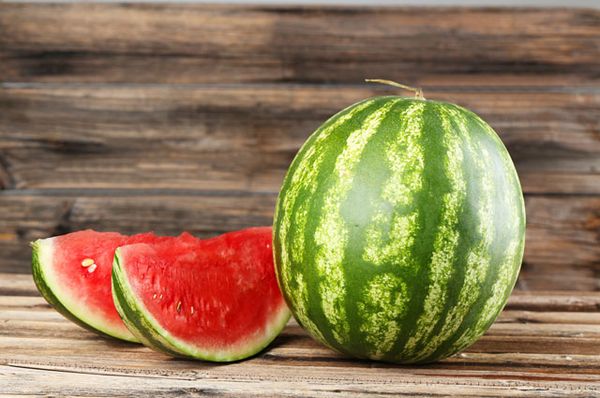
Watermelons are distinguished by their sweet taste and pleasant aroma. The juicy flesh is a rich pink or bright red color. All these characteristics are typical of fruits. However, this is where the arguments for this theory end.
Where does fruit typically grow, you ask? The answer is obvious: fruit primarily grows on trees. For this and other reasons, watermelon is not considered a fruit.
Third version: berry.
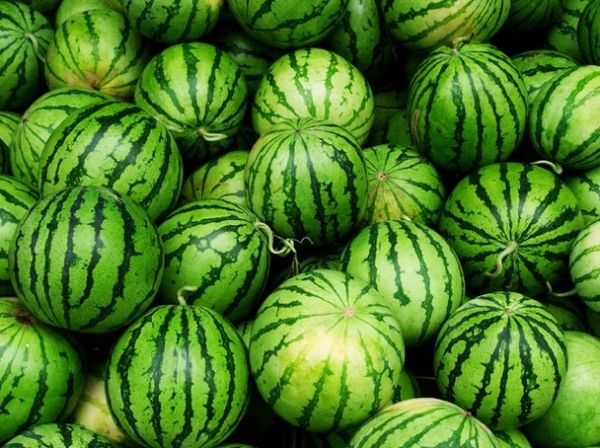
This assumption initially puzzled most gardeners and scientists. Why is a watermelon a berry? How can this be? So, here are several reasons why this crop can be called a berry:
- fruits are formed from both the upper and lower ovaries;
- inside the fruit there is juicy pulp;
- presence of seeds in the pulp;
- a dense skin that protects the fruit from various damages.
We could end our answer here, but let's remember what family the watermelon belongs to. This plant is a member of the Cucurbitaceae family. For this reason, a common question is: why is a watermelon considered a berry, but a cantaloupe is not? The difference between these two melon-like crops lies in the arrangement of the seeds. In a cantaloupe, the seeds are concentrated in the central hollow part of the fruit, while in a watermelon, they are scattered throughout the flesh. This is the key characteristic that prevents a melon from being considered a berry crop.
Recently, professional farmers have begun discussing separating plants from the Cucurbitaceae family into a separate group. The advantage of such a classification is that the emergence of a new plant subspecies will avoid confusion when it becomes unclear which species, class, or group a particular plant belongs to.
Video "The Truth About Watermelons"
This video will tell you about the benefits and harms of watermelons.