
Description and cultivation of the hybrid cherry variety Vstrecha
Content
Description and characteristics
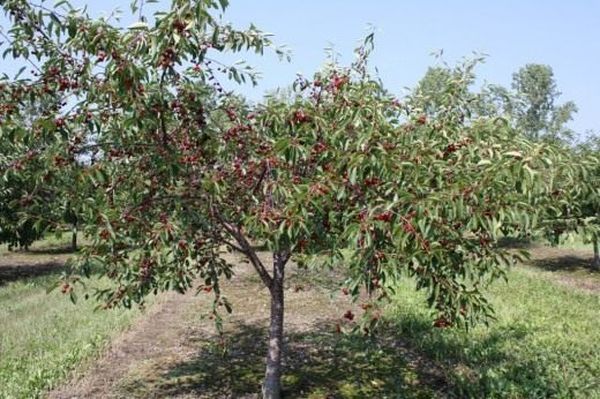
The cherry, a cross between the Lyubskaya and Kyiv-19 varieties, owes its origin to N. I. Turovtsev and V. A. Turovtseva, specialists at the Ukrainian Academy of Agrarian Sciences. The description of the variety, known since 1966, begins with the tree: it is a dwarf cultivar, growing up to 2.5 meters in height. The cherry tree grows in pairs, with a spherical, wide, and dense crown. The branches are drooping, especially after the fruit ripens. Flowering occurs in late April - early May. The first harvest is 3-4 years after planting, with a single cultivar yielding up to 25 kg of berries. Fruit ovaries form on one-year-old shoots and cluster branches.
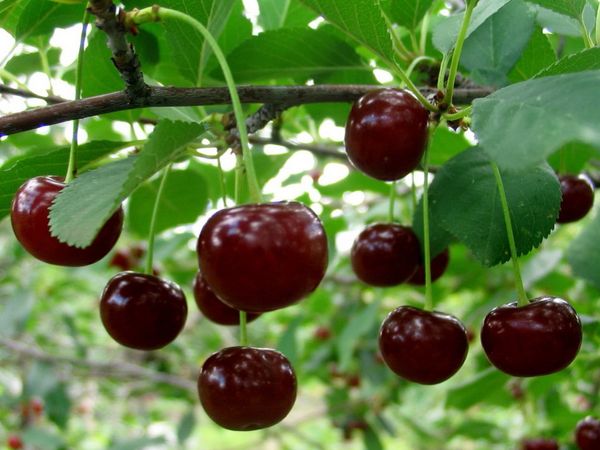
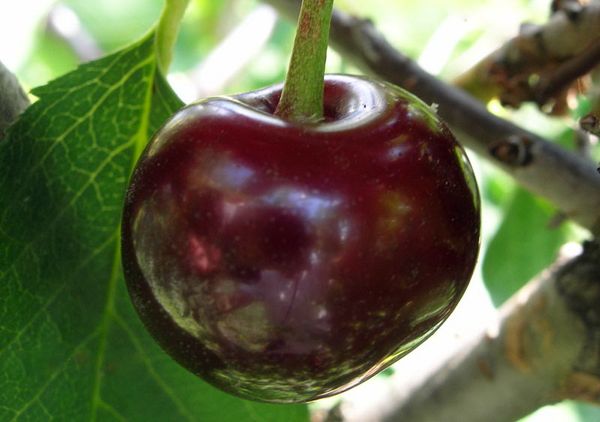
The Vstrecha variety's fruits are large, dark red, and flattened round. They weigh between 9 and 15 grams and are covered with a thin but dense, shiny skin. The flesh is juicy and tender, producing dark red juice. The small, round pit is slightly flattened on the sides and easily separates from the flesh. The berries have a dessert-like, sweet-and-sour flavor. Each berry contains up to 16.8% dry matter, 11.64% sugars, 7.6 mg of vitamin C per 100 g of raw weight, and approximately 0.8% organic acids.
The advantages of the variety are high yield, strong immunity to moniliosis and coccomycosis, frost and drought resistance, and transportability.
Necessary pollinators and care
Almost all cherry tree varieties are undemanding when it comes to planting and care. They are planted in loose loamy or sandy loam soil, even in shade. Ideally, sandy loam soil with neutral pH, located on a south-, west-, or southwest-facing slope, is ideal. Place the seedling in a hole up to half a meter in diameter and water it thoroughly for the first 3-5 days.
Further care for the cherry tree called "Vstrecha" consists of watering, fertilizing, pruning, whitewashing, and treating the tree for diseases and pests. The tree should be watered regularly and generously, making adjustments based on the climate.
Plants are treated for diseases and insects during bud break. Damaged branches and foliage are burned. Trunks are whitewashed in early spring. Before autumn tilling, nitrogen fertilizers are applied twice: after flowering and two weeks after the first application. The recommended application rate for phosphorus fertilizers is up to 200 g.
Instead of potassium and nitrogen mixtures, complex fertilizers are often used. Compost should also be considered. When pruning, diseased and dead branches are removed and the tree is shaped. This procedure is scheduled for spring, when the buds are swelling. To ensure a high yield, root suckers are also removed. Bird cherry can be used as a rootstock to prevent coccomycosis.
Trees of this variety are partially self-fertile, so pollinators such as Lyubskaya, Shalunya, Samsonovka, and Primetnaya are planted in the area.
Video: Cherry Tree Planting Instructions
This video will teach you how to properly plant cherry trees in your garden.