
Description of the winter-hardy and self-fertile cherry tree Volochaevka
Content
Description of the Volochaevka cherry
The Volochaevka cherry was developed by A. I. Evstratov, who crossed the well-known Vladimirskaya and Lyubskaya varieties. According to the variety's description, the Volochaevka tree grows no taller than 3.5 meters. The crown is round and moderately dense. The cherry's leaves are small, serrated, and egg-shaped. Their color is rich green.
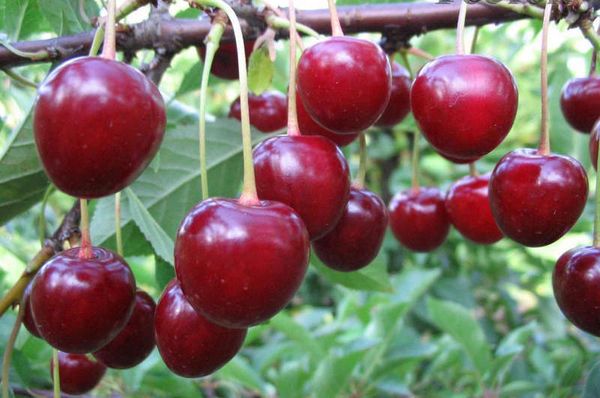
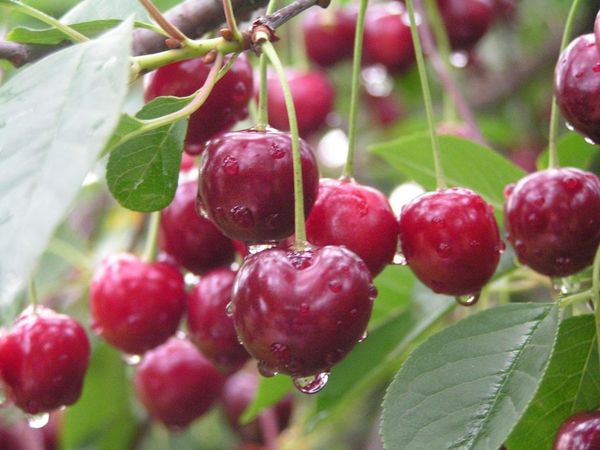
The cherries are oval and quite large, weighing approximately 4.5 g. They are a rich red. The berries have a sweet and sour taste, and the flesh is firm and very juicy. The pit is easily removed. They can be eaten fresh or used in compotes, jams, or preserves.
The fruit tree is moderately susceptible to fungal diseases. The most common attacks are coccomycosis and moniliosis. However, the crop is very productive. A single plant can yield approximately 15 kg of fruit. Volochaevka is an early-fruiting cherry tree that produces fruit consistently every year.
This variety can be successfully grown in the garden. It doesn't require much care. The main thing is to systematically treat the tree with antifungal preparations.
Characteristics of the variety
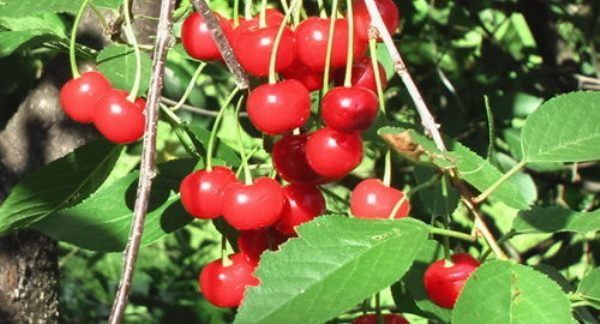
The Volochaevka cherry variety tolerates frost well. However, at temperatures of -30°C and below, the plant's buds experience discomfort, which negatively impacts fruit production. The first harvest can be collected four years after planting. The plant actively bears fruit in late July. Due to the ripening time of the fruit, this variety is considered "late."
Volochaevka variety plants are self-fertile, so they don't require plants or insects for pollination. Their yield is also unaffected by weather or climate conditions.
Among the variety's advantages are its reliable and consistent yield. Volochaevka's berries are large and delicious.
A disadvantage of cherries is their susceptibility to fungal diseases. Therefore, the plant needs to be treated with special preparations in a timely manner.
Features of cultivation
Despite the unpretentiousness of the culture, it is still necessary to follow the rules for its cultivation.
Cherry tree seedlings should be planted in April before bud break. Young trees should be planted 0.6 m deep in holes of the same diameter, maintaining a distance of 3 m between them. When planting, spread out the root system. Before planting, inspect the roots: trim off any damaged ones, and restore dry ones by soaking them in water for several hours.
For Volochaevka, add compost, superphosphate, ash, and potassium chloride to the soil. If the soil is clayey, add sand. A stake is driven into the center of the hole to support the seedling. Then, fill the hole with soil mixture, level it, and compact it so that the root collar protrudes slightly above the ground.
A couple of buckets of water are needed to water one plant. After planting, the hole should be mulched to protect the soil from evaporation and cracking. Straw or compost are commonly used as mulch.
Cherry tree care involves a number of processes. Covering or smoking the trees can help protect them from frost. Covering the area under the tree's crown with snow and then mulch helps keep the ground frozen and delay flowering to avoid losses. Smoking is done by setting fire to peat or sawdust, producing thick smoke. The disadvantages of this frost protection method are its poor environmental performance and the difficulty of controlling wind direction.
As for fertilizing, you can get by without it for the first few years after planting: the cherry tree will thrive on the fertilizer applied at planting. After that, add minerals, compost, and manure to the soil.
Typically, the tree is fed with urea in the second year, and diluted nitrogen-containing fertilizers in the third year, in the spring. In the fourth year, it requires superphosphate and potassium sulfate (in spring and summer), and organic matter should be added in the fall. In the fifth to sixth year, it should be fed with ammophoska, and in the seventh year, with urea (in spring) and superphosphate and potassium (in the fall). After that, minerals are added to the soil every two years, and organic matter every four. Every five years, the cherry tree should be limed with chalk, limestone, and dolomite.
The soil must be loosened three times during the growing season. Loose, weed-free soil promotes cherry tree growth and protects it from pests.
Branches should be pruned annually to relieve the trunk of excess weight. Dead branches and those that interfere with the proper crown formation should be removed. These procedures should be performed in the spring. Occasionally, pruning is performed at the end of the year to remove broken branches.
Volochaevka is very sensitive and demanding when it comes to moisture. However, it needs to be watered periodically: after flowering, during berry formation, and in early autumn. Approximately 50 liters should be used. Additional watering is provided using dry mineral fertilizers.
So, the Volochaevka cherry is an unpretentious berry variety, ideal for growing in the countryside.
Video: "What to do if your cherry tree isn't producing fruit"
This video will tell you what to do if your cherry tree has stopped bearing fruit.