
What activities are involved in caring for cherry trees in spring?
Content
Features of spring care
First of all, it's important to understand that the region's climate is a key factor in determining the timing of cherry tree care. If whitewashing or pruning is to be done, for example, in the Urals, then it should only begin in the spring, after the last frost has passed.
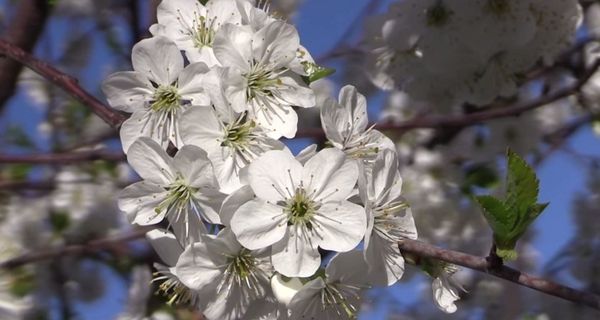
Experienced gardeners have written extensively about how to properly organize spring cherry tree care. And the most important factor to consider is that caring for old and young trees differs.
Young seedlings need care from the moment they're planted. These trees often only require generous watering (about 5 buckets on hot days). Don't forget about mulching and protecting them from pests and diseases.
Old trees need constant removal of dead bark. Also, the main pests for fruit-bearing trees are not only diseases and parasites, but also shoots, so do not forget to remove them.
Trimming
Before pruning your cherry tree in the spring, decide whether your plant is a tree or a bush. Tree-type cherries bear fruit along the entire length of their growth, while bush-type cherries bear fruit at the tips. Pruning techniques differ accordingly.
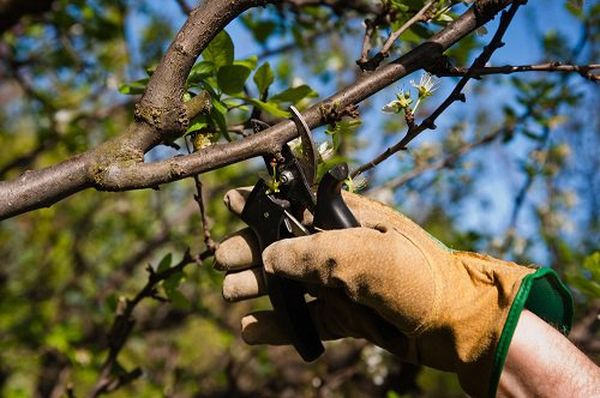
The best time to prune cherry trees is early April, before the buds have swollen. Dry and broken branches are pruned first. Then, any branches that rub against each other or are not pointing outward are trimmed.
It's important to keep in mind that the cherry tree should be short. Upper branches should be pruned to direct them laterally and allow more light into the center.
Whitewash
Pruning alone isn't enough to fully care for cherry trees in spring. Gardeners whitewash their trunks every spring. This measure is taken to protect fruit trees such as cherries and sweet cherries from sunburn, temperature fluctuations, and insect pests (plum care is similar). The simplest way to protect trees is with a lime or chalk solution.
When should you whitewash trees to see the results? Experienced gardeners recommend doing it three times a year: in late October, early March, and midsummer. It's best to whitewash in dry weather to allow the solution to dry.
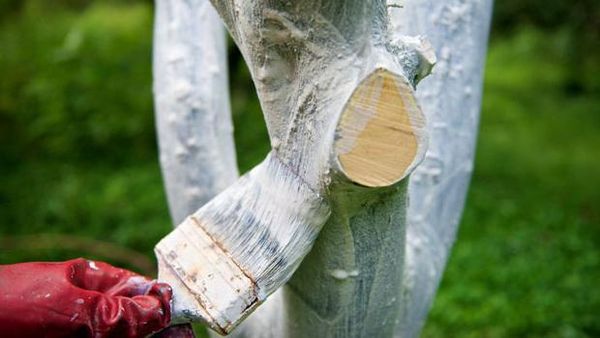
First, remove dry bark from the trunk. Use only a wooden scraper, never a metal one. Work on the trunk and lower branches. For best results, treat the "wounds." Treat the cuts with a copper sulfate solution and then paint the top.
Cleaning the tree trunk circle
Remove grass and, if any, other debris from around the tree. Then, lightly dig around the cherry tree. Just remember that the cherry tree's root system isn't very deep, so do this very carefully. This will help the tree get aerated, which will positively impact its growth.
Top dressing
Without timely and proper fertilization, cherry trees will never bear fruit. This is because, due to rapid growth in the spring sun, the tree doesn't have time to absorb nutrients. Therefore, cherry trees need help in the spring. Start before the growing season begins with a nitrogen fertilizer. Add one tablespoon of ammonium nitrate per bucket. One bucket is enough for young trees; two or three for mature trees.
You can use organic fertilizers, such as cow or pig compost (in a 1:10 ratio to water) or chicken manure (in a 1:20 ratio to water).
Pest and disease control
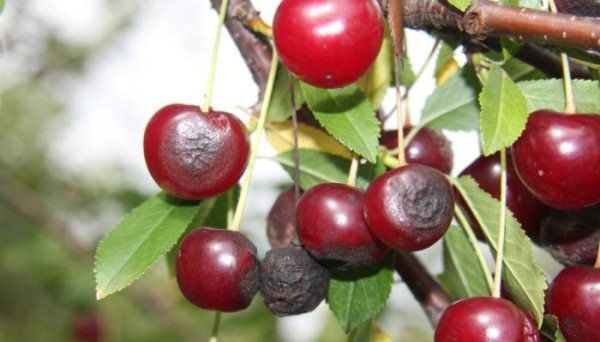
The main rule in fighting diseases and pests is to know the exact proportions of products. Otherwise, you could kill not only harmful insects but also the tree itself.
Even before the fruit tree begins to bear fruit, it's important to prevent diseases and pests. Specialized products such as "Aktara" or "Horus" will help with this. For leaf-eating pests, "Engio" should be used in conjunction with "Horus."
The main pest of cherry trees in spring is the cherry fly, which is almost impossible to eradicate. However, after flowering, the tree can be treated with Actellic.
If you're concerned about the condition of your cherry tree leaves, it could be signs of holey spot, which can affect not only the leaves but also the fruit. What can you do to prevent this? The best way is to treat the tree with a copper-containing substance.
Proper spring cherry tree care will definitely pay off during the fruiting season. Spring cherry tree care will not only protect trees from diseases and pests but will also definitely increase yield. Follow these recommendations, and your tree will gratefully reward you with a bountiful harvest.
Video: Cherry Tree Care Tips
This video will give you some helpful tips on caring for fruit trees.