
Description and necessary pollinators for the Tamaris cherry variety
Content
Description and characteristics of the variety
Dwarf cherry varieties are considered the best. Compact, highly productive trees can be grown in virtually any location. Therefore, when developing Tamaris, breeders aimed to create a dwarf tree. Such a plant would take up little space, allowing for the cultivation of a variety of crops in a small area. Furthermore, dwarf cherry varieties are easy to care for and harvest.
A low-growing cherry variety called Tamaris was bred by Tamara Morozova from the Shirpotreb Cherny berry. To produce the new plant, sprouted Shirpotreb seeds were treated with ethylene at a low concentration of 0.005%.
In the mid-1990s, a new cherry variety was added to the State Register. The Central and Northern regions were identified as ideal for growing this variety. However, today the berry is successfully grown in many other regions of the country.
The description of the Tamaris tree defines it as a low-growing plant, reaching a height of up to 2 m. Sometimes the plant can grow up to 2.5 m. The tree develops a wide, rounded crown. It is characterized by medium density and a distinctly upright appearance. The bark of the trunk and main branches is brown. Cherries form on the cluster branches.
The shoots of the Tamaris berry, like those of other sweet cherry varieties grown in central Russia, are long and brown. Numerous lenticels form on the shoots, with oval buds that extend slightly away from the branch itself.
The leaves are medium-sized, smooth to the touch, with serrated edges. The leaf surface has a glossy texture and a rich green color. They are completely smooth. They are held on the shoots by a short, medium-thick petiole.
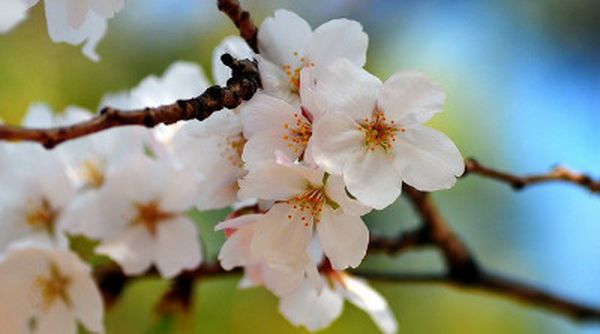
Tamaris is an early-bearing berry, but despite this, the tree begins flowering late. During this period, the tree is covered with medium-sized flowers.
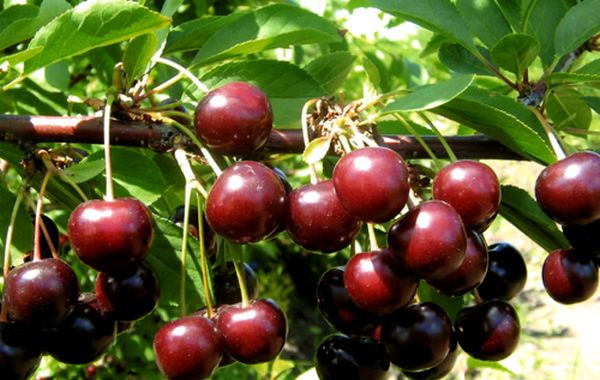
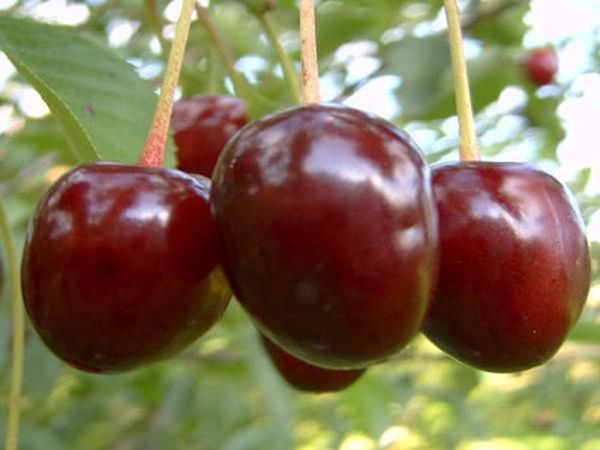
The plant produces large fruits (each weighing over 4 g). The berries are round, slightly flattened at the base. The skin of the cherries is deep purple with small brown spots. The flesh is soft and juicy. The large, round pit inside the cherry is easily separated from the flesh. Tamaris cherries are sweet in taste.
The Tamaris variety is a highly productive plant. The plant is considered self-fertile, with fruit formation beginning while still in the bud. This method of producing new berries helps create and maintain optimal conditions for their development.
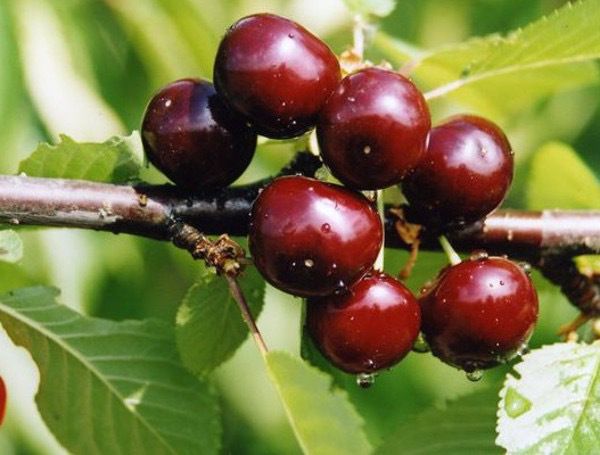
According to Tamaris's characteristics, the first harvests can be collected several years after planting. On average, a single tree yields up to 10 kg of berries. In the variety's native city of Michurinsk, the plant yield per hectare is 60–80%.
The Tamaris cherry variety is one of the sweetest, ripening in the second half of July to early August. This ripening period allows the berries to avoid the damaging effects of frost. Before harvest, the fruits will develop a sweet, slightly tart flavor.
Tamaris has the best winter hardiness of its bark and wood. Its short stature allows it to be grown in regions with strong winds, and its short branches are virtually unbreakable. Overall, this variety is the best cherry cultivar for temperate climates.
Necessary pollinator varieties
Tamaris is a self-fertile plant, which does not require nearby pollinating crops for its reproduction.
The tree produces berries through self-fertilization. Experienced gardeners note that the plant's yield will increase significantly if sweet cherry varieties such as Turgenevka, Zhukovskaya, and Lyubskaya are planted nearby, serving as natural pollinators. Tamaris is also an excellent pollinator for some varieties of cherries.
Tamaris, thanks to its low growth, is an excellent choice for gardening. Its compact size makes it much easier to care for. Moreover, it produces high yields and can easily survive without pollinators. You'll be pleasantly surprised by the taste of this variety's fruit. The berries can be eaten fresh or used to make jams, preserves, and compotes.
Video: Cherry Tree Planting Instructions
This video will show you how to plant cherry trees correctly.