
Description and care of the early-ripening cherry Shpanka
Content
Description of the variety
The Shpanka cherry tree became famous over 100 years ago, and its creators are considered to be amateur gardeners. Trees of this variety are most often grown in home gardens in Ukraine, Russia, and Moldova.
The plant is a vigorous tree, reaching up to 6 meters in height. Its crown is moderately foliated. The trunk and mature branches are brown. Only the young branches are light brown. Because the branches are positioned at right angles, they are often prone to breaking under the weight of the fruit.
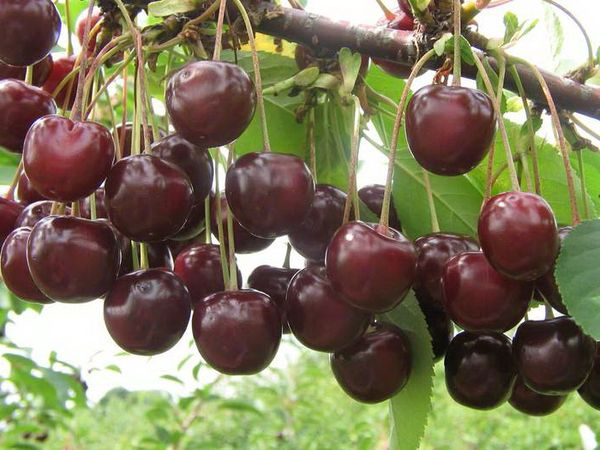
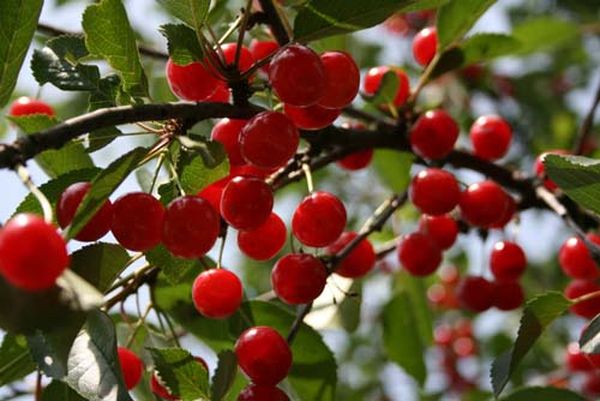
This variety has long leaves—up to 8 cm. The green leaves are located on pink petioles. Each inflorescence contains up to three large flowers. The berries of this cherry, burgundy in color, can weigh up to 5 grams. They are somewhat flattened, revealing juicy yellow flesh. The juice is usually bright red.
The stone can always be separated from the pulp without any extra effort. The Shpanka cherry tree includes such subspecies as the dwarf Shpanka, the height of which barely reaches 3 meters, the Bryansk Shpanka, which can grow up to 4 meters, the Kursk (the same height), the Shimskaya (a medium-sized crop, excellent for cultivation in the northern regions), the Donetsk, large-fruited and early. When grown on the latter plot, the harvest can be collected already at the beginning of summer.
Main characteristics
Although the Shpanka cherry is considered self-fertile by experts, to ensure a bountiful harvest, it's best to grow pollinators such as the Stoikaya, Griot Ostheimsky, Griot Ukrainsky, and other cherries in the nearby garden. Fruits are typically concentrated on the previous year's shoots and bouquet branches, where they form clusters. The first fruiting should be expected 5-7 years after planting.
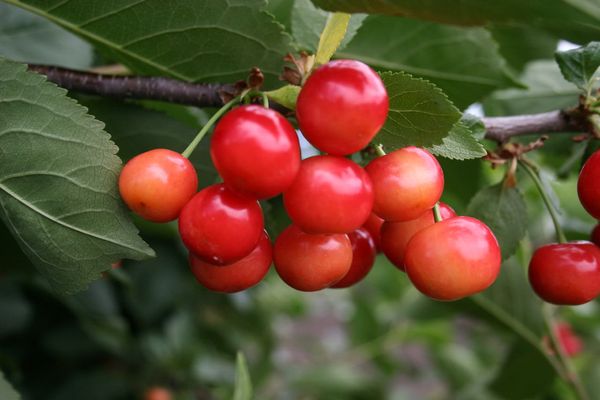
The variety is moderately early fruiting. A stable annual harvest can be expected. Cherry fruiting peaks at 15 years of age. The average yield is approximately 35–40 kg per tree. Occasionally, over 50 kg can be harvested from a single tree. Its lifespan typically does not exceed 25 years. The berries have a sweet flavor with a characteristic tartness.
In warm southern regions, the harvest begins in late June. In temperate climates, ripe berries can be enjoyed no earlier than July 10th. If harvested late, the fruits tend to fall off.
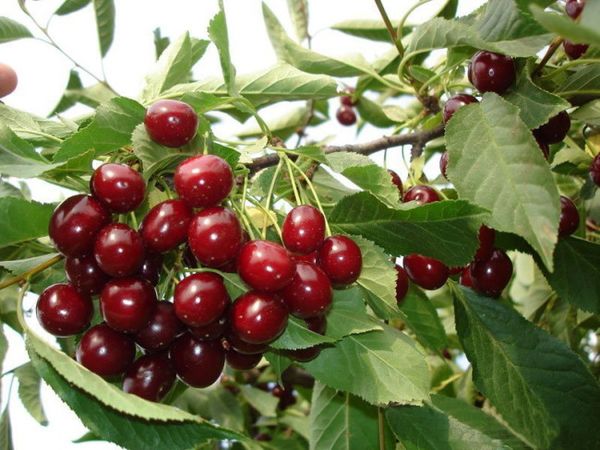
This variety tolerates cold well, is not overly susceptible to disease and pest attacks, and is easy to care for. The berries do not transport well. During storage, they quickly lose their marketable appearance and flavor.
Care Features
Although the variety tolerates dry days well, watering is recommended during the active growing season. This should be done for the first time in April-May (when the cherry blossoms are in bloom), and again in the second ten days of June (when the fruit begins to ripen). No more than three buckets of water should be used per tree. Mulching the area around the trunk with sawdust or compost is recommended. Weeding and loosening the soil periodically is also necessary. Spring fertilization with Bordeaux mixture and nitrogen-containing fertilizer is also essential.
If you experience a cold and prolonged spring, you can spray the trees with boiled water with honey dissolved in it.
The same solution is effective during the flowering period. Fertilizing is done three times per season. Autumn preparation of the tree for winter involves clearing fallen leaves and grass, and digging. The trunk will also need to be whitewashed. In winter, it is recommended to pile snow around the trunk, lightly compact it, and cover it with a layer of sawdust. Clearing the crown is also important.
Diseases and pests
Monilial blight is a fungal disease that affects shoots, foliage, and fruit buds. In the spring, spray with Horus. In the summer, if the weather is cool and damp, Skor is effective. Overuse of fertilizers, frostbite, or burns can cause gummosis. Treatment involves removing the resinous growths. Treatment with copper sulfate is also recommended.
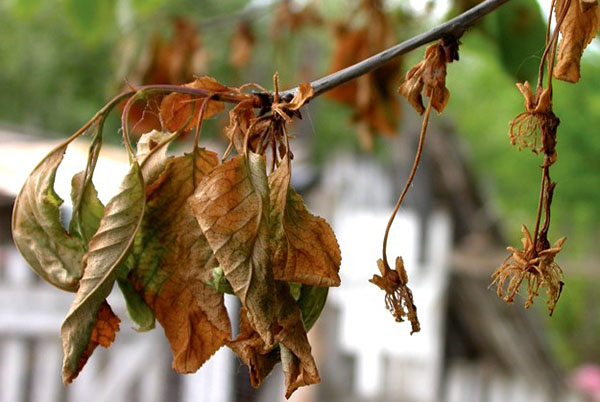
Next, the affected areas are coated with garden pitch. Sooty mold infestations cause gray spots on the foliage, which later develop into a black coating. Spraying with a copper oxychloride solution, a copper-soap mixture, or Bordeaux mixture can help. If cherry slime sawfly appears, trees should be treated with Inta-Vir, Aktara, or Iskra after harvest. Karbofos, Rovikurt, and Actellic are effective against cherry weevils.
Pros and cons
The variety's advantages include good cold and drought resistance, consistently high and increasing yields year after year, good immunity to moniliosis and coccomycosis, early ripening, and a long fruiting period. The fruits contain many vitamins, microelements, beneficial fructose, pectin, glucose, and tannins.
Disadvantages: branches tend to become brittle (requires regular pruning), conditional self-fertility (requires other varieties for pollination), low fruiting rate, poor shelf life and transportability, and the large size of the tree, which makes it difficult to care for and harvest berries.
Video “Cherry Shpanka”
This video will teach you about caring for the Shpanka cherry variety.