
The intricacies of planting and growing the promising cherry variety Shokoladnitsa
Content
History and description of the Shokoladnitsa cherry
This variety was developed by Oryol specialists in 1996. Using the Shirpotreb and Lyubskaya cherry varieties as parent varieties, they developed the high-yielding, winter-hardy Shokoladnitsa variety, recommended for cultivation in central Russia, including the Moscow region.
Decorativeness of wood
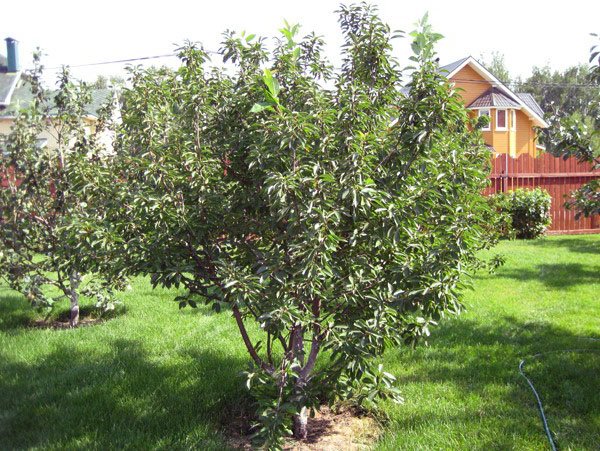
Mature trees reach no more than 2.5 meters in height, with a sparse crown, making pruning and harvesting easy. The tree's inversely pyramidal shape makes it compact, allowing for row spacing of 3.5-4 meters. The leaves are elongated and pointed, a deep emerald green. Chocolate Tree blooms in mid-May with umbels of delicate pink flowers. The flowering period lasts 2-3 weeks.
Fruit characteristics
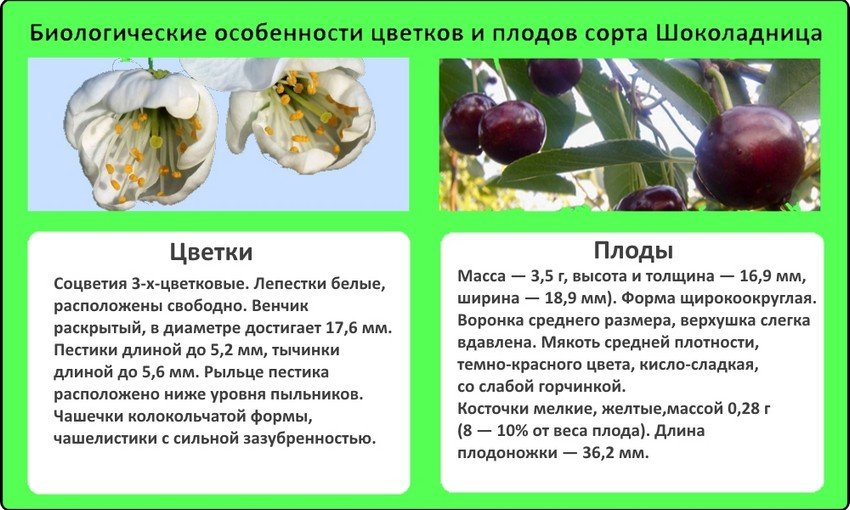
The fruits ripen in mid-July, but don't appear until the fourth year. Their dark burgundy color distinguishes the ripe berries from other varieties, and the bitterness in the flavor confirms the cherry ancestry of the parent varieties. Some gardeners call this variety "sweet cherry" due to its distinctive flavor. The fruits reach 4 grams in weight, and the aromatic, juicy flesh separates easily from the pit.
Shokoladnitsa is considered a dietary variety; its berries contain beneficial microelements such as iron, copper, and cobalt. Doctors recommend eating the fruit for people with digestive issues.
Video "Description of the Shokoladnitsa Cherry"
This video presents the key varietal characteristics of the fruit crop.
Characteristics of fruit crops
The low height of the trees allows harvesting without the use of ladders or other equipment.
Flowering and ripening period
The Shokoladnitsa tree blooms in early to mid-May. Its primary pollinators are the Griot cherry and cherry varieties such as Vladimirskaya, Turgenevskaya, and Sklyanka. However, breeders consider the Shokoladnitsa to be partially self-pollinating, making the presence of other varieties unnecessary for cross-pollination. Ripening begins in late June, and the tree produces an abundance of fruit until mid-July.
Productivity and fruiting
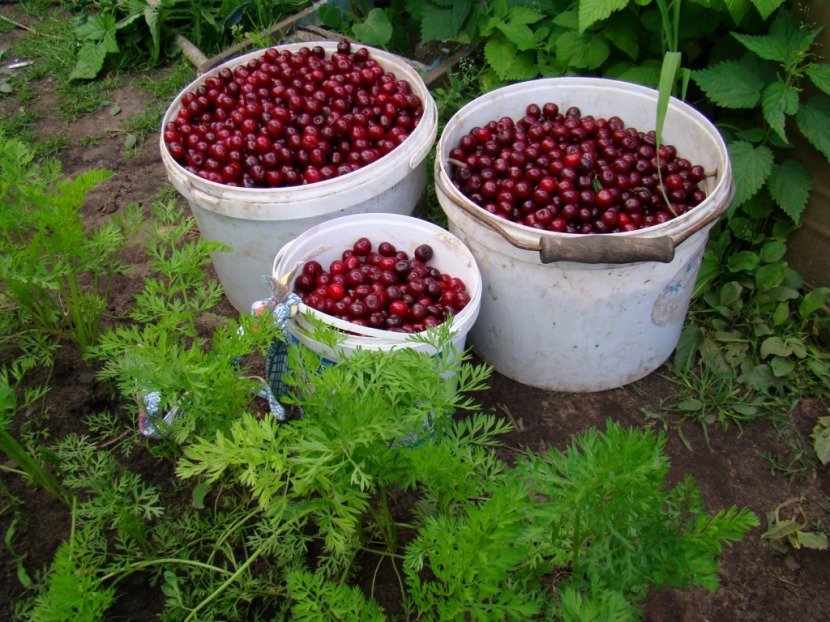
A single mature tree can produce 10 to 15 kg of delicious berries, a significant yield for a low-growing crop. With proper care, fertilizing, and pruning, the tree can live up to twenty years.
Application of berries
Ripe cherries contain approximately 12% sugars and 1.5% acids, giving them a distinctive tart flavor. The fruits are used in desserts. Harvested berries don't keep for long; they are used to make jam, preserves, preserves, compotes, and can also be frozen.
To preserve cherries as long as possible, they are picked with the stems still attached. However, even when stored in the refrigerator, the fruit's flavor will remain intact for no more than 10 days.
Drought resistance and winter hardiness
A key advantage of Shokoladnitsa is its resistance to drought and low temperatures. These characteristics have been inherited from its parent varieties. Even spring frosts, which can be detrimental to other crops during flowering, have no detrimental effect on Shokoladnitsa.
Thanks to this, dwarf cherry trees are successfully grown by gardeners in the Trans-Urals, as well as Western and Eastern Siberia. The unique structure of the tree's root system allows it to retain moisture during hot summer days, even without regular watering.
Advantages and disadvantages
- high productivity;
- ability to withstand frosts down to -35 °C;
- drought resistance;
- excellent taste and dietary properties of fruits;
- ability to self-pollinate;
- preservation of collected berries during transportation.
- lower yield compared to other large-fruited varieties;
- weak resistance to diseases that affect cherry varieties;
- relatively short productive life – 15-18 years.
Planting and caring for the Shokoladnitsa cherry tree
Despite its unpretentiousness, this variety, like any other crop, requires due attention and has its own care and cultivation features.
Selecting a location and soil
The planting area should be well-lit and protected from cold northern winds by buildings or other plantings. Even slight shade can affect the quality of the Shokoladnitsa harvest. The soil should be loose and well-aerated. Sandy loam or loam with a pH of around 7.5 is suitable for cherries.
Trees should be planted using 60 to 90 cm tall seedlings. They should be firm, free of disease, and have a fully developed root system. Early autumn is considered the optimal time for planting in southern regions, while in areas with a more moderate climate, experts recommend planting in mid-spring. Leave at least 2.5 m between trees, and plant rows at least 3.5 m apart.
Landing algorithm
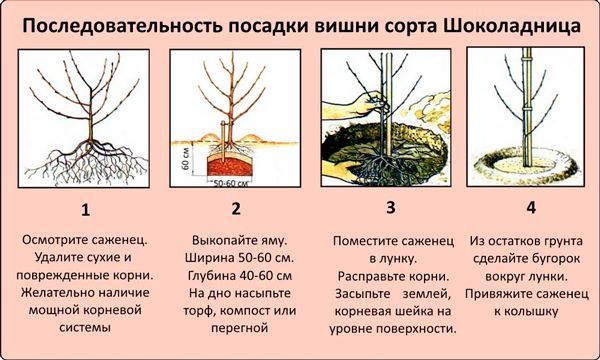
To ensure the seedling takes root well, the following steps are taken:
- dig a hole 70x70 cm, 50 cm deep, if the soil is poor, then the size is increased by 1.5 times;
- carefully loosen the bottom, pour in a bucket of water;
- then prepare mineral fertilizers from manure or compost with the addition of wood ash, as well as superphosphate or potassium sulfate;
- the hole is filled with soil mixed with fertilizers to two-thirds capacity, then a support post is driven in;
- cut off all broken roots, place the seedling next to the support so that the graft is 6-8 cm above the ground surface;
- straighten the roots, lower the seedling into the hole, carefully cover it with soil, periodically watering and compacting the soil;
- the roots are completely covered with soil, the seedling is watered generously;
- The soil around the tree is mulched, and the trunk is tied to a support.
Watering and fertilizing
Thanks to its drought-resistant properties, the tree tolerates a lack of moisture more easily than excess. With regular rainfall in the spring, watering is unnecessary. Trees are watered after flowering, then in the second half of June, then 12-15 days before harvest, and 3-4 weeks before frost.
Feed Shokoladnitsa in the spring using nitrogen fertilizers or liquid organic matter, such as bird droppings or cow manure. During the summer, feed the plant 3-4 times with potassium chloride or superphosphate. Wood ash can also be used instead. In mid-September, apply a complex fertilizer.
Trimming options
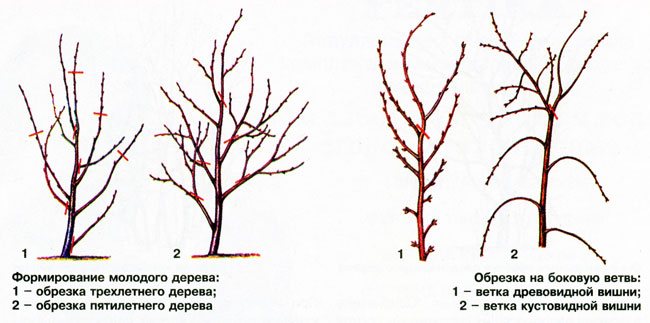
The best time to shape a cherry tree's crown is early spring, before the buds swell. Dry or frost-damaged shoots are removed first. After that, remove any branches growing inward or intertwined with other shoots.
To maintain fruitful growth, maintenance pruning is used to thin out branches and provide shoots with the necessary air and sunlight. Crown development is stimulated by regulating or rejuvenating pruning, which involves shortening 30% of the main branches. This allows new growth to emerge during the summer, which is then shaped into the desired growth direction.
Preparing for winter
After the leaves have fallen, the soil around the trunk is dug up and then watered thoroughly. This should be done at least three weeks before the first frost. To protect the tree from rodents, the dug up soil should be covered with nylon material or spruce branches.
When pruning shoots in the fall, the cuts must be treated with special mixtures. The final application is covered with mulch, the layer of which should be at least 5 cm thick.
Diseases and pests of the Shokoladnitsa cherry
The tree's susceptibility to diseases requires special attention when caring for it. The pathogens that cause moniliosis and coccomycosis enter the crown during pruning at the cut points. To prevent infection, tools are treated with garden pitch or charcoal before pruning. As a preventative measure, trees are treated with Bordeaux mixture or copper sulfate in the spring. The crown of Shokoladnitsa is treated with antifungal agents.
To prevent diseases, fallen leaves are collected and burned. Fungicides are used to prevent pathogens from spreading.
The main pest of cherry trees is aphids. To combat them, use garlic or tobacco infusions, and if the infestation is severe, use special preparations.
-
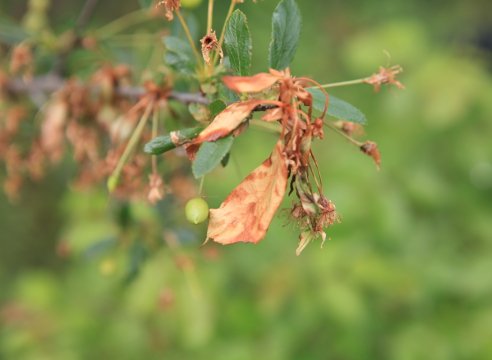
- Monoliosis
-
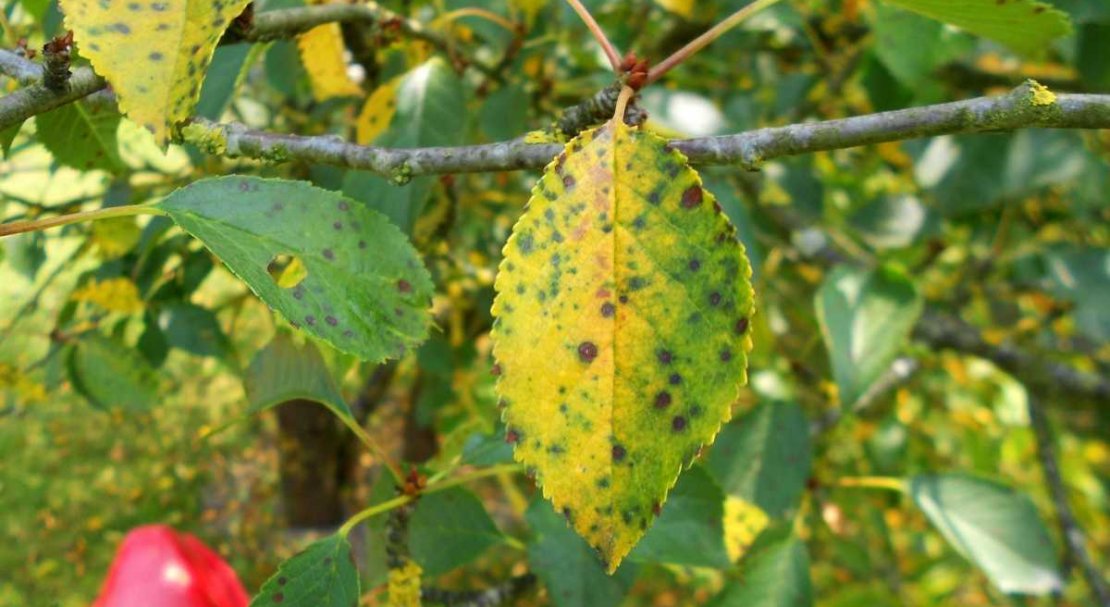
- Coccomycosis
-
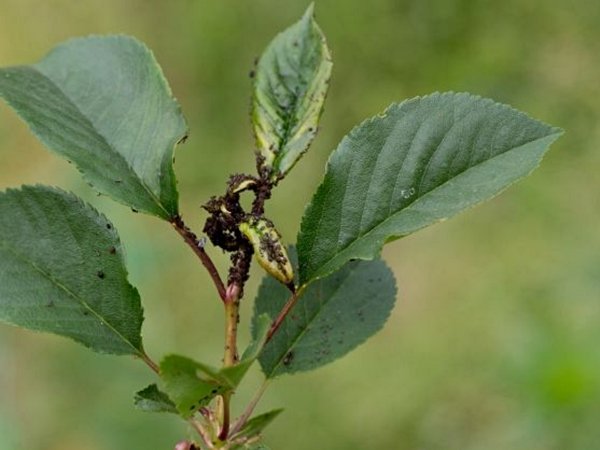
- Common black aphid
Reviews from gardeners
We love cherries; there are many different varieties in the garden. Five years ago, we planted Shokoladnitsa, and last year we had our first bountiful harvest—the whole family is happy! In the third year, aphids were plaguing it, but we treated it with an infusion of homegrown tobacco—the problem was solved. Now I spray it every year.
I've been growing the Shokoladnitsa tree for eight years now. It's been delighting me with its blossoms and fruit for years. The flavor is unforgettable; I can preserve it for compotes and make jam for the winter. When I bought it, I was worried about our harsh climate, but I fertilize and water it regularly, and the tree expresses its gratitude with a sizable harvest.
After reading the description of chocolate cherries and reviews from gardeners, consumers can only be convinced of their desire to plant this simple and undemanding crop in their garden. It's important to be mindful of diseases and timely fertilizing.