
A review of self-fertile cherry varieties for the Moscow region
Content
Apukhtinskaya
The Apukhtinskaya cherry variety is quite popular among gardeners in our country. Some gardeners consider it a dwarf variety, although it is actually a medium-sized tree. Its maximum height is 2.5–3 cm. The tree resembles a bush in appearance.
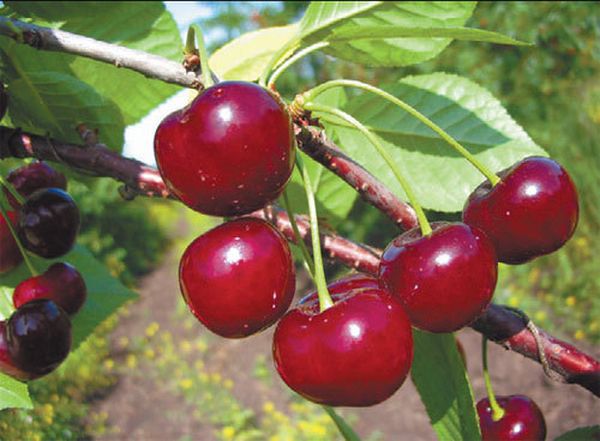
The Apukhtinskaya variety begins to yield early, in its second year. It has the following characteristics:
- Large-fruited. The shape of the cherries resembles hearts;
- regular and abundant fruiting;
- late ripening period. Harvesting begins in mid-August;
- high cold and drought resistance;
- Low immunity to fungal diseases. The tree is particularly susceptible to coccomycosis.
Thanks to these characteristics, the Apukhtinskaya, an old variety, remains popular today. This variety produces beautiful and delicious cherries. The cherries are dark red in color and have a pleasant, distinctly tart flavor. They are used in various preserves.
Apukhtinskaya is often planted in the Moscow region, as it can bear fruit well in such climatic conditions.
Volochaevka
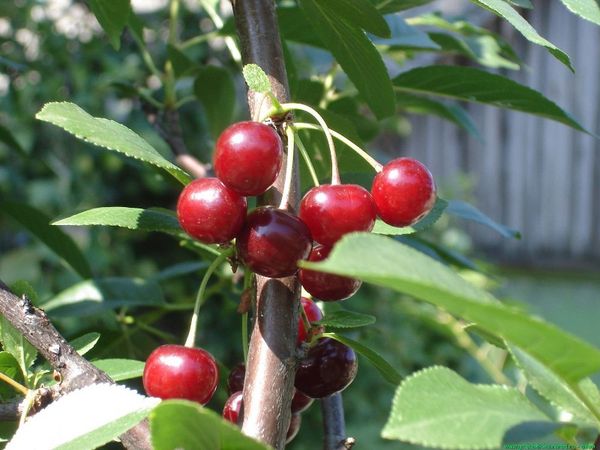
Another popular cherry variety in the Moscow region is the Volochaevka. This medium-sized tree is characterized by good annual fruiting. Key characteristics of this variety include:
- regularity of harvests;
- Self-fertility. The formation of male and female flowers is characteristic. Therefore, self-pollinating varieties of this fruit crop should not be planted near Volochaevka;
- mid-season;
- Low frost resistance, meaning the tree needs to be carefully prepared for winter. With proper preparation, the tree can tolerate frosts well;
- Average immunity to rot. Its development occurs during the rainy season;
- Large-fruited. The fruits weigh about 4.5 g.
The Volochaevka produces sweet fruits with dense, juicy flesh. This makes the pit very easy to separate. The skin is ruby red. The fruits have a distinct cherry aroma.
Zagoryevskaya
Many cherry varieties native to the Volga region are suitable for cultivation in the Moscow region. Among them is the Zagoryevskaya variety. This variety is a hybrid created by crossing the Lyubskaya and Shirpotreb Cherny cherry varieties.
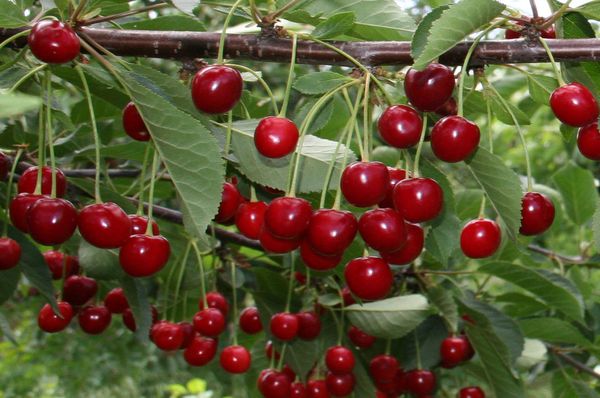
This dwarf tree is characterized by its low growth and bushy habit. This variety has a sparse but spreading crown, characterized by a wide diameter.
The variety has the following characteristics:
- large-fruited;
- regularity in fruiting;
- Good frost resistance. However, in severe frosts, buds may freeze;
- The yield is average, with a decline observed after particularly cold winters;
- average immunity to various fungal diseases (especially coccomycosis).
Fruiting occurs on one-year-old shoots. The fruits have the following description:
- round shape;
- brown or dark red color;
- large sizes;
- weight about 3.7 g;
- The flesh is dense and sweet with a slight chocolate aftertaste. Its color is also dark red.
Separating the fruits requires some effort. The tree produces its first harvest only in its third or fourth year. The ripe fruits are harvested in July–August.
Zagoryevskaya is suitable for cultivation in northwestern and southwestern Russia. When choosing varieties for the northwest, it's essential to emphasize cold hardiness. This requirement also applies to the western region.
Lyubskaya
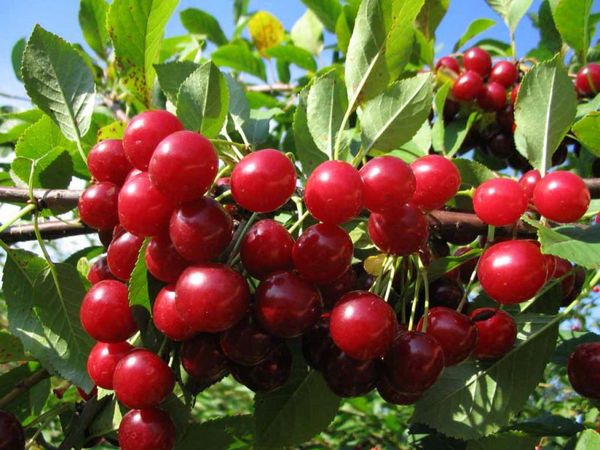
Self-fertile cherry varieties that can be grown in the Moscow region include those producing fruit with different characteristics. The Lyubskaya variety is quite popular in the Moscow region. When choosing early cherry varieties, this one is definitely worth considering. It is self-fertile. The tree rarely exceeds 2.5 meters in height. Its crown is spreading but not dense.
Lyubskaya has the following characteristics:
- high yield;
- early fruiting;
- poor frost resistance;
- low immunity to many types of diseases;
- self-fertility;
- compactness, which makes the harvesting process easy.
Fruiting begins earlier than many varieties of this fruit crop—in the second year. Lyubskaya reaches its full potential in its ninth year. During this period, a single plant produces up to 60 kg of yield. However, at 20 years of age, the plant's life cycle ends, leading to a gradual decline in yield.
The fruits of this variety are characterized by the following description:
- large size;
- color dark red;
- sweet and sour taste;
- dense pulp, which makes the fruit highly transportable.
Typically, cherries of this variety are used for making preserves: jams, compotes and wine. Lyubskaya is actively grown in the central part of Russia, as well as in the Moscow region.
In memory of Yenikeev
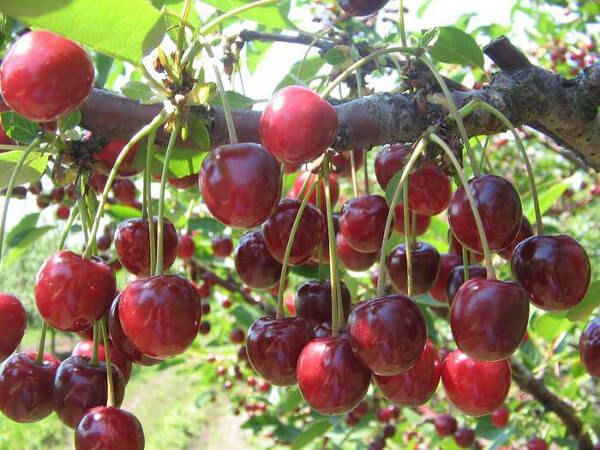
The Pamyati Yenikeeva variety differs somewhat from the varieties described above. This cherry tree can grow to a height of 3 meters. The tree is characterized by a moderately dense, spherical crown.
The variety has the following characteristics:
- average yield;
- large-fruited;
- self-fertility without the need for additional pollination;
- high taste characteristics of fruits;
- average resistance to drought and cold.
Fruiting begins 3–4 years after planting. Harvest begins in late June. One tree produces up to 15 kg of cherries.
This variety is popular for its large fruits, weighing approximately 5 g. The fruit's size is more similar to that of a cherry. They have the following description:
- oval shape;
- color dark red;
- juicy pulp that has an excellent taste;
- large bone.
The Yenikeev Memory cherry is often grown in regions of Russia characterized by a moderate climate.
Rastorguevskaya
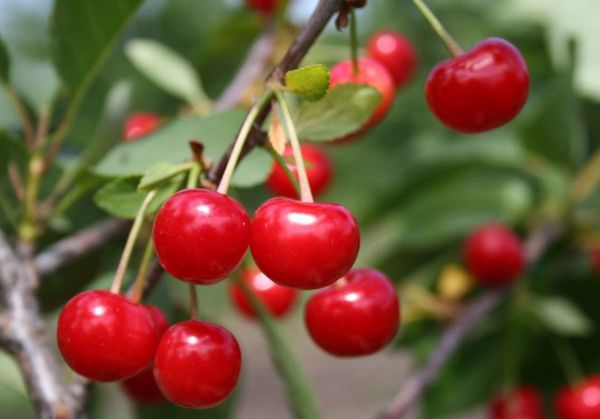
The Rastorguevskaya cherry is very popular in the Moscow region. This variety was developed at the beginning of this century. Rastorguevskaya is a self-fertile hybrid with a versatile purpose. The harvested fruit can be eaten fresh or processed.
Rastorguevskaya is considered a benchmark variety that is easy to care for, produces good fruit, and produces tasty fruits.
Chocolate Girl
The Shokoladnitsa cherry variety is renowned for its unusual fruits. They have excellent flavor and a beautiful appearance. The fruits have a dark burgundy or chocolate-colored skin and firm, red flesh.
The tree is not tall (2–2.5 m). Fruiting begins in the fourth year. The Shokoladnitsa tree is characterized by the following characteristics:
- high self-fertility;
- high immunity to various diseases, but there is susceptibility to fungal diseases (moniliosis, coccomycosis);
- drought resistance;
- stable fruiting;
- average yield – no more than 11 kg.
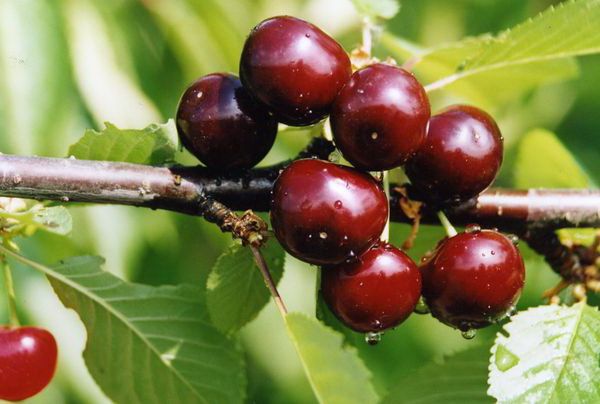
Shokoladnitsa is often grown in many regions of the country, including the Moscow region.
The article described the most popular and best self-fertile cherry varieties suitable for the Moscow region. All of them have both advantages and disadvantages. However, they were recognized as the best in terms of care, fruiting, disease resistance, and low temperature tolerance. However, almost all of them are dwarf or low-growing varieties.
Video: Cherry Tree Care Tips
This video will give you some helpful tips on how to care for your cherry trees.