
Description of the fruits and frost-resistant Radonezh cherry tree
Content
Description and characteristics
Tree
Radonezh trees are distinguished by a relatively short trunk. The crown is rounded-oval, with a medium density. The plant height ranges from 3 to 3.5 m. Annual shoots bloom and produce ovaries. The shoots are thick.
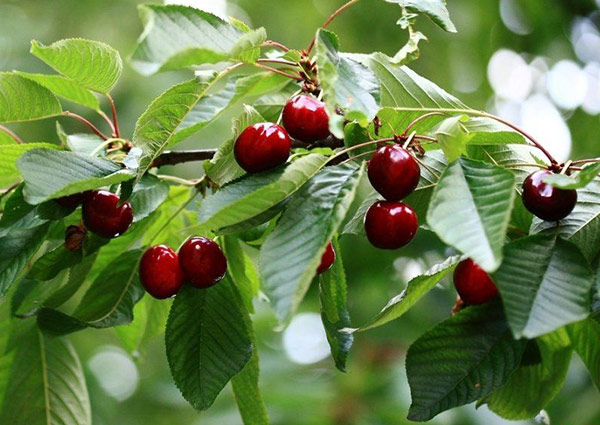
The leaves are leathery, glossy, flat or slightly cupped, wide, oval-shaped with a pointed tip. They are borne on short, medium-thick petioles. The vegetative bud (from which shoots develop) is cone-shaped, while the generative bud (from which flowers emerge) is ovoid. Glands are located at the base of the leaf and petioles.
Seedlings of this variety begin to bear fruit in their fourth year. Saucer-shaped, medium-sized white flowers form inflorescences of 5–6. The stamens and pistil are long, with the pistil usually positioned flush with the anthers. The sepals are narrowly goblet-shaped.
Radonezh typically blooms in May. It is partially self-fertile, capable of self-pollinating at 20-40% rate. To ensure a good harvest, other pollinators with similar flowering times are needed (cherries such as Lyubskaya, Vladimirskaya, and Turgenevka are considered the most suitable).
Radonezh prefers light, super-sandy soils that allow moisture and air to pass through well, close to neutral. Groundwater levels should not be higher than 1.5 m.
Responds well to proper, systematic crown pruning. Regular fertilizing is essential.
This variety is suitable for both private and commercial farms. Recommended for the Central Region.
Fruit
The first harvest from this variety can be obtained at the end of June. Radonezh berries are sweet and sour, juicy, weighing 4–4.8 g. Their delicate flavor makes them a dessert variety. They are round and medium-firm. They sit on a long stalk, from which they are easily separated. The juice and pulp are dark red. The sugar content is 10%. The pit is easily separated, weighing approximately 6% of the berry's total weight.
The fruits are suitable for both raw consumption and for making jam and compotes. They can also be frozen and dried, and used to make cherry juice. The maximum yield for this variety is 70 c/ha, with an average yield of 50 c/ha.
Advantages and disadvantages of the variety
A key advantage of the Radonezh cherry variety is its high frost resistance. It tolerates both harsh winters and spring frosts, including during flowering. According to reviews, frosts as low as -5°C can damage only 30% of the blossoms.
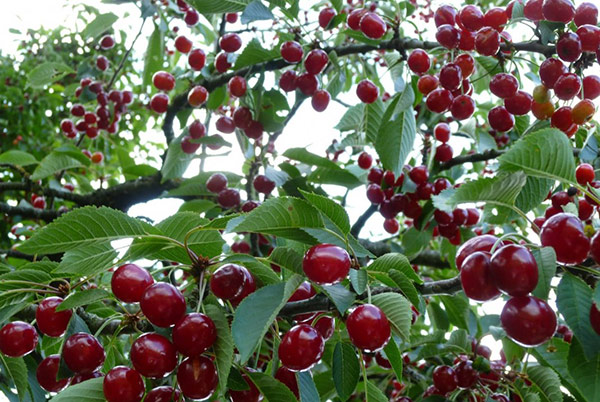
The variety is also resistant to fungal diseases such as coccomycosis and moniliosis. However, due to the high infection rates observed in recent years, treatment with copper-containing products is highly recommended.
Radonezh is demanding in terms of lighting, without which both the yield and the quality of the fruit decrease.
Video: Cherry Tree Care Tips
This video covers the basic steps for properly caring for this fruit tree so it grows strong, healthy, and produces a rich harvest of delicious berries.