
How to graft a cherry tree onto a cherry tree for a beginner
Not sure how to graft a cherry tree onto a sour cherry tree? Our article will help you choose the optimal time for the procedure, prepare the rootstock and scion, and graft the plants correctly.
Content
When is the best time to vaccinate?
To ensure successful grafting and the successful establishment of the cutting on the tree, it's important to choose the right time. Experienced gardeners recommend grafting fruit and berry crops in early spring. The optimal time is considered to be from early March to mid-April, when temperatures are no longer below freezing. Frost can kill the fruit tree cutting.
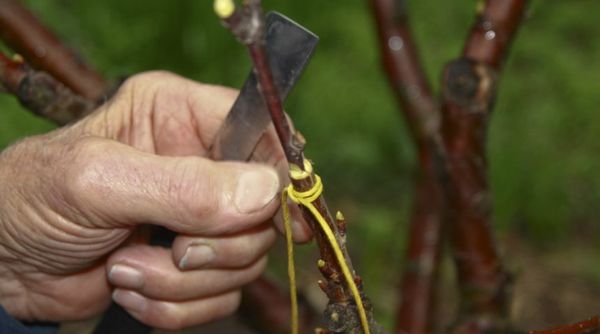
Why is it better to graft cherries onto sour cherry trees in spring? During the period of active spring sap flow, the likelihood of successful fusion between the scion and rootstock increases.
If for some reason you weren't able to graft the plant in the spring, you can do it in the summer. However, choose a cloudy, dry day between mid-July and late August. Experienced gardeners note that grafting cherry trees onto cherry trees in summer in such weather promotes better survival of the cuttings.
Is it possible to graft two fruit and berry crops in the fall? Don't give up on this idea, but try to do it before the cold weather sets in. If you graft a tree in September, then, given favorable weather conditions, the cutting will have time to take root before the first frost.
Necessary tools
Be sure to prepare all necessary tools and equipment in advance. You will need the following during the procedure:
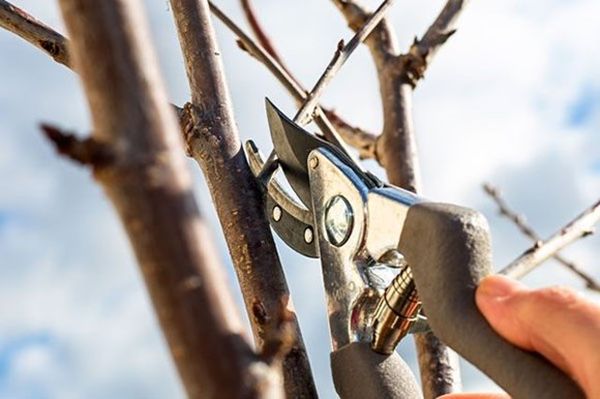
- a sharply sharpened budding knife (the tool must be sharp to cause minimal damage to the plants and to avoid introducing any infection);
- garden saw and pruning shears;
- material for strapping (thick polyethylene film or wide electrical tape);
- a means for treating wounds and grafting sites (garden pitch or oil paint based on drying oil);
- scion (a cutting of the grafted cherry variety);
- rootstock (cherry tree onto which another fruit or berry crop will be grafted).
Preparing the scion and rootstock
We've already covered the basic definitions of scion and rootstock. Now it's worth noting that the success of the procedure depends on the fruit and berry crops chosen as scion and rootstock. Since we're aiming to increase the fruiting and yield of our cherry trees, this crop is therefore our scion.
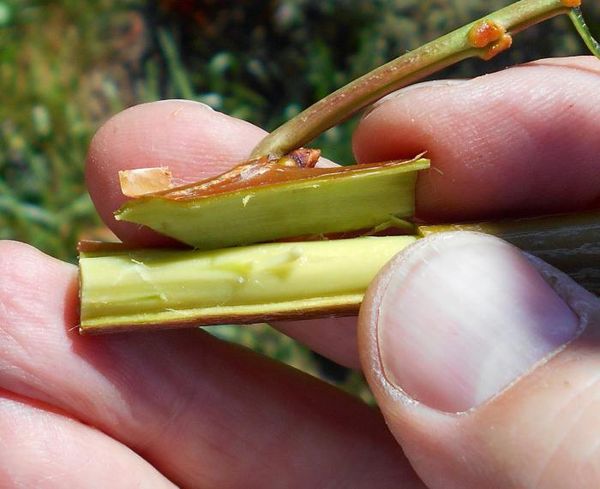
The best rootstocks are considered to be those trees that have a similar structure and uniform morphology. Following the recommendations of professional gardeners, a cherry tree cutting can be grafted onto a different cherry variety or onto a sour cherry (Lyubskaya, Vladimirskaya, Magalebskaya, as well as the Pika, VSL, Gizella, and Kolt hybrids).
Select and cut the cuttings in the fall before frost. By this time, the tree's leaves have fallen, sap flow has stopped, and the plant is dormant. Choose one-year-old shoots with an average diameter of 5 mm. The cuttings should have a growth bud at the top and several leaf buds located on the sides.
The scion is placed in a cool room where it will be stored until spring. Before grafting, the scion is removed from storage, disinfected in a weak solution of potassium permanganate, allowed to acclimate to room temperature, and then soaked in water for 16–24 hours. The more moisture the branch absorbs, the faster it will germinate.
It is desirable that the place on the cherry tree where the grafting will be carried out matches the diameter of the scion.
Step-by-step instructions
Farmers distinguish several methods for grafting cherry cuttings onto cherry trees. The most common grafting methods include:
- in a half-split;
- into the cleft;
- on the bark;
- normal or improved copulation;
- bridge;
- in the side cut;
- into the corner cut.
Let's take a closer look at one of the simplest methods, which even beginners in gardening can handle.
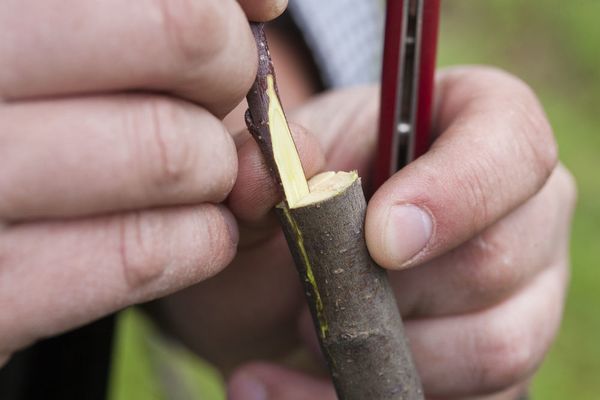
The standard copulation method (used only if the thickness of the scion and rootstock are identical – maximum 15 mm):
- On the lower part of the cutting and on the branch of the cherry tree, make oblique cuts no more than 3–4 cm long.
- Place the scion onto the rootstock so that both cuts match perfectly.
- Wrap the grafting site tightly with plastic film or electrical tape.
- Cover the top of the cutting and the joint with garden pitch or oil paint.
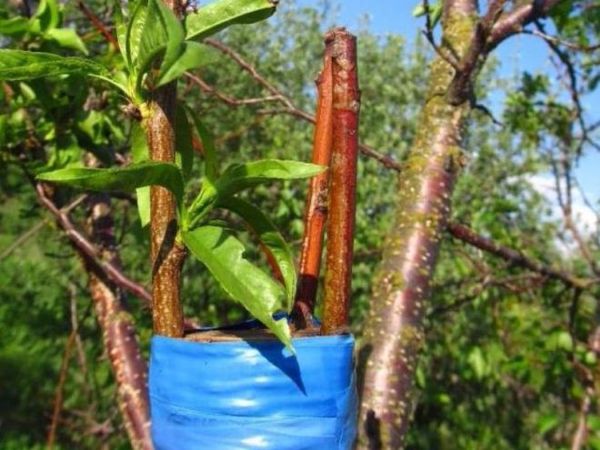
As you can see, grafting a cherry tree onto a sour cherry tree isn't particularly difficult. It just takes a little time and a little determination.
Further care
For grafting to be successful, it's essential to provide the plant with proper care. Proper care for a grafted tree includes treating the fruit and berry crop against harmful insects, pinching, and pruning.
Young leaves on the cuttings become a target for insects. To protect the plant, spray the tree with Tanrek or Biotlin insecticide once every 2-3 weeks.
One to two months after the procedure, apply a splint to the graft site to protect the branch from gusty winds. In early August, gardeners recommend pinching the shoots that have formed at the tip of the cherry scion. In the spring, the first pruning of young shoots should be done.
Video: "Grafting Cherry Trees onto Cherry Trees"
This video will show you how to graft a cherry tree onto a cherry tree.