
Choosing the best cherry tree variety and planting it in spring in the Moscow region
Content
How to choose a variety for the Moscow region
Today, numerous cherry tree cultivars have been developed through selective breeding. Different cherry species and cultivars have distinct flavors, which are highly valued in the fruit industry. The diversity of cultivars also depends on the plants' tolerance to the weather and climate conditions of different regions and their resistance to diseases common to these types of fruit trees.
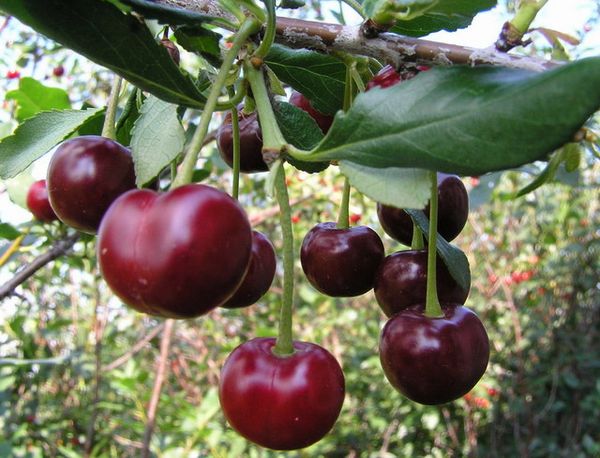
Depending on the ripening time of the fruit, farmers distinguish three types of cherries:
- early maturing;
- mid-season;
- late.
To ensure a plant takes root, thrives, and produces a bountiful harvest in a given location, it's essential to select the right variety. If you're looking for suitable cherry varieties for the Moscow region, we'll help you determine which ones are best suited for your area. According to recommendations from summer residents and gardeners with many years of experience, the following cherry varieties are suitable for the middle zone: Molodezhnaya, Turgenevka, Lyubskaya, Apukhtinskaya, Shokoladnitsa, Volochaevka, and others.
What are the benefits of spring planting?
When to plant cherry trees in the Moscow region – in spring or fall? Both options are used in gardening. The key is to adhere to precise planting dates. For fall, this means September and the first week of October. However, if early fall is particularly rainy and cold, it's best to postpone planting until spring. If you've already purchased the seedlings, they need to be dug into the ground. To do this, dig a hole and lay the tree at an angle, cover the roots with soil, and water thoroughly.
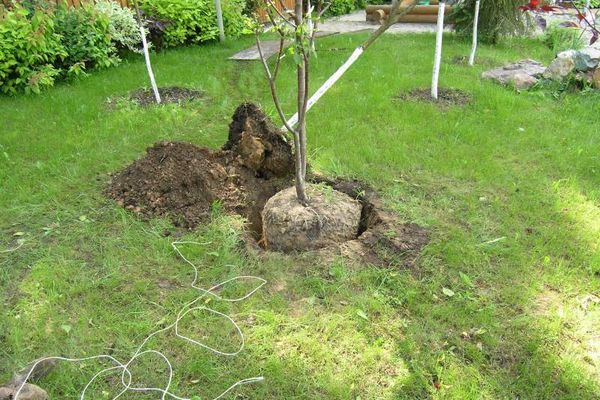
Cover the top with pine or spruce branches and sprinkle with sawdust. You can also sprinkle with snow. In this way, young trees will withstand winter frosts and will survive well until spring. Planting cherry trees in spring is a more common option in the Moscow region.
Farmers recommend planting seedlings before the first ten days of April – a period when the buds formed on the trees have not yet begun to bloom.
Choosing a landing site
An equally important aspect of planting a fruit tree is choosing a location. Cherries love full sun, but they don't tolerate open areas with strong winds. Choosing the soil: Cherries grow well in sandy loam or loamy soil. Avoid areas with high acidity. The plant also dislikes marshy soil and areas with a high water table.
Choosing a cherry tree seedling
Planting a fruit tree begins with choosing a sapling. What makes an ideal cherry sapling? Opt for one- or two-year-old trees. Sellers often offer older cherry trees (three- or four-year-olds), but it's best to avoid these trees, as they have a hard time establishing themselves in a new location.
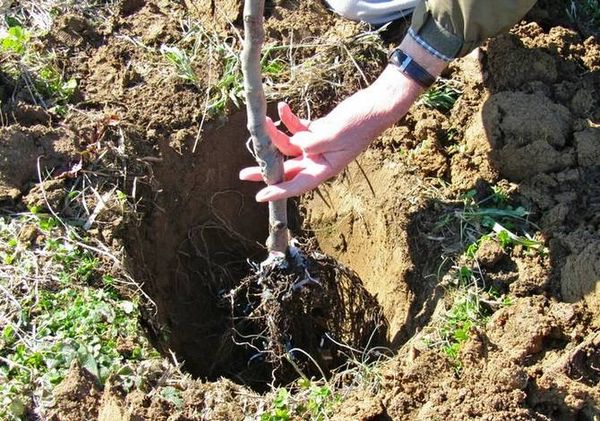
The seedling height should be between 70–80 cm for a one-year-old and 100 cm for a two-year-old. If you're offered a plant that's around 1.5 m tall, decline. Trees that are too tall are the result of too much nitrogen fertilizer. The trunk should have several branches and a well-developed root system. To check if the tree the seller is offering is a good one, break off a thin branch and inspect the break. It's also recommended to pry up the young bark with your fingernail; the trunk underneath should be green.
Preparing the planting hole
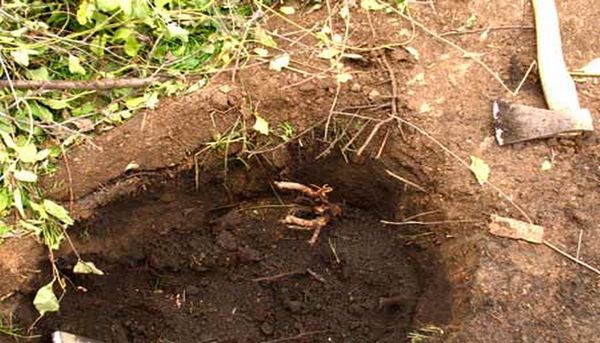
Preparing the hole (planting hole) begins in the fall. The topsoil should be preserved. The optimal dimensions for a cherry tree planting hole are 60 x 100 cm (where the first number is the diameter and the second is the depth). Cherry trees are planted in the spring, after inspecting the root system. Be sure to check for signs of disease and insects, and remove any broken or damaged roots. Planning to plant several cherry trees close together? Remember to maintain a distance of 2.5–3 m between planting holes.
Planting a seedling
Now let's look at how to plant a cherry tree step by step:
- Add organic fertilizer to the pre-prepared planting hole and cover with a layer of soil.
- Place the seedling in the center and carefully cover it with soil. Don't bury the root collar too deep—it should be 4–6 cm above ground level.
- Compact the soil.
- Place a wooden stake nearby and tie the seedling to it.
- Dig three holes 25–30 cm from the planted tree. Water the seedling—you'll need about three buckets of warm (room temperature) water.
- After the water has been absorbed, the soil will settle. Correct any potential planting errors when planting a young tree.
- Cover the soil with a layer of sawdust and humus - this will ensure moisture retention and protect the soil from cracking.
Further care
The tree has been planted, now it's time to ensure proper care for the cherry tree in the spring. If organic fertilizer was added to the planting hole, no additional feeding will be necessary for the foreseeable future. Watering and gentle loosening of the soil are the basic rules for caring for a newly planted seedling.
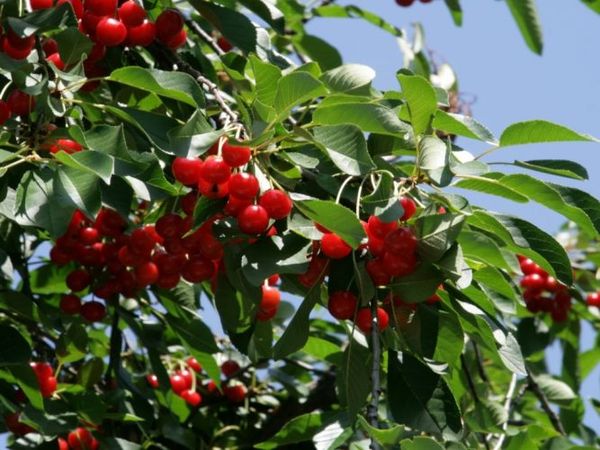
Frosts are common in spring. To protect young plants that have just begun to bloom from frost, smoke the garden. The smoke releases warm air and warms the trees. Regular watering, fertilizing in spring and fall, timely and proper pruning, and disease and insect prevention will allow you to grow beautiful and delicious cherries in your own garden.
Video "Planting Cherry Trees"
This video will show you how to plant a cherry tree correctly.