
Timing and rules for planting cherry trees for beginners
Content
How to choose the right variety
The variety you choose determines not only the tree's yield or the taste of its berries, but also how difficult or easy it will be to grow: the tree must be resistant to local winters, humidity, and soil.
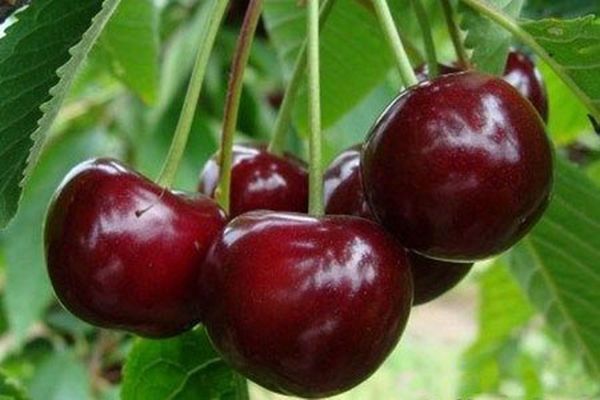
In the central part of the country, Vladimirskaya, Nizhekamenskaya, Shokoladnitsa, and Stoykaya are good choices. In the southern regions, Girlyanda, Surprise, Effektnaya, and Khutoryanka will thrive. For the Leningrad Region, frost-resistant Rubinovaya, Lyubskaya, Amorel Nikiforova, Zvezdochka, and Michurinskaya are good choices. An important requirement for varieties suitable for the Moscow region is resistance to fungal diseases. Consider Shchedryaya, Igrushka, Almaz, and Molodezhnaya.
In the Urals, you can plant 'Plamennaya,' 'Standard Urala,' and 'Mayak.' In Siberia's challenging climate, 'Metelitsa,' 'Altaiskaya Krupnaya,' 'Altaiskaya Lastochka,' and other varieties will produce fruit.
Planting cherries and sweet cherries is possible using both grafted and own-rooted seedlings. Own-rooted varieties tolerate frost better, but grafted varieties begin to bear fruit faster.
Please note: most varieties are non-self-fertile, meaning they require a pollinator from another variety (not just another tree!) to produce fruit. What should you plant with a non-self-fertile cherry tree? For pollination, choose another regionalized variety that blooms at the same time. Sweet cherries and sweet cherries are good pollinators for each other.
When to plant a tree
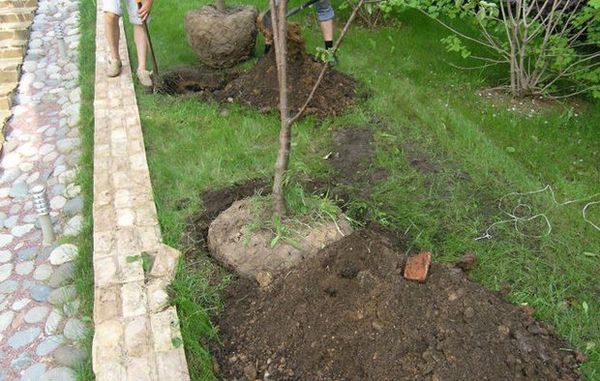
Cherry tree planting times vary depending on the climate of each region. Many experts recommend planting cherry trees in the fall for southern and central regions. Planting cherry trees in the spring poses no threat to the tree; flowering will simply begin the following year. For northern regions, spring is the only suitable time to plant cherry trees: severe cold and frozen soil can destroy immature saplings.
The optimal time to plant cherries in the spring is around mid-April. For northern regions, May is more suitable. Since cherries need to be planted in warm soil in the spring, the timing may shift depending on how long the winter lasted.
When planting cherries, plums or sweet cherries in the spring, it is advisable to wait for dry, warm and windless weather.
What a good seedling should be like
Beginning cherry tree growers sometimes wonder: is it possible to grow a cherry tree from a neighbor's sucker? The answer: only if the plant is self-rooted, but even then the yield will be inferior to that of the mother tree. If you do decide to take one, it's best to use shoots a few meters from the trunk, as they are stronger there. If the tree is grafted, the sucker will be of no use at all—it's a wild plant.
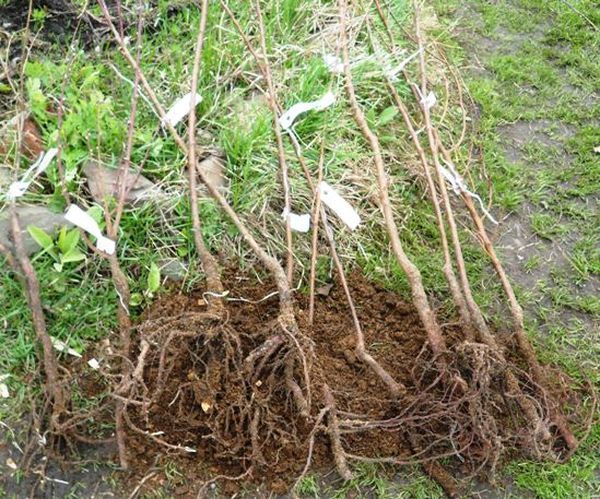
It's best to use seedlings from a professional nursery. Choose cherry trees 85–95 cm tall with a well-developed root system and at least eight shoots measuring 10–20 cm each. A large seedling with many shoots will have a much harder time taking root: the older the plant, the more stressful it is to transplant.
Of course, the tree shouldn't have any defects, damaged bark, broken branches, etc. There shouldn't be any growths on the roots. Gently bend the root—it should be flexible and not crunch. This also applies to the shoots—if they crunch when pressed and the bark crumbles, the plant is overdried.
Please note that the budding site should be visible on the trunk: a slight curvature 5–15 cm above the root collar. If this is not the case, the sprout may be a seedling without any signs of a wilted variety.
For spring planting, you can use a cherry tree sapling purchased in the fall, when the selection is much wider. For the winter, place the sapling horizontally in a hole and carefully cover its roots with soil. In this condition, it will easily survive the winter, and planting the cherry tree in the spring will be successful.
A good choice is a seedling with a closed root system. It grows initially in a container, so its roots are not damaged when dug up for sale, and they don't dry out in the pavilion. It also fits into the planting hole with a lump of its native soil. This ensures a much higher survival rate than seedlings with open roots.
Selecting a location and soil for planting
Before planting a cherry tree in the spring, you should take care to choose the optimal location on the site.
A well-lit location on the south side of the house is preferable. However, the plant shouldn't be exposed to direct sunlight all day long—if there's a fence or building nearby, it will provide shade during the hottest part of the day. Also, keep in mind that the crown will expand and shouldn't be impeded. Each variety has its own maximum crown size, so it's a good idea to research the cherry tree you're choosing in advance.
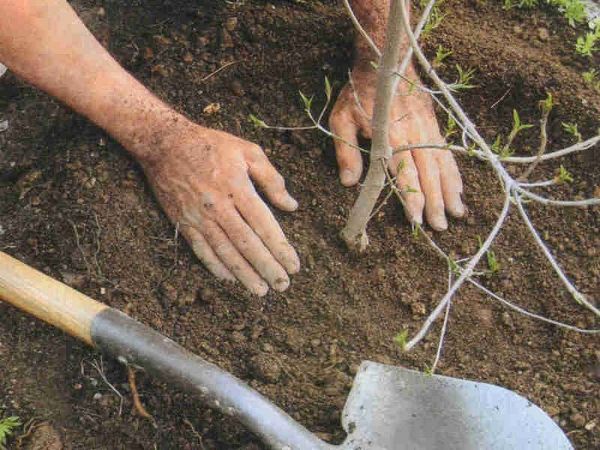
The soil should be sandy or loamy, fertile, loose, and aerated, neutral or slightly acidic (in acidic soil, the tree will grow poorly or fail to thrive at all). However, owners of plots with acidic soil need not worry, as it is possible to prepare a site for planting a cherry tree even in this case: simply apply lime and treat the soil with dolomite flour or wood ash.
If sandy loam soil is acidic, 500 g of lime per square meter is needed; for heavy loam soil, 700–800 g. Therefore, the planting site for young cherries should be prepared several months in advance to allow the reaction to occur. If the soil is heavy, preparing the hole should include mixing soil with sand.
Some experts argue that early spring preparation for planting should also include fertilizing the soil, and that this should be done 2-3 weeks before the cherry tree is planted.
Cherry trees do not like stagnant water, so groundwater should flow no closer than 2.5 m to the surface, and the site itself should not be located in a lowland where there is a risk of flooding from melt or rainwater.
When considering how to plant cherry trees, keep in mind that the plants shouldn't be crowded. A dense cherry orchard not only hinders the trees' normal development but also encourages the rapid spread of pests and dangerous fungal infections. Cherry tree planting patterns vary by variety, but in all cases, the distance between rows should be at least 4 meters, and between saplings, 3 meters. A staggered arrangement is recommended.
Step-by-step planting instructions
Let's look at step-by-step instructions on how to plant a cherry tree correctly.
The planting hole should be approximately 80 cm in diameter and 50 cm deep—the size of the hole can vary depending on the size of the roots. Separate the top and bottom layers of soil removed from the hole. Mix the top layer of soil with compost, superphosphate, wood ash, and potassium chloride (spring planting requires fertilization—without it, the tree will grow much more poorly or fail to thrive).
Drive a peg into the hole, fill it with the prepared mixture around it, and then add an 8–10 cm layer of “bottom” soil on top.
If you're planting with a partner, your partner should check the condition of the roots. Any damaged parts should be trimmed off. Articles on how to plant cherry trees often recommend dipping the roots in a mixture of manure and clay. If the root inspection reveals that the roots have dried out (this can happen when buying bare-root seedlings), soak them in water for 5-6 hours.
If you want to know how to plant a cherry tree correctly, be sure to pay attention to this point: the plant should be planted in a prepared hole so that part of the root collar (3-4 cm) rises above the surface.
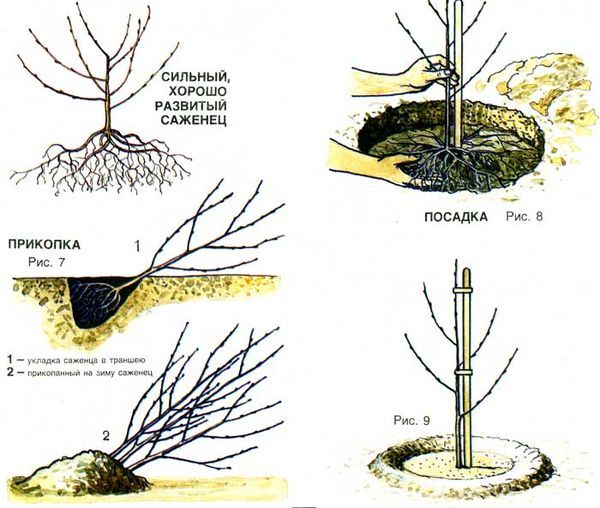
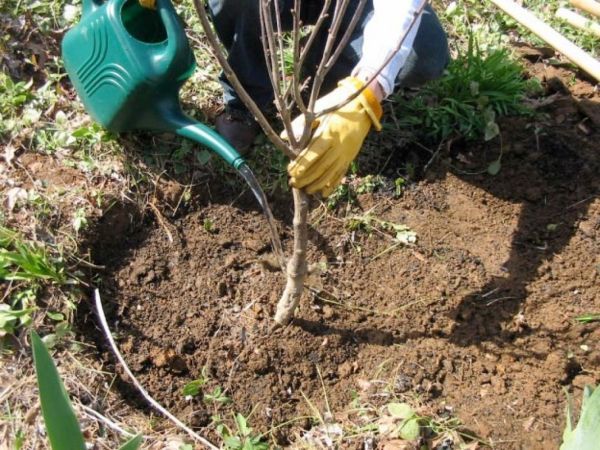
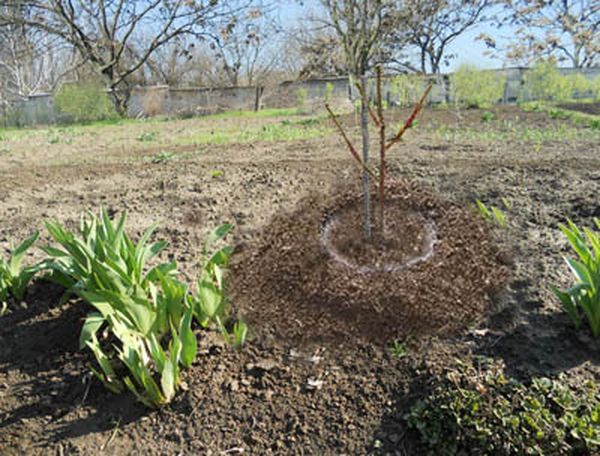
Finally, fill the hole with soil from the bottom layer and tie the tree to the stake. Gently compact the soil to form a hole around the trunk. For the first watering, you'll need two buckets of water. Finally, mulch the hole with sawdust.
Further care
Proper planting and care of cherry trees are equally important for a good harvest. For the first 1-2 years, a young tree will require abundant and frequent watering (on average 12 times per season), then reduce the amount. Regular loosening of the soil around the tree is essential.
The crown needs to be maintained: shape it and promptly remove broken or drying branches. After the first spring pruning, 4–8 shoots should remain, evenly spaced along the trunk.
It's believed that fertilizing isn't necessary for the first two years—the fertilizer applied at planting is sufficient. Other experts, however, recommend nitrogen fertilization in the spring. If the tree's growth during the season was less than 30 cm, phosphorus and potassium can also be added in the fall.
Proper planting and care will ensure a healthy, abundantly fruiting cherry tree.
Video: Cherry Tree Planting Instructions
This video will teach a novice gardener how to properly plant a cherry tree in their garden.