
How do cherry trees pollinate?
Content
How and under what conditions does pollination occur?
Pollination, or sexual reproduction, is the stage in plant development when mature pollen grains are transferred from the anther to the stigma of the pistil. The pollen grains then germinate in the pistil, fertilize the ovule, and ultimately produce ovaries. If a plant pollinates with its own pollen, it is considered self-pollination; if pollination requires an intermediary (an insect, animal, or human), then we speak of cross-pollination.
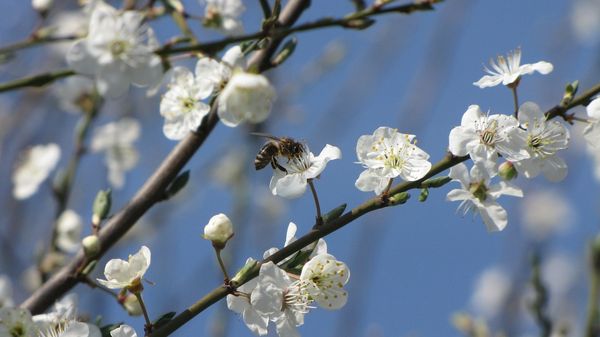
Trees are typically pollinated by insects or wind. However, there are situations when plants are pollinated artificially—by hand. There may be several reasons for this: the tree bloomed too early, before insects emerged from winter, or access to the tree was limited. For effective pollination, it's important not only to check the plant's readiness (pollen maturity) but also to wait for suitable weather conditions. Typically, plants are pollinated in the middle of the day during warm, dry weather. This is done using a small, soft brush or a cotton swab.
Suitable weather conditions are one of the most important factors responsible for the possibility and effectiveness of pollination. Atmospheric extremes, such as heat, cold, or dampness, adversely affect flowering. High temperatures dull the receptivity of the stigma, while low temperatures can cause damage. Such weather is also unfavorable for pollinating insects. High humidity and precipitation wash away a significant portion of the pollen and create favorable conditions for the development of fungal diseases. Strong gusts of wind significantly complicate the process of collecting and transporting pollen for insects.
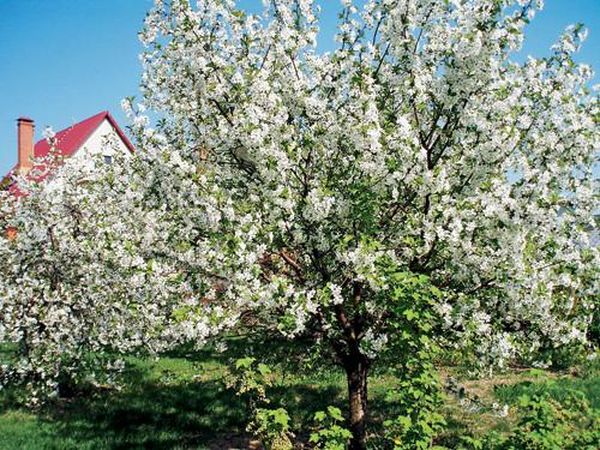
Since not all cherry varieties self-pollinate, it's recommended to plan for cross-pollination in advance and select the optimal pollinator for your cherry tree. Therefore, it's best to plant trees in pairs, choosing different varieties with similar flowering times. Specialty stores can help with this. You can also find information in specialized gardening guides.
Cherries and sweet cherries are genetically closely related crops with similar pollination and flowering processes. Naturally, the question arises as to whether cherries can pollinate sweet cherries, and vice versa. The situation is ambiguous: cherries are often suitable pollinators for sweet cherries, but pollination of cherry trees by cherries by cherries is very rare. Cherry pollen retains its ability to germinate on the body of the pollinating insect for more than a week. However, since cherries bloom earlier, only early cherry varieties can be pollinated with this pollen.
Tree species by pollination method
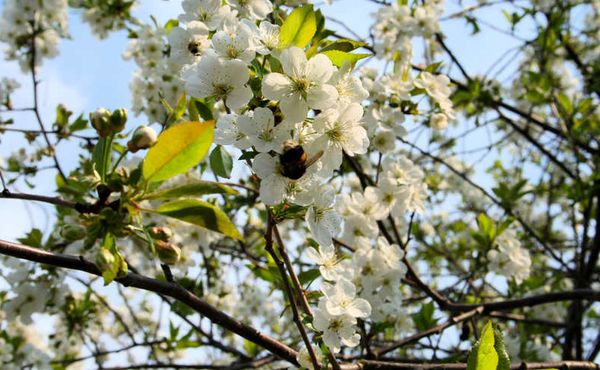
Based on their ability to fertilize themselves with their own pollen, cherries are classified as self-sterile, self-fertile, and partially self-fertile. Self-fertile varieties can produce up to 50% of their flowers on their own, without the help of intermediaries.
In partially self-fertile cherries, the fruit production rate does not exceed 20%, and self-sterile cherries set only about 5% of the fruit.
Self-fertile cherries
The flowers of these varieties have an unusual structure: the pistil and stamen are almost the same height. This structure facilitates internal pollination even before the flower opens. Furthermore, the large number of ovaries ensures that the pollen retains its properties for two weeks and germinates. This ability allows the plant to survive possible drops in temperature and fulfill its function. The following varieties are considered the most popular: Griot, Kensky, Brunetka, and Podbelsky.
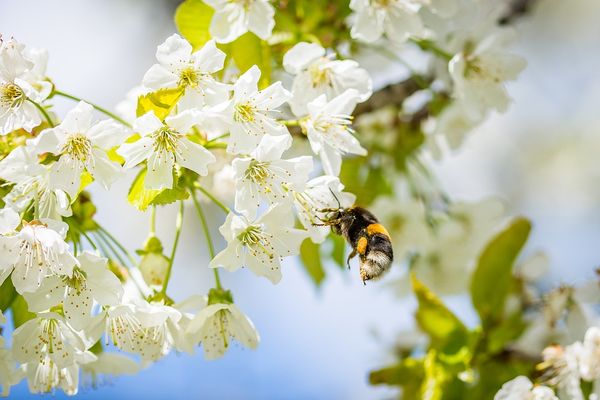
Self-sterile cherries
This group includes the largest number of varieties. To pollinate these cherries, they are planted among self-fertile varieties. Hybrids obtained by crossing cherries and sweet cherries are often also self-sterile. Such trees can also be pollinated artificially. Which cherry varieties are considered self-sterile? Alpha, Chernokorka, Uralsky.
Partially self-fertile cherries
Because these varieties have a low ovary rate when pollinated with their own pollen, they are also planted alongside self-fertile varieties. These include: Altai Swallow, Malyshka, Vstrecha, and Tergenevka.
How to choose compatible varieties
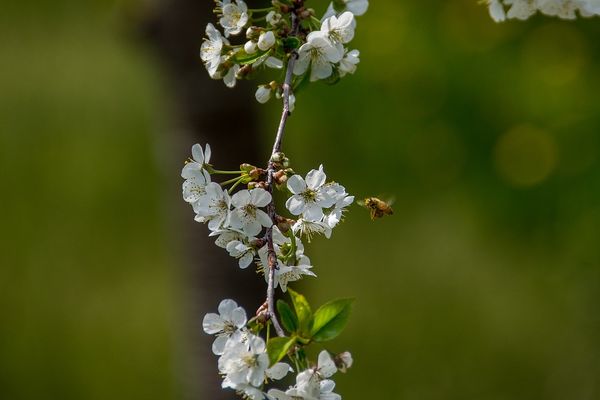
However, even planting self-fertile varieties does not guarantee a high fruit set rate for self-sterile varieties. This is primarily due to good or sufficient cross-pollination. Therefore, it is crucial to select cherry pollinator varieties that are universally suitable for all tree types. After all, even a tree with excellent characteristics will not produce a good harvest without the appropriate pollinator. Therefore, when planting cherries, select trees of several varieties that can pollinate each other.
It is important to select varieties that bloom, begin fruiting, and ripen at approximately the same time, with approximately the same overall plant lifespan.
When planting trees, it's important to calculate the correct spacing: in some cases, cherries should be no more than 10-15 meters apart, while in others, more than 30 meters are recommended. For example, Turgenevka and Pobelsky are recommended for planting near shrub-type cherries; Ashinskaya will produce an excellent harvest when planted next to late-blooming varieties; Griot and Shubina are suitable for Alpha, and Lyubskaya and Aelita are suitable for Chernokorka.
Follow these tips and you'll be able to not only treat your family and friends to delicious berries, prepare all kinds of dishes and preserves from them, but also sell them.
Video "Reproduction of fruit trees"
This video will teach you how to properly propagate fruit trees.