
How to properly prune felt cherry in spring
When to prune
The timing of cherry tree pruning will depend directly on the gardener's goals: if you're pruning a felt cherry to shape the crown, this should be done in early spring, just like rejuvenation pruning. The only option for pruning a cherry tree in the fall is a sanitary procedure, which involves removing damaged shoots.
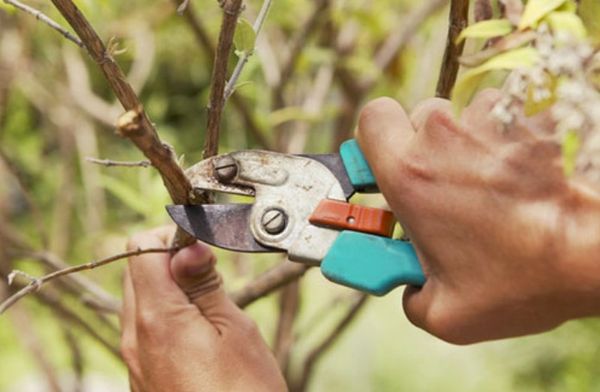
Necessary tools
Spring pruning of bush cherry, sweet cherry, or standard cherry tree will only be successful if you have the necessary tools. During the work you will definitely need pruning shears, sharp knives or saws. It's also important to have garden pitch on hand for treating cuts. When pruning cherry trees in the spring, all tools must be disinfected to prevent the tree from becoming infected with pathogens.
Trimming diagram
The classic pruning method, which is easy to understand for novice gardeners, involves leaving 10 main skeletal branches on the tree. All other shoots on the pruned tree should be removed or shortened by one-third of their length. Ignoring this step in cherry tree care is a mistake, as they tend to become dense. Unfortunately, this inevitably impacts yield, and not in the most favorable way.
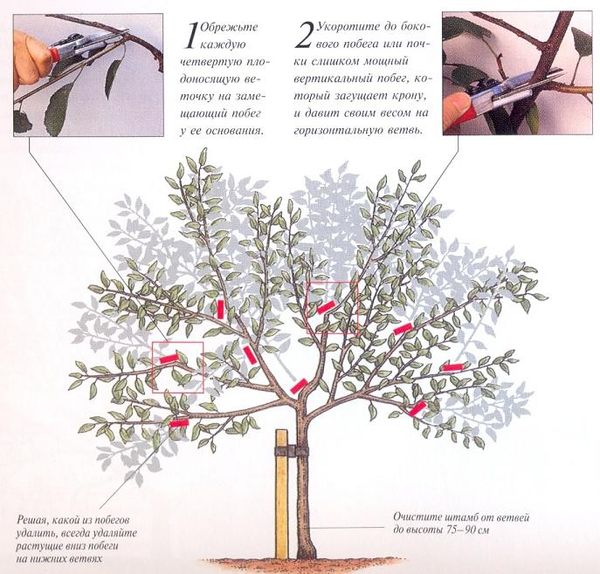
If overgrowth does occur, extensive pruning is necessary, leaving only six two-year-old shoots and removing the rest down to the roots. This pruning method is most often used for older trees with impressive green mass but poor yields.
Instructions
When wondering how to properly prune a fruit tree, every gardener should understand the task at hand. Typically, pruning felt cherry trees in early spring involves shaping a strong, well-formed bush, ensuring that subsequent maintenance is all that remains. This approach will help you achieve consistently high yields and prevent signs of overgrowth. When shaping the bush in spring, be mindful of broken, damaged, or frozen branches—remove them completely, leaving no more than 10 skeletal shoots.
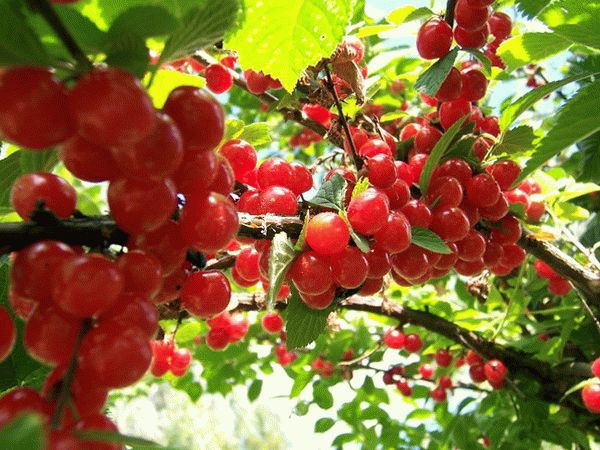
Remember: cherry trees bear fruit mainly from young one-year-old shoots. All older branches can be safely removed, as such dead branches only drain the tree's life force without providing any productivity to the gardener. Furthermore, even if the remaining skeletal branches are longer than 60 cm, they can also be shortened, as always, by about a third.
When pruning a cherry tree, always remove old branches: young, strong shoots will soon appear in their place, which, unlike their predecessors, will produce a bountiful harvest. If the tree is no longer young, annual formative and rejuvenating pruning is recommended to restore yield. While the sanitary procedures are straightforward, many novice gardeners hesitate to remove improperly growing branches within the crown.
And this is a huge mistake. The fact is, such internal shoots are rarely productive due to the limited amount of sunlight they receive. Therefore, by removing them, you don't harm the tree; on the contrary, you help it, ridding it of an unnecessary drain on its vital energy, allowing it to devote its resources to producing a harvest.
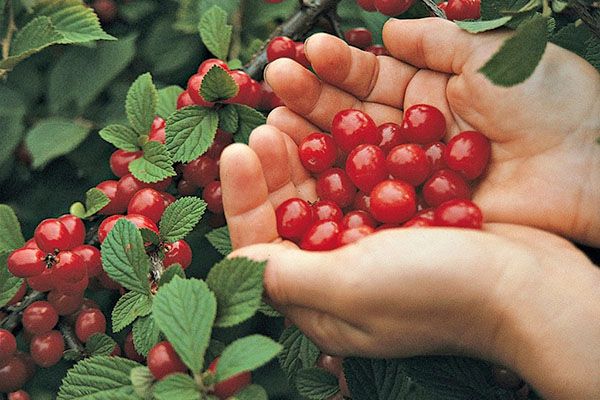
And, of course, it's worth mentioning that properly pruned felt cherry significantly simplifies tree care—it's easy to access, whitewash the trunk, and perform all necessary maintenance around the tree. Knowing how to prune a cherry tree properly will ensure a high yield.
Video "Felt Cherry"
This video will tell you more about felt cherry and how to grow it.