
Description of the mid-season cherry Novella
Content
Description and characteristics
The tree of this variety is not very tall—its rounded crown reaches upward, reaching a maximum of 3 meters. The Novella cherry tree has spreading foliage of a very rich green color. The leaves are ovoid and have a matte surface—a characteristic that prevents this variety from being commonly described as a cherry.
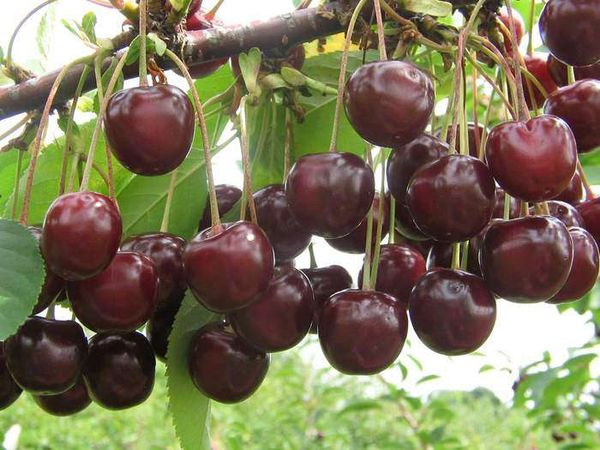
Flowering begins early; already in early May, you can admire the first snow-white inflorescences, which are formed from four flowers, randomly arranged. The fruits are formed on last year's branches, and each berry weighs 5 grams. They are quite large in diameter, reaching two centimeters, and almost black in color, which is why Novella is often confused with cherries. The berry contains a pit that separates easily from the pulp. The pulp itself is sweet and sour in taste, but very firm and juicy—tasters rated these characteristics at 4.5 points (a fairly good score). The berries of this variety are very popular; they are suitable for any type of processing, as well as for fresh consumption. They are very practical: they never crack or spread, and they have proven excellent in transportation.
Pay close attention when choosing a seedling. Avoid buying a tree taller than 1.5 meters—this is a clear sign that the plant is overexposed to nitrogen fertilizer. A two-year-old cherry tree, under good conditions, will reach a maximum height of 110 centimeters.
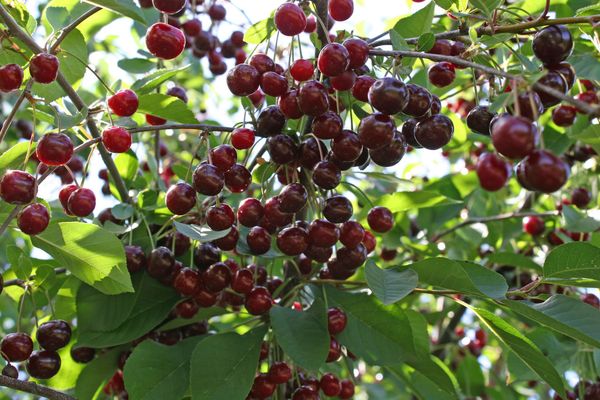
Young seedlings of the Novella variety begin to bear fruit four years after planting in the ground.
This cherry variety is partially self-fertile; without pollinators, the tree will produce fruit, but not abundantly. To attract bees, spray the flowers and buds with a weak honey solution (1 tablespoon of honey per 1 liter of water), but planting pollinator varieties nearby is ideal. The first harvest can be as early as early July. In a fruitful year, the tree can yield up to 100 centners per hectare. This variety is also considered long-lived, but this will depend on proper care. The tree itself is frost-resistant and tolerates low temperatures, but it's important to remember that mature buds don't respond to frost in the same way.
Pros and cons of growing
The variety has many advantages:
- high frost resistance;
- fertility (with proper care);
- high quality berries;
- resistance to pest attacks;
- possibility of self-fertility;
- decorative beautiful view.
There are only a few disadvantages:
- the tree is very picky about the choice of soil - the earth must breathe and allow moisture to pass through well;
- The frost resistance of the buds is average, so sometimes the yield suffers.
Video "The Best Cherry Varieties"
In this video you will learn about the best cherry varieties.