
Characteristics of the frost-resistant cherry variety Nadezhda
Content
Description and characteristics
The development of the Nadezhda variety was facilitated by breeders from the Rossoshanskaya Fruit and Berry Station. Under laboratory conditions, specialists pollinated the Griot Ostgeimskaya berry with pollen from the Likernaya and Severnaya cherry varieties. The resulting plant was taken for testing in central Russia in the mid-1990s.
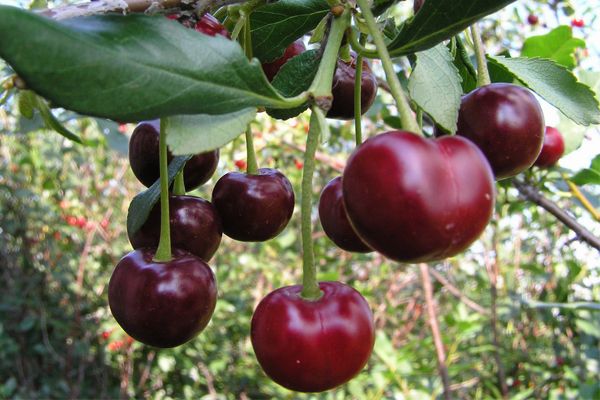
fruits
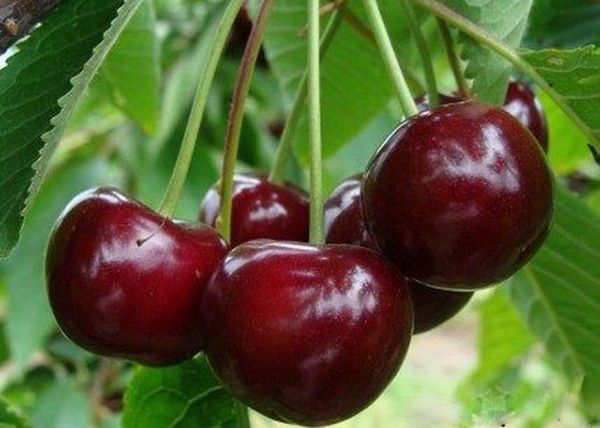
The description of the variety's fruits describes them as large berries weighing up to 6 grams each. The cherries are deep red and round. The flesh is also red, not tart, with a slightly tart flavor and a pleasant aroma. The stalk, which attaches the berries to a branch up to 4 cm long, is easily separated from the berry. Inside the fruit is a small stone, easily separated from the flesh.
The first harvest from Nadezhda trees can only be collected 4 years after planting. The crop is considered average in terms of ripening time, but produces fruit vigorously. On average, a tree can yield over 16 kg of cherries. Trees older than 15 years can yield up to 50 kg of fruit.
Trees
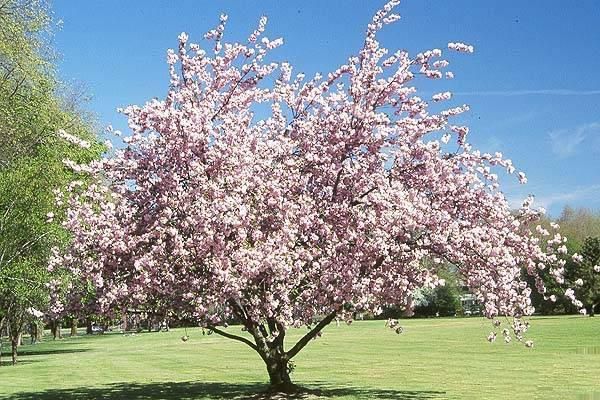
The tree's characteristics are as follows: it can reach 6 m in height, forming a dense, pyramid-shaped crown. The bark is clearly visible on the trunk, dark gray or black with gray. The lenticels of the Nadezhda cherry are narrow and can be medium or large in size.
Cherry tree shoots are greenish-brown with raised glands on their surface. Vegetative buds are large, slightly oblong, 0.6 cm long. Generative buds are similar in shape but smaller. Their main difference from vegetative buds is their rounded top.
The plant's leaf is 0.06 m wide and 0.1 m long. The leaf blades vary in shape, from oval to ovoid. The leaves are typically rich green, matte in texture, and have serrated edges. The petiole is short and slightly pubescent at its tip.
Like many cherry trees, Nadezhda blooms with large flowers, paired together to form an inflorescence. The flowers are white, with pink flecks appearing towards the end of the blooming period. The flower can be cup-shaped or flat, and its diameter can reach 4 centimeters. The petals are open, and the sepals are covered with fine teeth.
The Nadezhda cherry tree blooms early. It is self-sterile and therefore requires pollinators. The Lada, Chernaya Krupnaya, and Kentskaya cherries are excellent for this purpose.
Pros and cons of the variety
Cherries can be eaten fresh, dried, or frozen. They also make an excellent ingredient for making jams, desserts, and compotes. Cherries are rich in vitamins and minerals. In addition to these benefits, the berry has a number of other benefits.
This variety exhibits excellent frost resistance. Cold damage only affects the plant's flower buds. Furthermore, the plant is also resistant to temperature fluctuations. The Nadezhda cherry tree has excellent immunity to various diseases, including fungal diseases (coccomycosis and moniliosis). The tree boasts high and consistent yields and large fruits—their flavor will please even the most discerning taste buds.
The cultivar has no significant visible drawbacks. The only drawback, which complicates cherry tree care, is its height. The Nadezhda, like the Duke, can grow up to 6 meters tall, making pruning and harvesting difficult.
So, the Nadezhda cherry tree has a number of strengths, making it at least worth considering. However, if your plot is small, it's best to choose dwarf varieties, as the Nadezhda tree is far from compact.
Video: Cherry Tree Planting Instructions
This video will show you how to plant cherry trees correctly.