
Is it possible to graft a cherry onto a plum tree and how to do it correctly?
Content
Is it possible and why to vaccinate?
Many gardeners, especially beginners, don't know whether it's possible to graft a cherry tree onto a growing plum tree. It's also important to know whether grafting a plum cutting onto a cherry tree is permitted. These questions should be asked before attempting this procedure, otherwise, the results can be completely opposite.
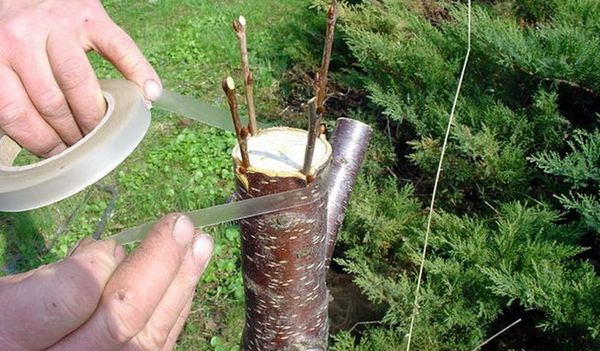
Cherry grafting onto plum can be done since both trees are stone fruits. Sweet cherry is also suitable for these purposes. The opposite is also possible, but in this case, it's better to have a wild cherry. It's important to know what can and cannot be grafted onto a specific cherry tree (for example, a felt cherry).
However, in order for the graft to take root, it is necessary to carry out all the necessary steps correctly.
In this case, grafting is performed on a winter-hardy, localized tree, which allows the scion to acquire the necessary properties for growth in a specific location. Furthermore, this procedure is a form of vegetative propagation based on combining parts of different horticultural crops. It is used to propagate not only fruit trees but also berry bushes.
You can graft felt cherry or any other variety onto a plum if you have the following goals:
- breeding a new variety;
- creating a tree that produces two types of fruit at once;
- preserve the existing appearance;
- collect an early harvest.
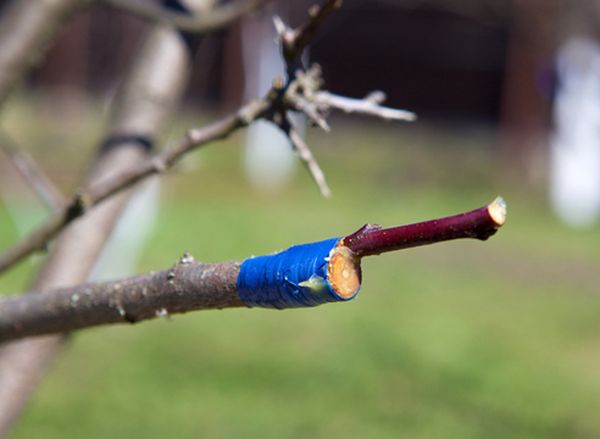
It's worth noting that grafting is not difficult if you choose the right scion and rootstock. It's also important to have a good understanding of the technique and the care required for the graft and the tree itself.
Preparing the scion
The scion, which in this case is cherry cuttings, is harvested in the fall if the grafting is to be done in the spring. The cuttings are usually cut after the leaves have fallen. The scion should be 10–15 cm long. The cut shoots should have 2–3 buds. After this, they are refrigerated, but be careful not to freeze too much.
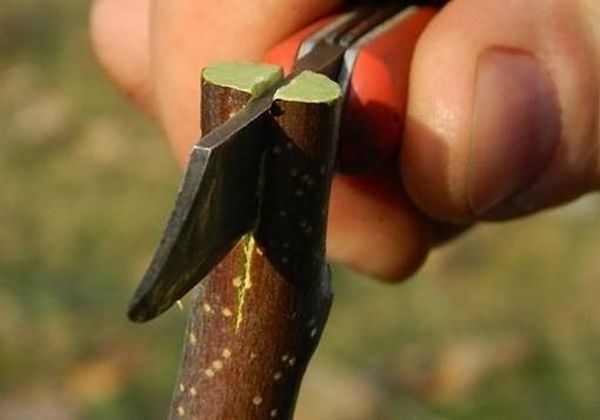
About a day before grafting, the scion should be removed from the refrigerator and placed in warm water. Then, remove the tip of the branch. Next, make a beveled cut at the base of the scion. After these steps, the scion can be grafted to the rootstock.
Preparation of the rootstock
This procedure is usually carried out in the spring, after the snow has melted. First, decide on the rootstock to graft onto. Healthy plum seedlings can serve as rootstock. To prepare them for grafting, they require proper care (weeding, fertilizing, and watering).
On the day of grafting the cherry cutting onto the plum tree, remove all branches from the selected area of the tree. The cleaned area should be wiped with a clean cloth. Otherwise, dirt may get into the cut, causing the graft to fail.
It should be noted that the preparation of both the scion and the rootstock depends on the grafting technology.
Grafting technology
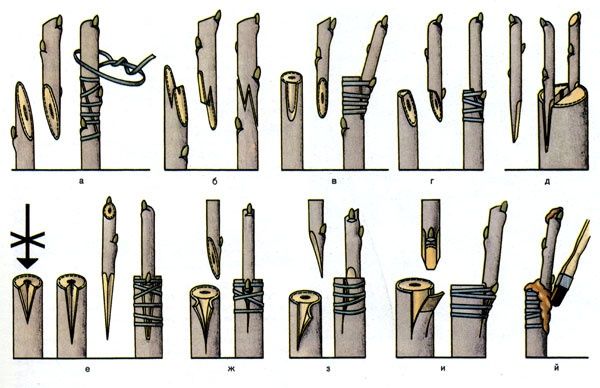
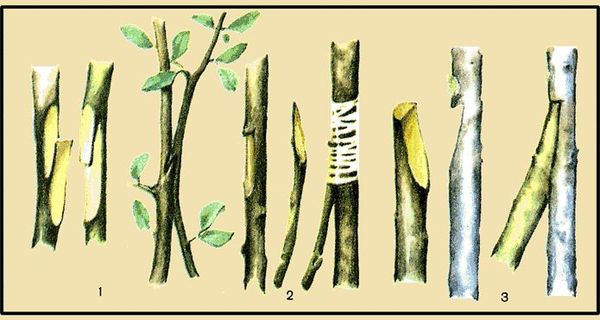
Today, the following vaccination techniques exist:
- Budding. This involves making a cut in the bark, which must include the wood. The grafted plant should resemble a small scion with a single bud. A cut is made on the rootstock to match this size;
- Copulation. A very simple method. An angled cut is made on the rootstock. The bark is not removed. The cut should not be larger than the scion (about ¼ of it). An angled cut is made on the scion;
- Cleft grafting. In this case, the cuttings are grafted only in the spring. This is the most common method for grafting cherries onto plums. The selected cutting should be more than 10 cm in diameter. A double-sided cut is made toward the roots. The prepared cutting is inserted into the cleft made in the trunk of the seedling;
- By the bark. The shoot should have 3-5 buds. The cutting is approximately 30 cm long and 4 cm in diameter. Its surface must be smooth. A shallow incision is made in the seedling, into which the cutting is inserted. Due to the complexity of the procedure, this is often performed by experienced gardeners.
Each gardener decides for themselves how to graft. However, it's important to remember that each technique has its advantages and disadvantages.
Further care
To ensure a successful grafting, young cherry and plum trees must be properly cared for. After joining the scion and rootstock, the joint is firmly secured with tape. It is also sealed well with garden pitch or wax. The area can be covered with a plastic bag or film.
The graft remains in this position for approximately one month. During this period, the scion should establish itself on the tree and begin to grow vigorously. Once the month has passed, the film is removed from the graft site. To prevent the grafted shoot from breaking in strong winds, it is additionally secured with a splint.
In addition, young shoots are removed from the tree. Otherwise, they will rob the scion of nutrients. It's important to feed the plum tree well during the period of active growth of the grafted cherry scion. Nitrogen-based fertilizers are used for this purpose, as nitrogen stimulates active plant growth. Phosphorus or potassium fertilizers are applied in the fall.
Knowing how to graft a cherry onto a plum tree allows you to easily do so and obtain a plant that bears two types of fruit at once.
Video: "Grafting Cherry Trees onto Plum Trees"
This video will show you how to cleft graft a cherry onto a plum.