
Features of growing Japanese fine-toothed cherry
Content
Description
Sakura isn't just a Japanese cherry tree, but a general term for several species of beautifully flowering ornamental trees and shrubs native to East Asia. All belong to the Rosaceae family, are fast-growing, and can reach heights of 20–25 meters in the wild.
Regular selective breeding to develop new ornamental varieties has resulted in hundreds of cultivars and dozens of species of this cherry tree. This diversity allows for the selection of a suitable variety for any country, including Russia, with its far from mild climate.
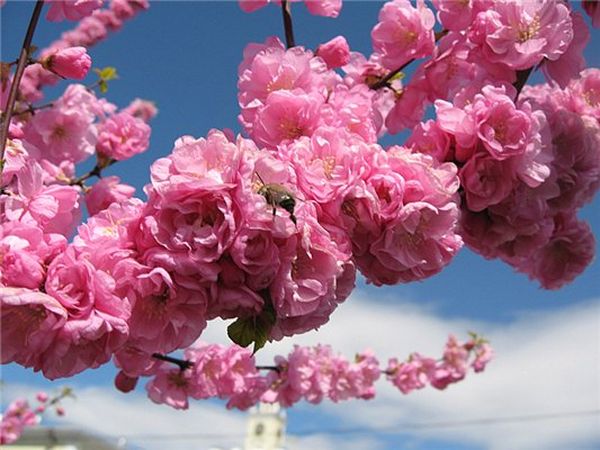
The Japanese cherry tree has its most colorful description during its flowering period, when its branches are covered with delightful pink, red or raspberry inflorescences that emit a delicate aroma. Cherry blossoms bloom for a long time, lasting from two weeks to two months depending on the variety. The classic cherry tree native to Japan has a wide, spreading crown—sometimes reaching 10 meters in diameter—with extensively branched shoots, large leaves, and reddish-brown bark with multiple fissures.
Characteristics and varieties
The common cherry and the Japanese cherry (sakura) are not the same thing, but completely different plant species with their own biological characteristics. The former is a fruit tree, while the sakura is an ornamental cherry, and its fruits are not edible (they are too small and sour), although in Japan they are used to make jams and wines. Sakura leaves also have culinary value: they are pickled, salted, added to rice, and used to wrap sweets.
The real Japanese cherry is a very heat-loving plant, for which temperatures below 15 °C are fatal. Winter hardiness can be increased by grafting garden varieties onto the wild cherry, which is often used by breeders when developing ornamental varieties. Garden cherry trees are widely used to decorate city parks, squares, and private estates. In Russia, these trees are not very popular, but interest in them is growing every year. Winter-hardy varieties suitable for growing in the country's southern and temperate climates are particularly popular:
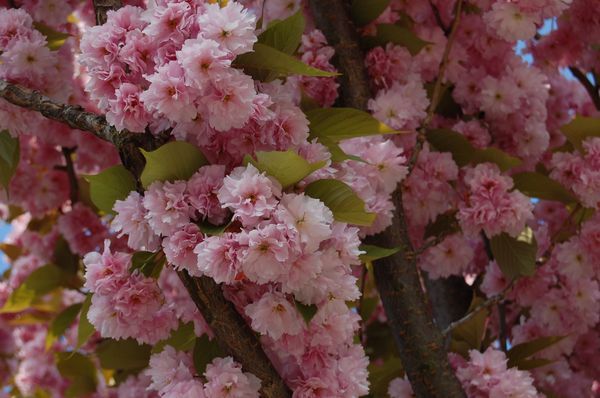
- The Kanzan cherry tree is a finely serrated cherry. This garden variety has an unusual, exotic, inverted-conical crown. The tree grows up to 10 meters tall and produces large, densely double, fragrant inflorescences. In autumn, the foliage turns fiery, giving the cherry tree a particularly decorative appearance.
- Kiku shidare is the ornamental cherry tree most suited to temperate climates. The trees are short (about 4 m) with a spreading, dense crown. Blooming is very early (late March) and profuse. The flowers are densely double and massive (5–7 cm in diameter). With proper care, the tree bears fruit.
- Sakura Oshidori. A compact garden variety, reaching a height of 1.5–2 m. The crown is wide (up to 1.5 m in diameter). Flowering occurs from April to May. The flowers are large, light pink, with densely double petals.
- Royal Beauty. The most decorative form, with drooping, weeping branches. Large, pink or purple flowers with long stalks hang from the branches, creating a vibrant floral fountain.
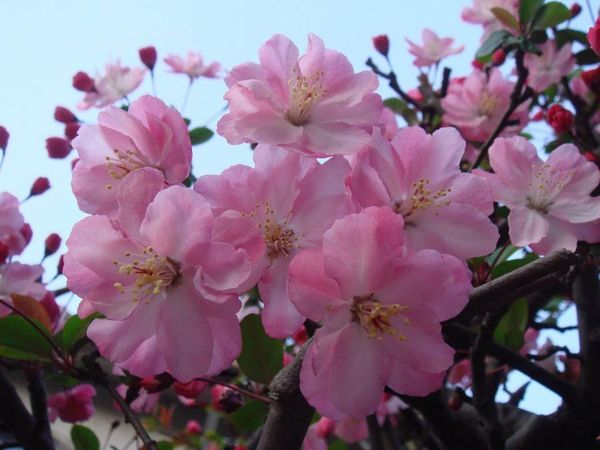
- Sakura Payan. A compact, spherical tree (sometimes a shrub), reaching a height of 2 m. It features large, double pink flowers with white centers. The leaves are small and turn an attractive yellow-red in the fall.
Planting and care
To plant sakura, choose a well-ventilated, well-lit area without stagnant water—a slight slope or elevation; a location against a wall on the southwest side of the house is also suitable. Sakura can be grown from seeds, but this is a laborious process, so grafted seedlings, now widely available in nurseries, are considered the best option.
Seedlings are planted in early spring, before the sap begins to flow, or in late autumn. They should be about 1.5 m tall.
The planting pattern is standard, as for regular cherries: dig a hole the size of the rhizome, place drainage material at the bottom, then add a fertilizer blend (superphosphate, potassium, and optionally, humus). When planting the plant deep, ensure the grafted area remains above the soil surface.
Planting and care requirements are similar to those for cherries. For full flowering, trees should be fed with complex mineral fertilizers at a rate of 15–20 g per 1 m² of the trunk circle. For growth and nutrition, it's best to add organic matter—rotted humus or compost at a rate of 6–8 kg per tree. In hot weather, ornamental sakura trees require watering, and the trunk area should be loosened and kept clean throughout the season.
In early spring, sanitary and formative pruning should be performed—the latter involves only thinning the crown. The trunk is also whitewashed in the spring. In Russia, cherry trees require frost protection for the winter. To do this, wrap the trunk in non-woven material and cover the area around the trunk with a thick layer of organic matter.
Diseases and pests
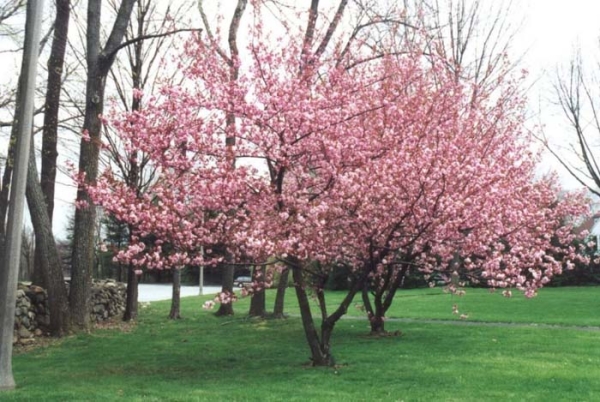
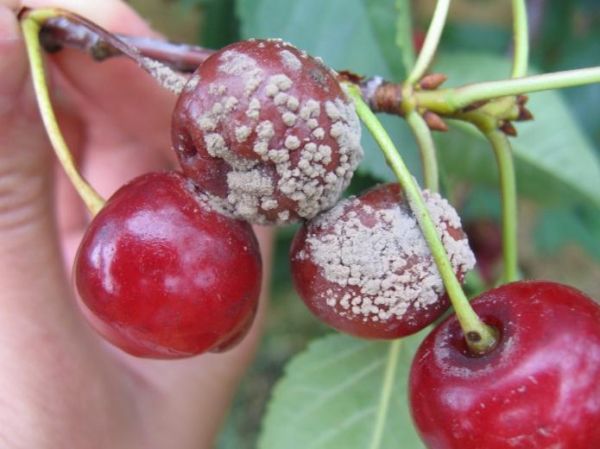
Ornamental cherry trees, unlike regular cherries, are less susceptible to disease. However, improper care or poor agricultural practices often result in the tree being attacked by harmful organisms, such as fungi and bacteria. Fungal infections of sakura trees result in reduced flowering, leaf deformation, stunted growth, and may even cause bark peeling and growth of growths.
To combat this phenomenon, it is recommended to spray carbon sulfur powder on the affected areas. Growths on the bark should be cut off, and the cut areas should be treated with garden pitch or disinfectant. Fallen leaves from the diseased tree should not be left on the ground; they should be collected and burned, as they harbor fungal spores and pest larvae.
Pros and cons
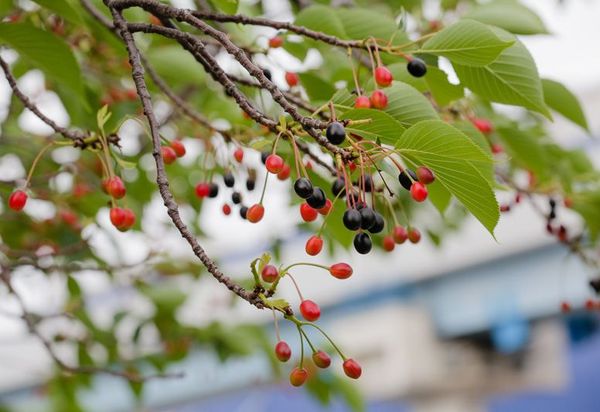
Looking at this beautiful tree, it's hard to find any flaws, as its magnificent blooms make you forget everything else. The exceptional decorative value both during flowering and throughout the season is undoubtedly the cherry tree's greatest asset. When considering ornamental garden varieties, it's worth noting their good winter hardiness, crown pliability, and relative ease of maintenance.
It's hard to find any drawbacks. According to gardeners' reviews, some varieties struggle to withstand frosty winters, and larger, sweeter fruits would be desirable, as sakura is still a cherry tree, albeit an ornamental one.
Video: Cherry Blossom Care
This video will teach you how to properly care for cherry blossoms.