
A review of the 9 best cherry varieties for the Leningrad region
Content
Vladimirskaya
An old and popular variety. Frost-hardy, but flower buds may freeze, especially during spring frosts. Advantages: resistance to dry, hot weather, rot, infections, and scab (especially important in damp climates).
The first harvest can be collected 4–5 years after planting the seedling. Self-sterile, suitable pollinating neighbors are Lyubskaya, Shubinka, Turgenevka.
The plant is bushy, multi-stemmed, 3–5 m tall, but when grafted, it grows like a single-stemmed tree. The crown is spherical, slightly weeping. Buds open in early May. Harvesting begins after mid-July. 80–85% of the fruit forms on one-year-old shoots. In the Leningrad Region, a tree can yield approximately 5 kg of berries per year.
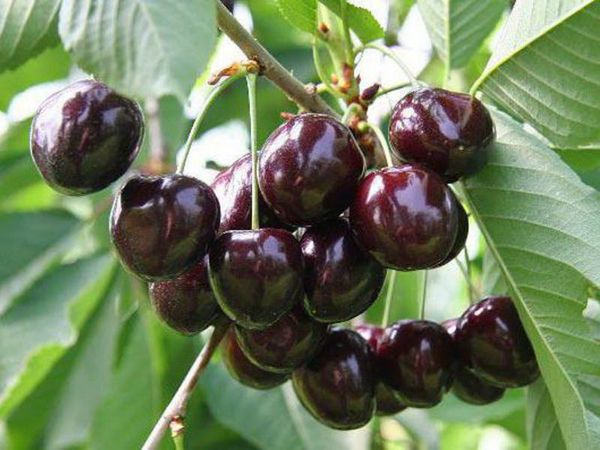
Ripe fruits are dark, almost black, with a sweet and sour taste, and contain small seeds. They are eaten fresh and used for preserves. They freeze without losing their flavor. They also transport well.
Ruby
Zoned for the northwestern region since 1974. Frost-resistant. Can be affected by coccomycosis, but has good immunity to moniliosis.
The tree grows up to 2.5 m tall, with a dense, spreading, and wide crown. This variety is self-sterile, and the Vladimirskaya and Otechestvennaya varieties serve as good pollinators.
A mid-late variety: buds open in late May. Fruit ripeness occurs in early August. Up to 40% of berries are set on one-year-old shoots, 60% on two- or three-year-old shoots.
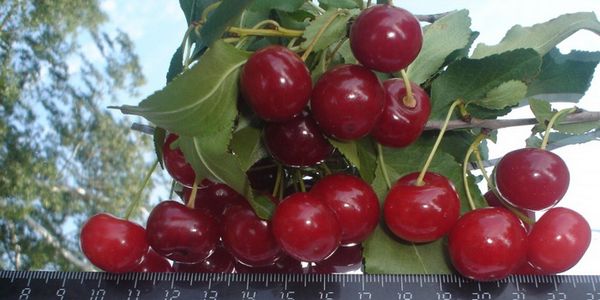
The juicy and tender berries weigh 3.5–4 g. They contain more acids than sugars. The flesh has a yellowish tint. The pit is easy to remove, but the stem breaks off, releasing juice, making this variety difficult to transport. The juice is clear.
Star
An early-ripening, productive cherry for the Leningrad region. Its cold tolerance is similar to that of the felt cherry, and its generative buds can withstand significant frost. Its immunity to coccomycosis is moderate.
This variety is tall, with a pyramidal crown. It begins bearing fruit on average in its third year. It is partially self-fertile, but to achieve a large harvest, pollinators such as "Venok" or "Seyanets No. 1" are needed. The variety responds very well to pollination by cherry trees. Most of the berries are formed on last year's growth. The berries ripen already at the beginning of July.
The cherries weigh up to 4 grams and feature bright red skin and light pink juice and flesh. They have a delicate, refreshing, sweet-and-sour taste. The pits are easily removed.
Lyubskaya
It's cold-hardy, like other varieties suitable for the Leningrad region. It doesn't require much watering and tolerates drought. Excellent self-fertile characteristics allow for large harvests even without pollinators. It has weak resistance to fungus.
It bears fruit for the first time in its 2nd or 3rd year. Ripening occurs in early August.
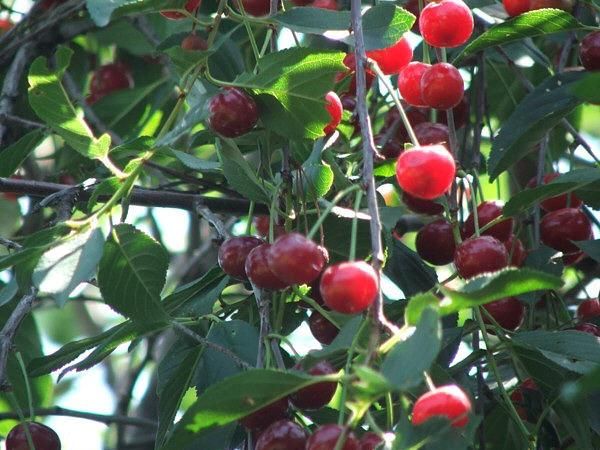
The berries weigh up to 4 g, are delicious, and a rich burgundy color. The juice is scarlet. Due to its transportability, this variety is suitable for commercial cultivation.
The variety's early flowering can be problematic: if spring frosts occur, the harvest will be affected. Planting cherries is recommended in light or medium loamy soils.
Shpanka Shimskaya
This is one of the best cherry varieties for the Leningrad region. It can withstand temperatures down to -35°C, long winters, and spring frosts. It has relatively strong resistance to coccomycosis, while producing high yields. Planting and care are straightforward, and its hardiness is similar to that of the felt cherry.
This variety is tall, reaching up to 6 m in height. The crown is spherical and medium-dense. It is considered an arborescent variety.
The first harvest occurs in the 3rd or 4th year of cultivation. Self-sterile, for a good harvest, plant Nikiforov's Amorel or Vladimirskaya nearby. It lives up to 25 years.
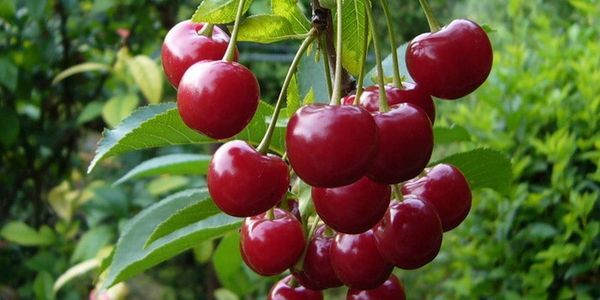
Gardeners prize this variety for its large (5–6 g) berries, their pleasant aroma, and refreshing acidity. The skin is crimson, the flesh is contrastingly yellow, and the juice is clear. This variety is not well suited for commercial cultivation due to its poor transportability and shelf life, but private farms use the fruits fresh, as well as for baking, canning, and even winemaking.
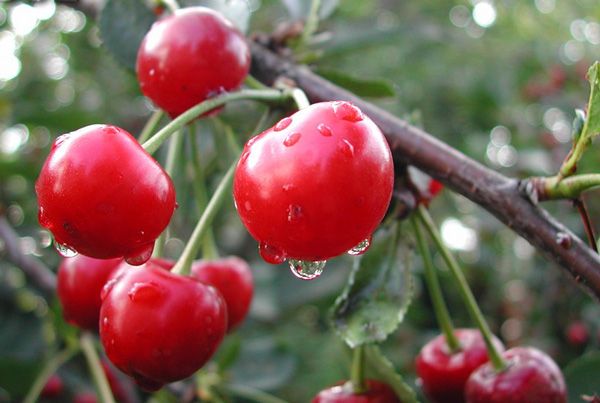
Amorel Nikiforova
This frost-resistant and productive cherry was zoned for the Leningrad region in 1959.
This variety is medium-sized, reaching 2.5–3 m. Mature trees become quite spreading. Own-rooted plants begin to bear fruit 3–4 years after planting, while grafted plants begin to bear fruit in their 2–3rd year. The variety is partially self-fertile; suitable pollinators include Shubinka and Shpanka shimska. Flowers bloom in late May. Harvesting can begin around the end of July.
The cherries are medium-sized, weighing 2.5–3 g and tender. The flesh is distinctive: red with yellow veins. The juice is clear. When detached from the stem, the juice is released, so commercial cultivation is not recommended. The fruits are usually eaten fresh; they are not suitable for canning or storing.
Crimson
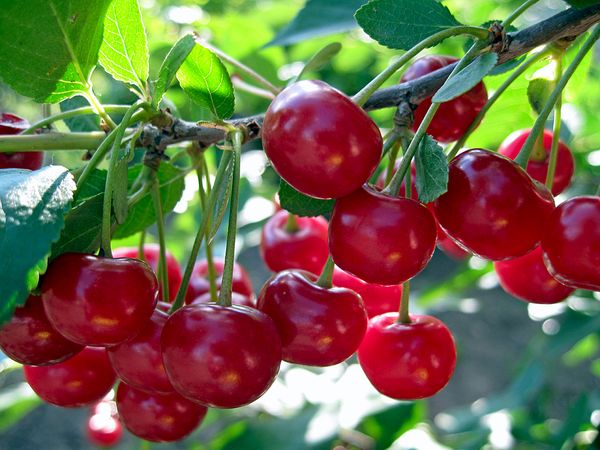
Although the variety is zoned primarily for the central region, thanks to its good winter hardiness, this cherry can often be seen in the gardens of the Leningrad region.
The variety is described as follows: a bushy variety up to 2 m tall, self-sterile. Good pollinators include 'Griot Moskovsky,' 'Shubinka,' and 'Sklyanka Rozovaya.' It is prized, among other things, for its early maturity: the berries ripen as early as the first half of July. The fruits are large, dark red, weighing 3.5–3.7 g, with a refreshing, pleasant flavor.
Volga dessert
The Volzhskaya Dessert cherry variety is valued for its good winter hardiness: like the felt cherry, it is suitable for growing in cold climates.
A tree up to 3 m tall with a loosely dense crown. Partially self-fertile, Vladimirskaya, Rastunya, and Finaevskaya are planted nearby for pollination. Grafted trees begin bearing fruit in 2-3 years, while own-rooted trees begin bearing fruit in 3-4 years. It is quite productive: with proper care, a mature cherry tree can yield up to 12 kg of berries.
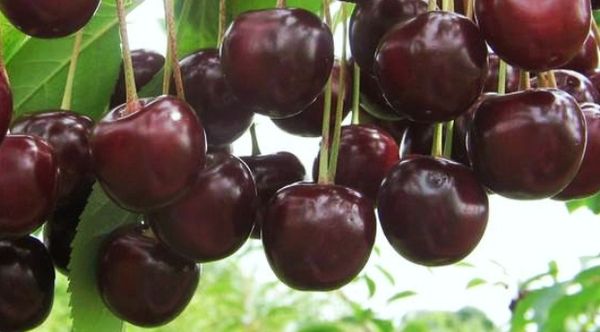
The berries weigh 3.2 grams, are glossy and burgundy, and ripen in mid-July. The flesh is pinkish-red and juicy. The juice is red. The berries are easy to remove from the stem, but they rarely fall off.
Lightning
A variety recommended for cold regions. Its frost resistance is comparable to that of the felt cherry. Fruiting begins 2–3 years after planting. Fruits form primarily on one-year-old shoots. The harvest ripens in early August.
The berries are small, weighing about 2 grams. The skin and flesh are dark red. They are medium-firm, with a harmonious, sweet and sour flavor. The pit is medium-sized. The stalk is loosely attached. They are eaten fresh and canned; these cherries make delicious jam.
Video: How to Care for Cherries
This video will show you how to care for cherries.