
What is a columnar cherry and how to grow it in your garden?
Content
- 1 Characteristics of columnar cherry
- 2 Characteristics of fruit crops
- 3 The best varieties of columnar cherries
- 4 Advantages and disadvantages of the plant
- 5 Video: Planting Columnar Tree Seedlings
- 6 Proper care and planting of columnar cherry trees
- 7 Pest and disease control
- 8 Reviews from summer residents
Characteristics of columnar cherry
The columnar cherry tree is named for the shape of its crown, which resembles a cylindrical column stretching upward. If you remember to carefully trim the side branches, you can grow a slender tree no more than a meter in diameter.
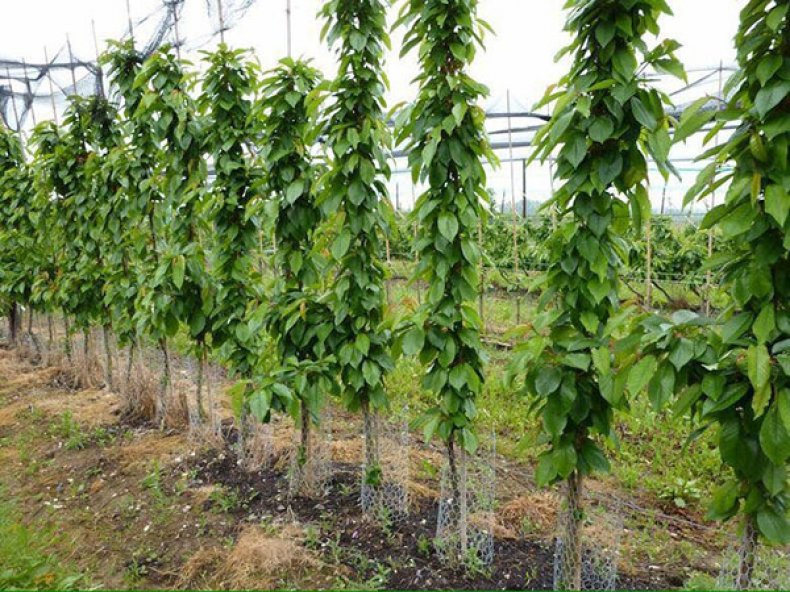
There are no columnar cherries in the wild, but breeders have managed to cross domesticated fruit and horticultural crops with the columnar wild apple tree, and since then, plants with cylindrical crowns have become regulars in country plots. Under favorable conditions, the cherry tree grows to a height of three meters, with sparse foliage.
The root system penetrates deeply but does not spread outward, encompassing the same meter-wide diameter as the crown. This allows cherry tree seedlings to be spaced closely together in the garden.
Characteristics of fruit crops
In a favorable climate, young cherries produce their first stable harvest 2-3 years after planting. During the first few years, it's advisable to monitor their growth, pruning any untimely fruit.
Pollination, flowering period and ripening
The flowers appear in May. The berries remain sweet until about the end of June. Although the crop is self-fertile, combining it with pollinating plants can double the yield.
The quantity of the harvest and the taste of the berries
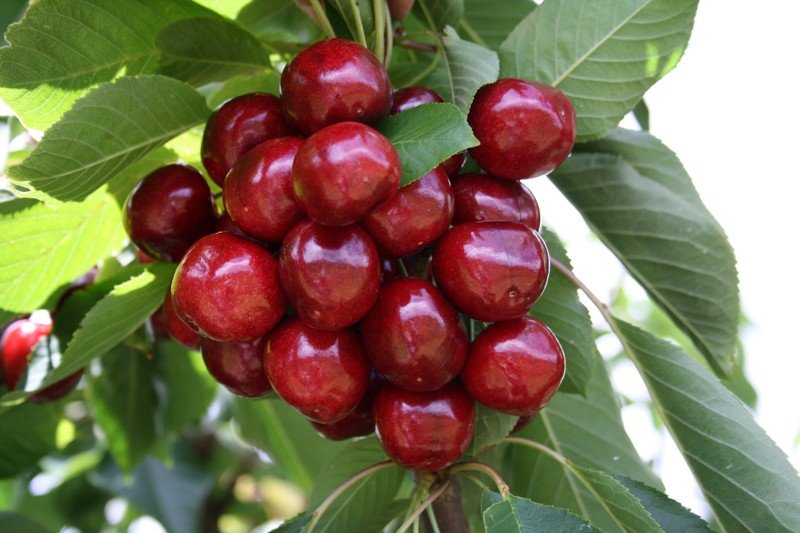
During the fruiting season, the crown is covered with crimson-red, yellow, or black berries (depending on the variety). The fruits densely cover the branches, giving them a resemblance to ears of corn. A tree yields 12 to 15 kg of berries, with some gardeners achieving up to 50 kg. It's no surprise that columnar cherries are widely grown in orchards for commercial berry production.
The crop's life cycle is 20 years, extending to 10 years in a favorable climate. Cherries have a sweet, juicy, and pleasant flavor. The skin is firm and dense, making the harvest easy to transport over long distances.
Resistance to drought and frost
Although best results are achieved in warm climates, gardeners have also managed to achieve good cherry harvests in northern regions. The crop tolerates temperatures as low as -30°C, but as frost approaches, it is strongly recommended to cover it.
Drought is harmful to the tree, as is excessive moisture. Moderate amounts of water are sufficient, but if drought occurs before the flowering season, watering should be increased.
The best varieties of columnar cherries
The variety of cultivars is wide, but Sam, Helena, and Sylvia are most popular for the climate of the Moscow region and the Urals. They are also more commonly cultivated in other regions. Let's look at popular columnar cherry varieties.
Delight
Classified as a mid-early ripening variety, the tree reaches 2.5 m in height. The annual harvest is consistent. The berries are large, weighing approximately 12–13 g, red with juicy flesh. The variety is resistant to many diseases.
Queen Mary
The yield is average – around 14 kg. The taste is exquisite and dessert-like. This variety is heat-loving and does not do well in colder regions; it is widely grown in the south and central regions.
Little one
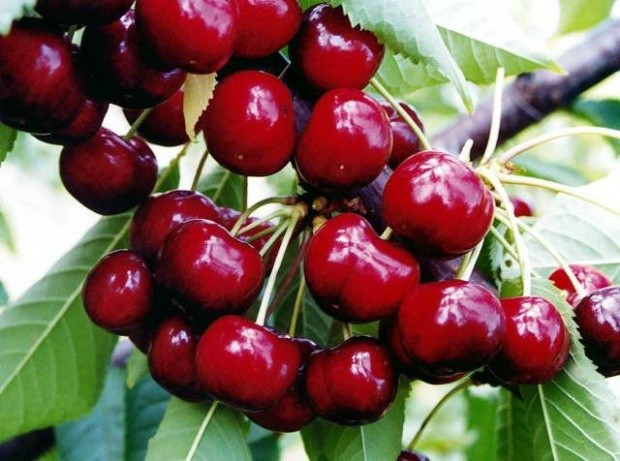
The tree is quite compact, just one and a half meters tall. The crown spreads up to 80 cm. Even at a dwarf height, it produces fruit well. The cherries are sweet with a hint of tartness and have a pleasant aroma. They are suitable for canning. This variety is frost-tolerant and is common in Siberia, but requires shelter during winter.
Jealousy
The flavor of the berries rivals that of the dessert variety Queen Mary. The berries are medium-sized, weighing 6–7 g, have a long shelf life, and transport well. The variety is frost-resistant. Ripening begins in July.
Sabrina
It doesn't require pollination and is self-sufficient—up to 15 kg of berries can be harvested from a single tree. It grows up to 2 m tall. The harvest ripens by the end of the first month of summer. It is resistant to most diseases and pests. It requires protection from drafts, although it is frost-resistant. However, the tree should be covered for the winter.
Seven
Early ripening, the fruit ripens as early as mid-July. Berries weigh approximately 12 grams and have an exquisite flavor. It is considered a gourmet variety and bears fruit for 15 years. It is recommended to plant this variety near other crops for pollination. However, planting near pollinators such as Helena or Van Bing significantly increases the yield. It is disease-resistant and tolerates cold well.
Silvia
Like Helena, it's a dessert variety. The berry color and yield are similar, but it ripens slightly earlier, around the 15th. It bears fruit for 15 years. It's cold-hardy, but requires protection from drafts and frost. There's a variety called Little Sylvia with similar characteristics, but with a slightly shorter trunk—up to 2 meters.
Helena
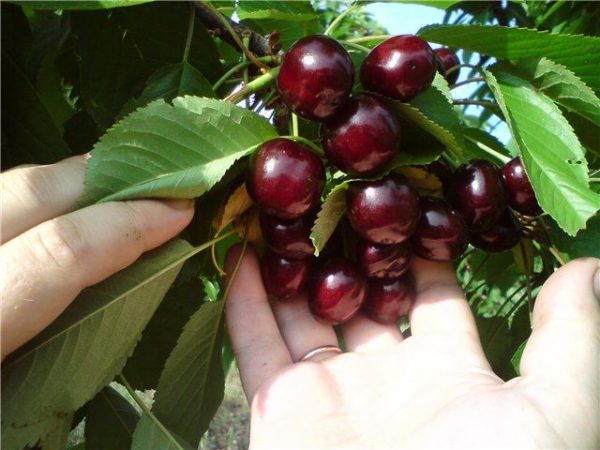
A dessert variety. The berries are red, weighing around 14 g. The tree is tall, reaching up to 3.5 m, with a crown that can expand to a meter. It produces a large yield, ripening in the second half of June. It bears fruit for about 10 years. It is widely sought after in the Urals, the Moscow region, and the central part of the country.
Black
The berries are large and black. The harvest is abundant. Frost-hardy, growing up to 2 m. Unpretentious to growing conditions.
Advantages and disadvantages of the plant
The crop has become widespread throughout the country, a testament to its many virtues. Gardeners love fruiting cherries, which are small in size and offer an ornamental appearance that beautifies the landscape.
- a sparse crown with few foliage – the tree does not cast a large shadow;
- easy care;
- easy propagation;
- consistently rich harvests.
- the need to monitor the shape of the crown;
- harvests are inferior in abundance to high varieties;
- short shelf life of the collection;
- weak frost resistance, requires shelter.
Video: Planting Columnar Tree Seedlings
This video shows how to plant a fruit tree.
Proper care and planting of columnar cherry trees
By following proper planting and care practices for fruit trees, you can achieve the best results. They should be planted in a sunny, draft-free area with some afternoon shade. Choose loose, fertile soil in areas with low groundwater levels.
The seedlings should be of the same age, without deformations, preferably with leaves.
How and when to plant cherries
Planting time depends on local conditions:
- In the northern regions, planting should be done in spring; in the south, in autumn.
- The latest date is a few weeks before the first frost, the earliest is when stable warm weather sets in.
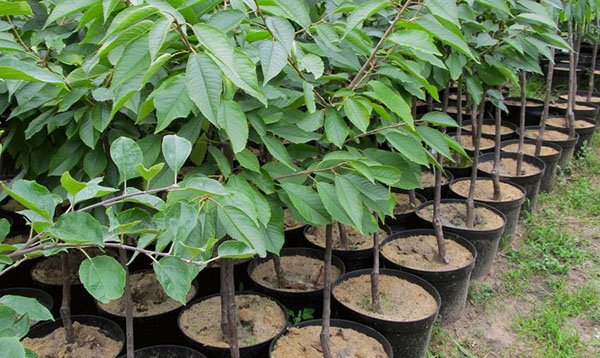
Planting is carried out in several stages:
- They dig a hole large enough for the roots of the seedling, the depth is 80 cm. The interval between trees is 2.5 m, between rows - one and a half.
- The rhizome is treated with a clay slurry, the seedling is placed in the hole, and covered with soil. The root collar protrudes a couple of centimeters above the ground.
- Water generously and make shallow grooves nearby.
Methods of reproduction
Fruit crops are typically propagated by seed (planting seeds). However, this deprives the tree of its characteristic features—the flavor changes and the yield decreases.
Another method is grafting. This allows for early harvests while maintaining the fruit's quality.
The third method is planting seedlings purchased from a specialty store.
Layering is a rare method. It's used for fruit-bearing trees by cutting off branches and covering the cut areas with soil.
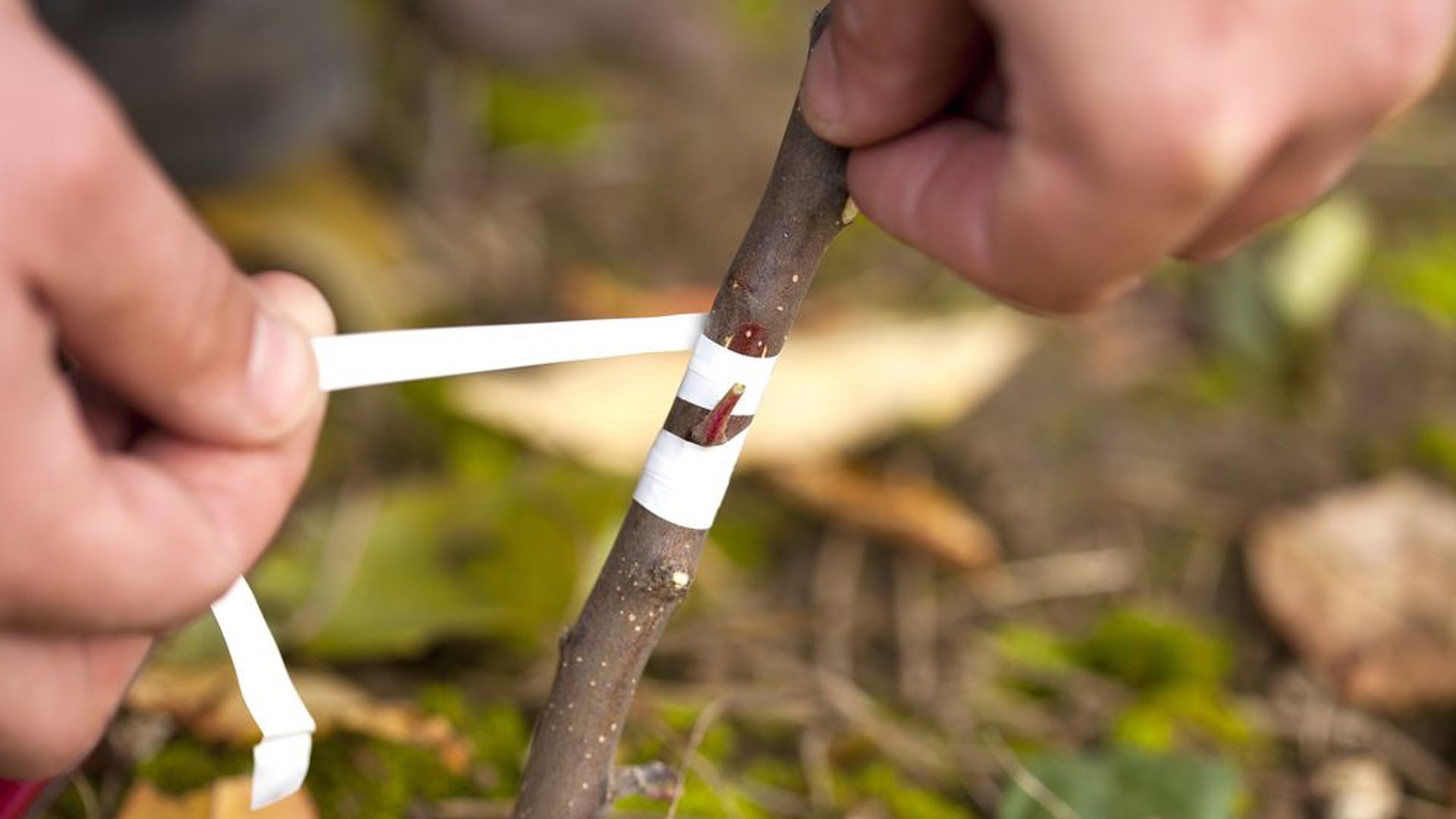
Watering and fertilizing
Water moderately, ensuring the soil remains moist but not waterlogged. As cold weather approaches (in October), water thoroughly to recharge the soil and protect the roots from freezing.
Fertilizers need to be added to the soil several times:
- In autumn – a mixture of phosphorus and potassium (170x800 g).
- In spring – nitrogen-containing (urea, ammonium nitrate).
- A couple of weeks after the end of flowering, water the tree with diluted manure and wood ash, 5 liters per tree.
Trimming options
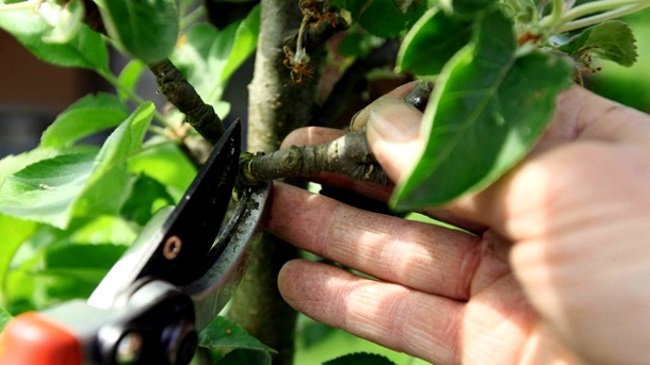
Light crown correction is required to increase yield. The method depends on the tree's age:
- In the first year, pinch the tops of the lateral shoots to a length of 12 cm.
- After two years, lateral branches are cut back 20 cm from the trunk. The top is cut off if it begins to grow too much.
- Mature trees need to have their lateral branches that cast shade pruned.
Preparing for winter
It's important to prevent the bud at the top of the central conductor from freezing. Before winter:
- mulch the tree trunk area with peat and sawdust;
- carry out moisture-charging irrigation.
The fallen snow is raked into a mound around the trunk, compacted, and sprinkled with a mixture of sawdust and peat.
Pest and disease control
Breeders have ensured their creation has good resistance to most diseases affecting fruit crops. Immunity is enhanced by proper agricultural practices. However, preventative measures against diseases and pests are recommended.
The following diseases threaten columnar cherries:
- Scab. To control it, spray with Bordeaux mixture.
- Coccomycosis and moniliosis. For treatment, trees are treated with copper-containing fungicides, copper oxychloride (40 g per 10 l), and 3% Bordeaux mixture.
- Brown or holey spot. Treat with antifungal agents—fungicides containing copper.
- Tinder fungus (mushroom-shaped growths on the trunk). To combat this, increase the tree's nutritional needs and optimize watering. The tinder fungus body is cut off and burned, and the wounds are sealed with a 3% copper sulfate solution or garden pitch.
-
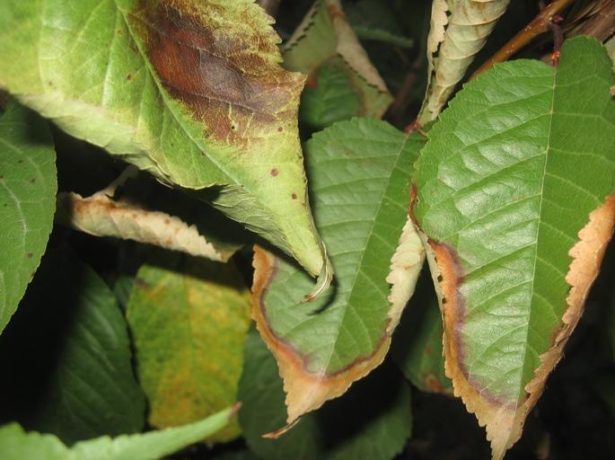
- Scab
-
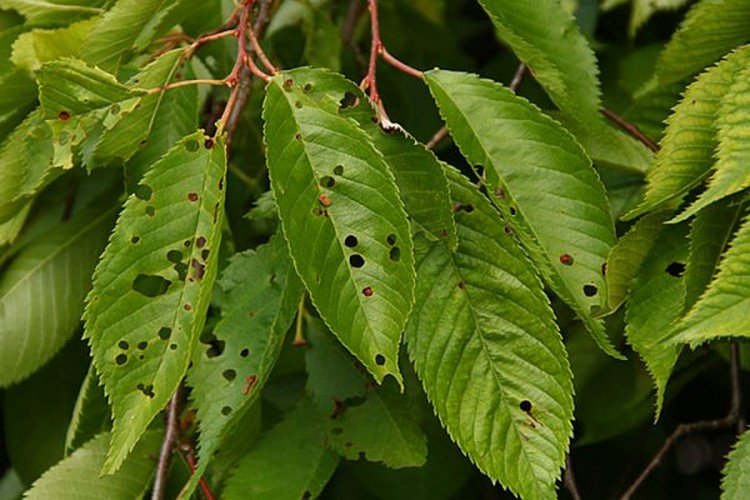
- Hollow spot
-
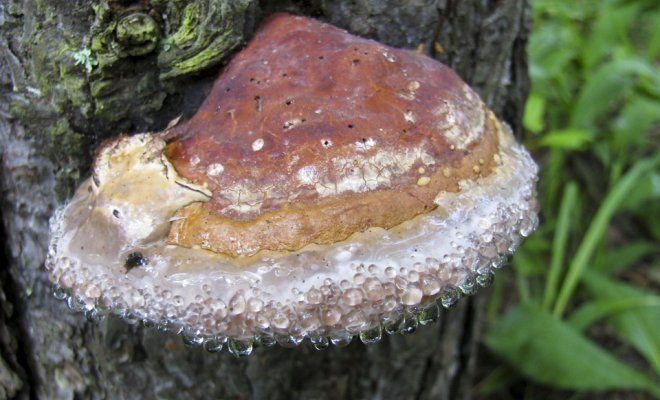
- Tinder fungus
Culture is also often attacked by:
- aphid;
- weevil;
- codling moth;
- hawthorn caterpillar.
To control pests, spray with appropriate insecticides.
Another danger is rodents. Not only garden mice are dangerous, but also hares from nearby forests. Rodents can destroy an entire tree by gnawing the bark around its circumference. The following methods are used against them:
- branches with a pine scent;
- trampling down the snow around;
- mesh fence.
Reviews from summer residents
"I planted several varieties of columnar cherries four years ago. Black, Yellow, and Raditsa have all taken root. They look beautiful in the garden, and harvesting is easy. I recommend them to everyone."
"I read the reviews and decided to plant the Sylvia and Revna varieties. Experts say they're perfect for our cold weather. Both seedlings took root well, and after two years, they yielded decent harvests."
Selling fruit is a lucrative business. Even a small garden can grow a sizable orchard from columnar cherry trees of various varieties, with yields that will recoup all costs.