
Planting and caring for columnar cherry varieties
Content
Columnar cherry varieties
Columnar cherry trees are still few and far between. Three varieties are considered the most popular: Queen, Little One, and Delight. However, in private gardening, the last two are most in demand; their varieties will be described later in the article.
Little one
The columnar cherry tree "Malyutka" will not only delight you with its sweet, large berries but also decorate your garden with lush pink blossoms in the spring. This variety is characterized by high yields and self-pollination. The trees are short (up to 2 m) with a pyramidal crown, reaching a diameter of no more than 0.8 m. The berries are large (8–10 g), bright red, sweet and sour, very aromatic, and suitable for any processing.
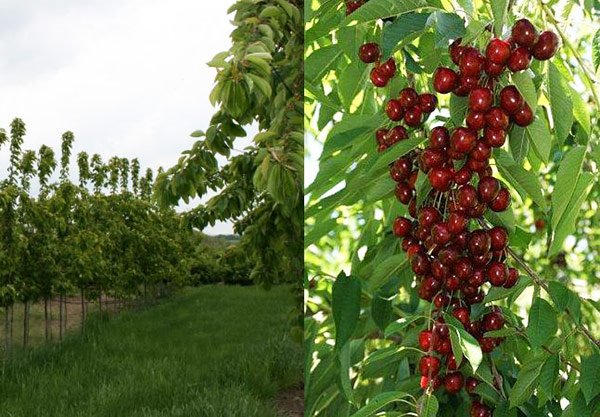
Cherries of this variety are unpretentious and can grow in any conditions: in the garden, in containers, and are suitable for balconies and terraces. Disease resistance is average. In humid conditions, it can be affected by fruit rot, coccomycosis, and other fungal diseases. Winter hardiness is also low; the trunk requires winter protection and insulation.
Delight
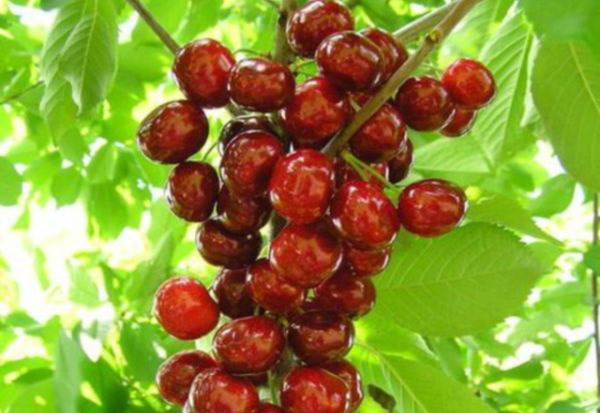
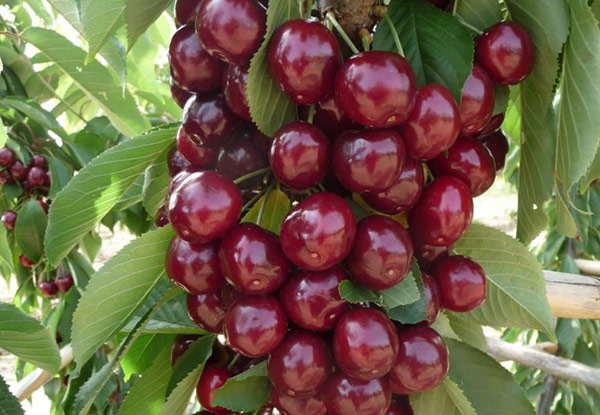
The columnar cherry with the promising name "Vostorg" is a new Dutch selection. The variety was bred in 2015 but has already become widespread in private and commercial orchards. This is due to its high varietal characteristics, impressive yield (20-35 kg per mature tree), and berry size (10-15 g). The cherry's flesh is ruby-red, with fine pinkish veins, very juicy and sweet. The fruit is dry when separated from the stem, and the pits separate easily from the flesh. The cherry ripens in mid-July.
The trees are dwarf varieties. When grown in the garden, they reach a height of 1.5–2 m, but the Dutch recommend growing them in pots and containers as ornamental plants. The crown is narrowly pyramidal, with virtually no branches. Fruiting occurs early, 2–3 years after planting. The variety is resistant to many diseases but is sensitive to cold. Cherry trees are partially self-pollinating. To increase yield, it is recommended to plant a pollinator, the Ashinsky Hybrid cherry, nearby.
Planting and care
Unlike standard trees, columnar cherries have a completely different crown structure, so planting and care for them require their own unique considerations. For example, these cherries don't require much space; they receive good light from all sides and can be planted in a dense pattern, spaced 0.7–0.8 meters apart. If space is limited, the distance between trees can be reduced to 0.5 meters, without affecting their yield.
Almost all varieties of columnar cherries are intended for cultivation in mild climates; they are more demanding in terms of soil composition, and this should be taken into account.
The site where the columnar cherry tree is to be planted should be in a sunny location, preferably on a slightly elevated site or a south-facing slope, and protected from cold winds. The soil should be loose and fertile, so a layer of humus and mineral fertilizer should be added to the bottom of the planting hole.
The main vegetative organ responsible for the growth of columnar trees is the apical bud. If it is damaged or underdeveloped, successful rooting is unlikely, so before planting, it is necessary to check the integrity of this bud. It will need to be protected from frost, as freezing the apex will prevent the tree from growing and bearing fruit.
Cherry tree care consists of watering, fertilizing, and disease and pest prevention. A pleasant bonus is that these trees don't require shaping pruning, as their crowns grow vertically and have no lateral branches. It's also important to keep the area around the tree trunks clean, loosening it regularly, and removing weeds.
During the first year, while the trees are establishing roots, it's important to keep the soil moist. Mature plants are watered as needed, increasing the amount on hot days and during fruit set and ripening. Scheduled fertilizing is applied twice a season: in the spring, with a nitrogen complex (urea and ammonium nitrate), and in the fall, with phosphorus (150 g per tree) and potassium (50–60 g). During flowering, cherries can be fed with a weak solution of mullein and ash.
Given the high susceptibility of plants to fungal diseases, preventative treatment of the crown with fungicides (Bordeaux mixture, Fitosporin) twice a year is recommended. During the summer months, trees may be attacked by aphids. Spraying with a tobacco infusion mixed with laundry soap helps get rid of pests. To prevent fruit rot, regularly remove spoiled fruit and damaged leaves.
Advantages and disadvantages
Columnar cherry trees undoubtedly have a number of advantages over regular trees:
- they are compact, which allows you to save landing space;
- The low growth of cherries makes them easier to care for and harvest;
- early fruiting (in 2–3 years);
- easy to care for (can be done without pruning);
- high decorative value of plants;
- almost all varieties are self-fertile;
- good yield and excellent taste of fruits.
The only drawback is that the plants do not tolerate frosty winters well, so it is not recommended to grow them in northern regions.
Video "Planting Cherry Trees"
The following video will discuss the beneficial properties of cherries, choosing seedlings, and planting tips for this plant.