
What are the dangers of cherry coccomycosis and how to treat it?
Content
Description of the disease
Coccomycosis and moniliosis (the latter also known as monilial blight) are considered among the most dangerous diseases of fruit and berry plants. Cherries, sweet cherries, plums, cherry plums, apricots, and other stone fruit crops are at high risk. These diseases are very difficult to control. To date, farmers have not found a method that can completely eliminate coccomycosis and moniliosis on cherries.
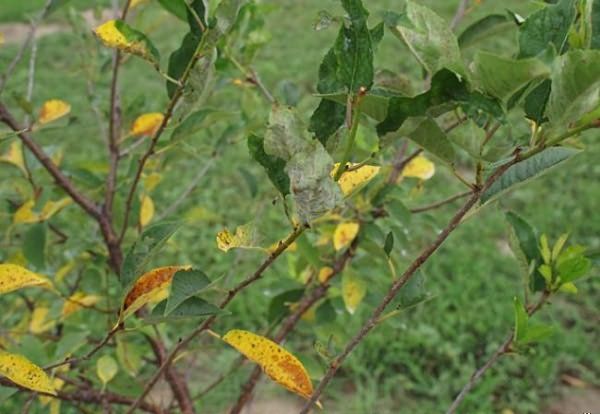
However, don't despair or give up if you notice the first signs of the disease in your garden. Let's first define coccomycosis of stone fruit crops and what are the characteristic symptoms of this disease.
Coccomycosis is widespread in central Russia, where high humidity prevails and the average air temperature is approximately 18–23 degrees above zero. This climate is an ideal environment for the proliferation of various fungal infections. In spring and summer, pathogenic fungal spores become airborne and infect more and more plants in the garden. Trees growing in low-lying areas are the first to suffer.
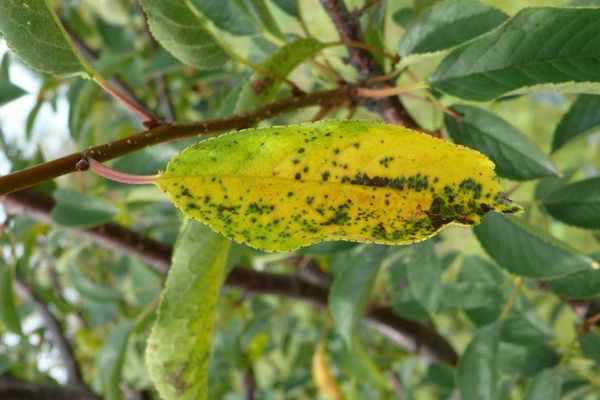
Cherry leaf spot begins with damage to the tree's canopy. Small, dark red spots appear on the leaves and quickly grow in size. As the spots grow, their color changes, turning brown. Over time, holes form at the site of the spots, and the leaf blade takes on a yellowish tint. A pinkish-white coating, containing the spores of the fungus, can be found on the underside of the leaf.
Cherries are small in size and most often look like seeds covered with a thin skin.
In midsummer, cherry trees begin to shed their leaves. By late August or early September, the tree sheds all its leaves and stands bare. Gardeners often ignore this behavior of stone fruit trees in their gardens, blaming it on acid rain and poor environmental conditions. Unfortunately, a plant affected by coccomycosis is unable to withstand winter frosts, and the cherry tree fails to "wake up" in the spring.
Methods of control
Forewarned is forearmed! To protect your garden from coccomycosis, you need to know the measures available to combat this disease of cherries and other stone fruit crops.
Garden treatment should begin in the spring, before the first buds have opened. The first stage of treatment is spraying the plants with a 1-3% solution of Bordeaux mixture. As an alternative, experienced gardeners note, using a fungicide such as Oxychom, Phtalan, Ordan, Kaptan, or Skor is acceptable.
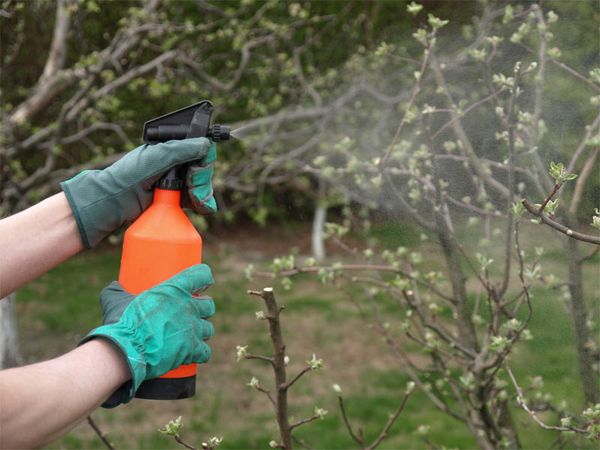
During the flowering period, cherry orchards should be treated with Horus, diluted in water (2–3 g per 10 liters of water). For regions with high humidity and low temperatures, a second spraying is recommended after the trees have finished blooming.
During the active fruiting period, stop treating with fungicides. Treatment is only recommended for severe cases of cherry disease. However, fruit from such trees should not be eaten for health reasons. If you notice the first signs of cherry coccomycosis, treat the foliage with a copper sulfate solution or ash and soapy water.
To prevent the spread of pathogenic fungal spores to other stone fruit crops, remember to collect and burn all fallen leaves and branches. Before wintering, treat affected trees with urea, which not only kills fungal spores but also serves as an excellent fertilizer for cherries.
The frost resistance of fruit and berry crops affected by coccomycosis is reduced several times, so the trees need additional protection from the cold.
Disease prevention
Having familiarized yourself with the basic techniques, you now know how to treat cherry coccomycosis. But, as we know, prevention is better than cure. Let's take a closer look at preventative measures for cherry coccomycosis:
- In the fall, clean up the garden, collect and burn all fallen branches;
- After wintering, the soil around the trees should be dug up;
- “Wounds” resulting from pruning branches should be covered with oil paint or garden pitch;
- when whitewashing trees, add iron or copper sulfate to the lime;
- Provide plants with good sunlight, and make sure that stone fruit crops do not shade other plants.
Video: How to Treat Cherry Blight
This video will show you how to treat cherry coccomycosis.