
How to get rid of cherry tree shoots in your garden
Content
Which varieties produce root suckers?
If your fruiting cherry, sweet cherry, or even plum tree is grafted, then annual shoots are of no use, as all such cherries will be wild. Otherwise, the strongest and most viable shoots can be used for propagation, but in any case, most of the cherry shoots will need to be regularly cut down. Apukhtinskaya and Vladimirskaya cherries are suitable for this method.
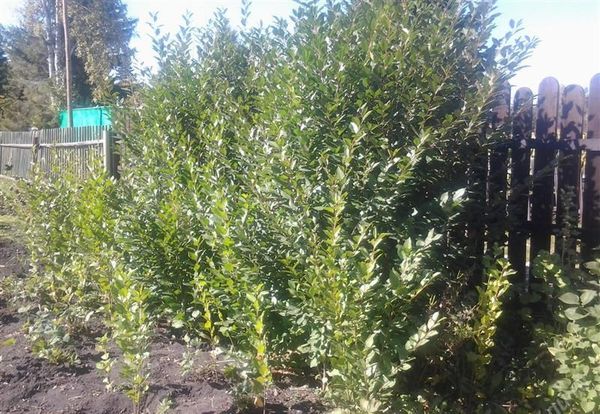
However, there are varieties that produce a huge number of root suckers, but these are completely unsuitable for propagation—for example, Molodezhnaya, Rastorguevskaya, and Polevka. Conversely, there are cultivars that do not produce root suckers: these are primarily the bush cherries Lyubskaya, Shokoladnitsa, and Bagryanaya.
How to remove undergrowth at your dacha
When everything in the garden is clear and orderly, every tree is in its place, and the placement of flower beds is carefully planned, cherry tree shoots appearing in the most unexpected places can greatly irritate even the most patient gardener, arousing an irrepressible desire to quickly remove them. The main measure to combat such uninvited "guests" is most often the removal method of digging. And completely in vain!
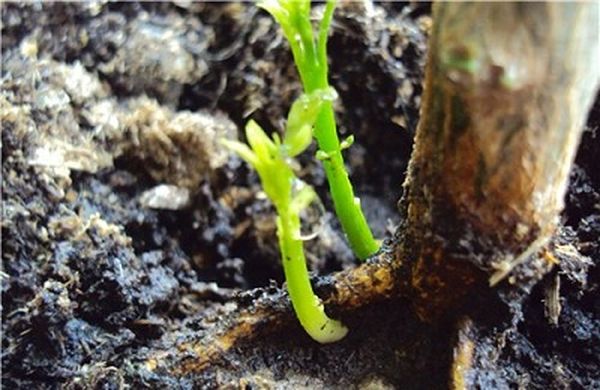
The thing is, cherry trees, like all shoot-based crops, have a specific replacement schedule: if one shoot is uprooted, several new ones will grow the following year. And so on ad infinitum. As a result, in a few years, you risk becoming the kind of person who completely digs up their garden every spring. Of course, no one wants that.
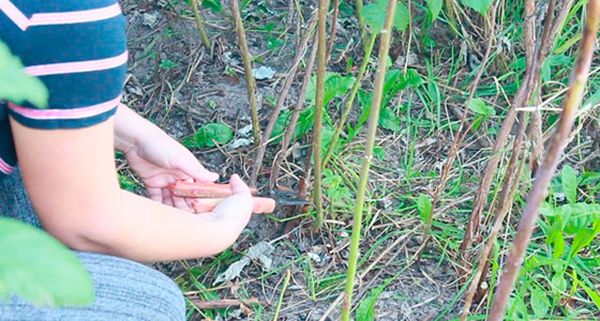
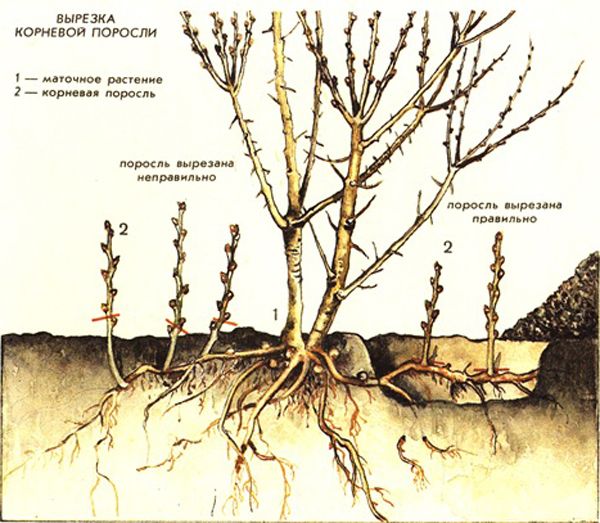
So how do you get rid of cherry tree suckers in your yard without having to remove the shoots systematically? It's simple: you can remove the root suckers by simply cutting them out with pruning shears. You can eliminate cherry tree suckers by cutting them off at approximately 30 cm from the ground. Once the suckers are removed, the root will no longer be able to produce new shoots. Thus, in just a few years, you can completely "train" the tree to stop producing unwanted shoots if you regularly remove cherry suckers, even the most minor ones.
But this is far from the only way to effectively combat cherry tree shoots. There's another method, initially labor-intensive but highly effective. It also has a beneficial effect on fruiting. It works by exploiting the fact that only roots located relatively shallow—approximately 40 cm from the surface—are capable of producing shoots. Anything deeper poses no danger in this regard.
So, to prevent the cherry tree from growing too large, do the following: draw a circle about 1.5 meters in diameter around the sapling and dig in pieces of slate around the circumference to a depth of up to half a meter. This "fence" will prevent the root system from spreading outward, but will instead encourage deeper roots. While growth within the circle itself is inevitable, in such a confined space, it's easy to control, and over time, the problem will be completely gone. Alternatively, you can cheat by covering the inside of the circle with a thick layer of protective mulch (using dry leaves, grass clippings, or straw). This will allow only a few sprouts to emerge, and we'll be able to get rid of them.
Some prefer to remove suckers using specialized herbicides. But before using this method to remove shoots, be sure to weigh all the risks, as all suckers share a common root system with the parent plant, and your cherry tree doesn't need any extra chemicals.
Preventing the appearance of shoots
Experienced gardeners know not only how to remove but also how to prevent active growth of shoots. For example, it has been noted that frequent and abundant watering reduces the intensity of the process. It is also helpful to mulch trees, combat pests promptly, and perform regular sanitary pruning.
The problem of suckers is not only aesthetically damaging but also practically harmful: if left untreated, they significantly reduce cherry tree yields. This is not surprising, as by feeding on the tree's roots, the suckers drain the tree of its precious life energy. But this won't happen to you, since you now know how to remove these annoying suckers.
Video: How to Get Rid of Overgrowth
This video will show you how to get rid of undergrowth.