
How to shape cherry trees in spring for a bountiful harvest
Content
Methods of crown formation
To shape a cherry tree crown according to all the rules, it is important to know the intricacies of the process:
- the buds of this tree open very quickly;
- each bud gives life to a young shoot during one growing season;
- the thickening of the crown occurs rapidly;
- a good harvest of cherries or sweet cherries directly depends on the density of its crown;
- Each bouquet branch is capable of producing fruit for only 5 years, then it dies.
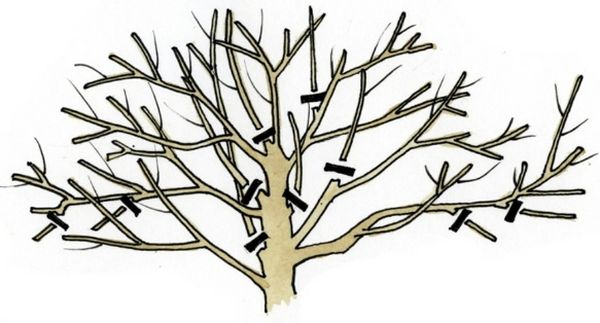
It is generally accepted that the highest yields are achieved by those gardeners who prefer a sparse, tiered tree crown.In fact, there are only a few ways to prune a cherry tree in the spring: by shortening and trimming, or by thinning and cutting.
Shortening
Pruning a garden cherry tree involves pruning all shoots that have grown longer than 40 cm. This is intended to stimulate the formation of new, fruit-bearing branches. Cherry trees can be pruned lightly in the spring (removing a quarter of the total annual growth), moderately (removing a third of the growth), or heavily (removing half of the total growth).
Formative pruning by shortening is divided into several subtypes:
- light rejuvenation – when only 2- or 3-year-old shoots are treated;
- average - branches that are 4 to 6 years old are used;
- strong – almost the entire crown is treated, right down to the skeletal branches.
As a result of this procedure, the crown diameter of the formed tree noticeably decreases, the growth of new shoots increases, the branches themselves thicken noticeably, and the buds develop more intensively.
Thinning
This method involves pruning branches and shoots, as well as the entire fruiting buds. As a result, the crown is noticeably reduced in size, the risk of overcrowding is eliminated, and fruit buds develop more vigorously.
How you prune your cherry tree is up to you. The key is that both methods activate vital processes, improve the distribution of nutrients and water throughout the tree, and reduce the crown's volume. As a result, you get a fruit tree with excellent water drainage and improved yields.
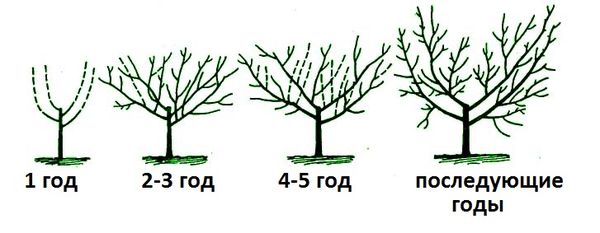
Formation during planting
To ensure a young cherry tree doesn't disappoint, it's important to prune it correctly immediately after planting. This is done when the seedling is transplanted to its permanent location. If the tree has no branches, it is pruned approximately 60 cm above ground level, just above a bud. The remaining buds are left in place; they will develop lateral shoots, which will form the main scaffold branches.
How to work with a young tree
Young felt cherry trees, like other cultivars, are usually pruned in early spring, before the buds begin to form. From the seedling's second year and for the next few years, proper crown formation becomes extremely important. Don't allow the bush to become too dense - try not to leave more than 15 branches. The most commonly used pruning method is a sparse, tiered pruning. And, of course, if the cherry tree has any dead or infected branches, they are also ruthlessly pruned.
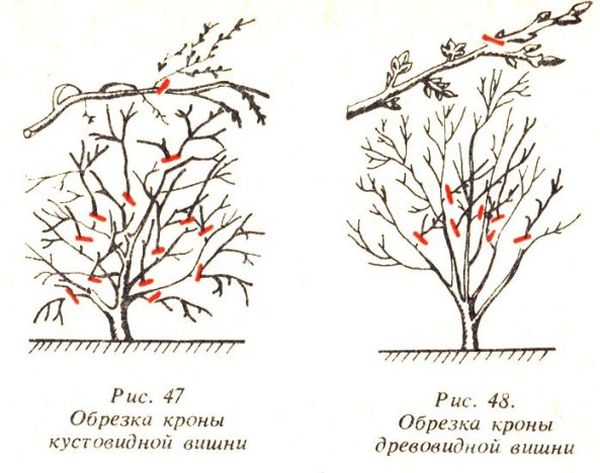
Tree cherry
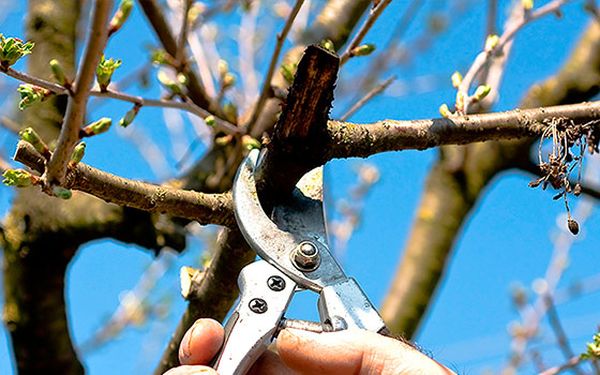
When answering the question of how to train a tree cherry in the spring, it's important to remember that working with this variety is somewhat different from the bush variety. In a nutshell, the procedure involves shortening one-year-old shoots to allow lateral shoots to develop. Once the cherry tree reaches five years of age, you can begin pruning the lateral branches as well, thereby stimulating the development of new shoots.
Bush cherry
This subspecies is much easier to work with. To ensure a good harvest, prune only when you notice bare branches, devoid of foliage and flowers. When pruning, it's important to leave as few branches as possible, cutting them back by a third or even half.
Video: Pruning and Shaping Fruit Trees
This video will teach you how to properly prune and shape fruit trees.