
Description of the winter-hardy cherry variety Izobilnaya
Content
Description of the variety
The cherry tree named Izobilnaya, described in this article, was bred in the late 1990s at the Sverdlovsk Horticultural Breeding Station from open-pollinated Michurin varieties. It is a low-growing (2.5–3 m) bush with a fairly compact, oval crown of medium density. The leaves are narrow, oblong, glossy, dark green on the surface, and several shades lighter beneath. The shoots are angled upward at an acute angle.
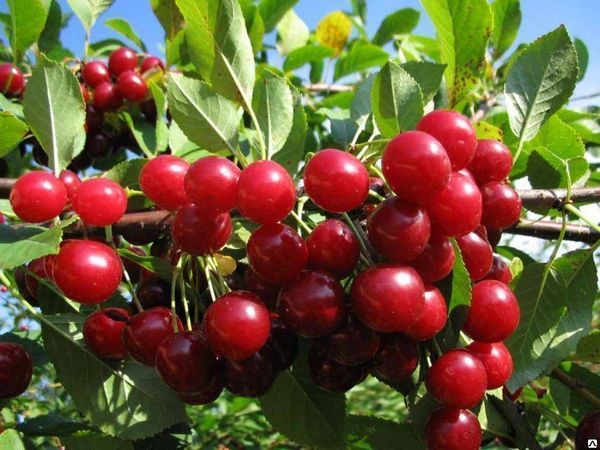
Cherry blossoms late—in late May, or early June in some regions, as it is a late-blooming variety. The blooms are profuse, with each inflorescence containing 5–7 loosely arranged white flowers. Fruiting occurs on young, one-year-old growth and on branchlets.
The fruits of the Izobilnaya cherry are not particularly large. They weigh only 2.5–3 g and are approximately 15 mm wide. The skin is dark red, the flesh is scarlet, tender, very juicy, and has a satisfying sweet and sour flavor, with a difficult-to-remove pit. The fruit separates easily and dryly from the stem. The berries do not crack due to weather conditions or overripening, and are ideal for technological processing.
Characteristic
The Izobilnaya cherry variety is characterized by late (second ten days of August) and gradual ripening, requiring harvesting in stages, over 2-3 harvests. Trees begin bearing fruit at 3-4 years of age. From this point on, yield increases annually, reaching its peak at 8-10 years of age, after which it remains consistently high. Cherries of this variety are long-lived – with regular rejuvenating pruning, own-root plants can live up to 30 years.
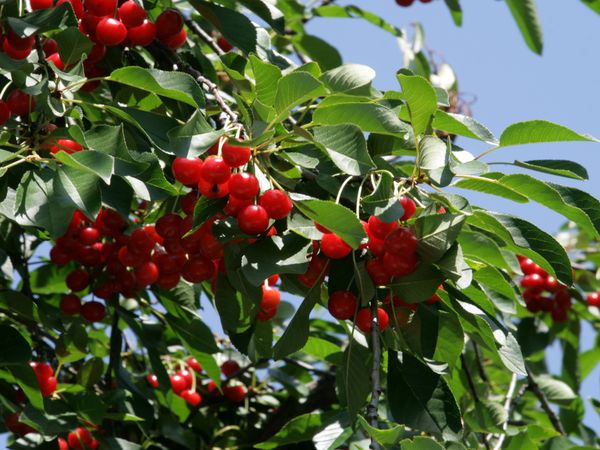
Among all cherry varieties, Izobilnaya is one of the most frost-hardy. Even in the harshest winters, no bud or wood freeze has been observed, and its late growing season allows it to avoid spring frosts.
Moreover, it tolerates drought well, allowing this variety to be grown in virtually all regions of the country. The trees are self-fertile but can also be pollinated by insects from other plants.
Disease resistance is average. Cherry is often affected by fungal stone fruit diseases such as moniliosis and coccomycosis. It is sometimes damaged by cherry aphids and slime sawflies. Overall, however, this variety has a high technical rating, and experts believe it can be grown not only in private gardens but also on an industrial scale, particularly in intensive orchards.
Pros and cons
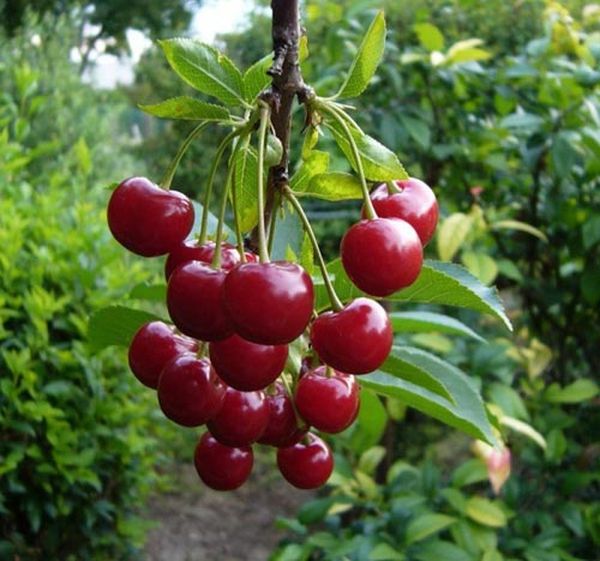
Like any berry, this cherry variety has its advantages and disadvantages. The former undoubtedly outnumber the latter, and these include:
- excellent winter hardiness of the tree;
- high annual yield;
- ability to self-pollinate;
- late flowering (prevents freezing of flowers and ovaries);
- unpretentiousness to conditions and care.
The big disadvantage of this variety is its small berries, as well as its uneven, and rather late, ripening. However, in small hobby gardens, this disadvantage can be considered an advantage, as it allows for an extended period of consumption of healthy berries.
Video: Cherry Tree Care Guidelines
This video will show you how to properly care for cherry trees in your garden.