
Description and popular varieties of cherry-plum hybrids
Content
Description of the hybrid
This plum-cherry miracle is the result of international breeding: a cross between the American Bessey creeping cherry and the Japanese plum. Its American roots endowed the hybrid with ease of care and resistance to various environmental conditions, while its Japanese roots gave it excellent flavor and large berries. During the breeding process, the breeders developed not only a pure fruit variety of the hybrid but also rootstocks for the plum family. For example, in cold climates, the hybrid is used as a frost-resistant rootstock for plums.
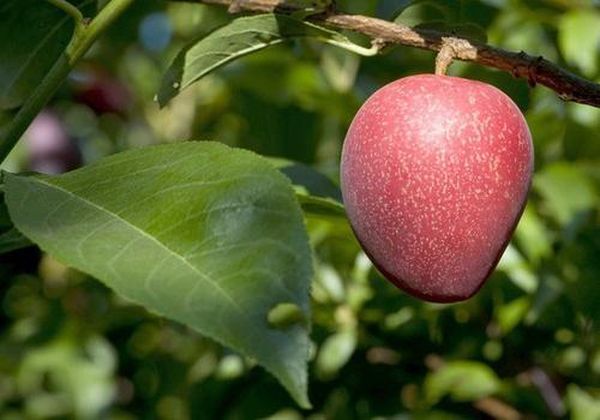
The hybrid is an early-bearing crop: the first fruits appear already in the second year after planting. It grows in a bushy form, resembling a pyramid. The plant is short, befitting its hybrid variety: it grows to a minimum height of one and a half meters and reaches a maximum height of over two meters. This plant, with its well-developed root system, tolerates drought and frost well.
The shape and size of the leaves are similar to those of plum trees. The plant begins flowering later than its relatives, but fruit ovaries appear even at sub-zero temperatures. This plum-cherry hybrid is characterized by high yields. Sometimes the weight of the fruit bends the branches down to the ground. The variety of berry shapes, shades, and flavors depends on the tree variety.
Popular hybrid varieties
Among the variety of varieties, there are several that are particularly popular among gardeners.
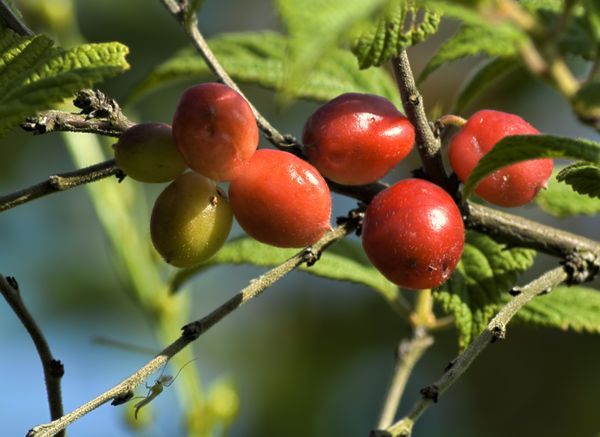
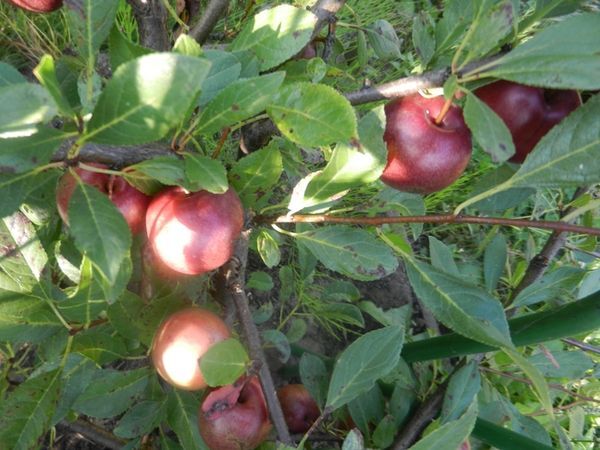
- Beta. The plant is quite short, reaching approximately 1.5 m in height. The round, deep-red fruits weigh 14–15 g. The berries are juicy and sweet, like cherries. Of all the hybrid varieties, it produces the most abundant harvests.
- Maynor. A dwarf variety bred in Canada. Frost- and drought-resistant, yet responsive to irrigation. The fruit is versatile, dark burgundy, and sweet.
- Omskaya Nochka. A low-growing, small shrub. The berries are dark, almost black, juicy, and sweet. They are quite large – up to 15 g.
- Pyramidal. The plant resembles a small pyramid. The fruits are bright yellow with juicy, light green flesh. The abundance of fruits gives the plant a decorative appearance.
- Samotsvet. Plants of this variety are quite tall, growing up to 2.4 m. They bear large, juicy fruits weighing approximately 20 g.
Landing rules
Hybrids are recommended to be planted in pairs, selecting shoots of different varieties. Since excessive soil moisture and deep cold can adversely affect growth, seedlings are not planted in holes or pits, but rather in mounds or raised beds. A heat-insulating cushion and drainage are essential. Small pebbles and wood chips are recommended for this purpose. Sand is added to peaty and clay soils. Organic fertilizers are also added.
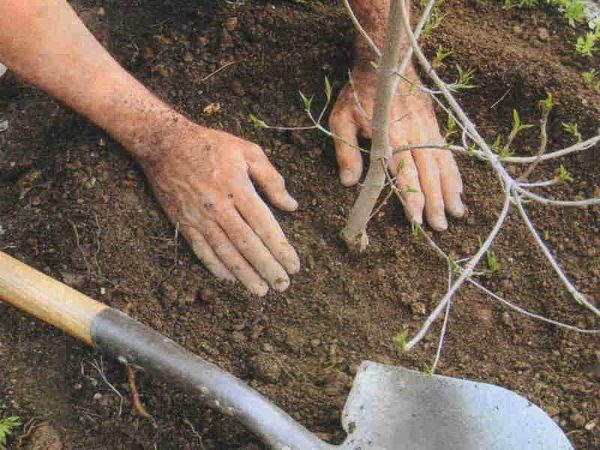
Warm water is used to moisten the soil before and after planting the seedling.
For the hybrid to take root, the soil must be well-warmed and frost-free. It's best to purchase seedlings in containers, as this will ensure easy planting even if the soil isn't yet ripe. Such seedlings can even overwinter, provided the room temperature is kept cool and above freezing and they receive regular fertilizing. Plants should be spaced at least 2 meters apart.
Pollination of a tree
All cherry hybrid varieties are self-sterile, so it's recommended to plant seedlings of different varieties close together to ensure cross-pollination. The mother plant, the Bessey cherry, is also a good pollinator. Regular garden plums or cherries are not suitable as pollinators.
Care Features
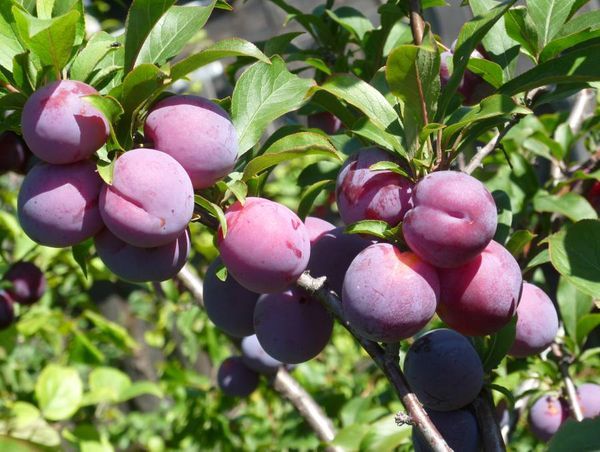
Aside from planting and pollination, the hybrid is cared for like a regular plum. Water the plant only if rainfall is irregular or insufficient. For preventative purposes, spray with disease-preventive products and fertilize with complex fertilizers. Nitrogen fertilizers, which encourage vigorous shoot growth, are applied very sparingly and rarely.
It's best to use ash rich in calcium, potassium, and phosphorus. Fertilizing the hybrid is recommended before the onset of cold weather to ensure the plant survives the winter well. Potassium fertilizers and micronutrients will enhance the plant's ability to withstand adverse weather conditions, protect against diseases and pests, and accelerate wood maturation in young shoots. Bushes require periodic thinning and removal of non-fruiting shoots. When pinching out growing points, pay particular attention to vigorously growing young shoots.
The plum-cherry hybrid is propagated only by layering and cuttings.
A tree grown from seeds may not have the full range of qualities typical of the cultivar. The horizontal pruning method involves bending the lower branches down to the ground, securing them in place, and then adding soil in the middle of the branches.
Pest and disease control
The main threat to the hybrid, like its parents, is moniliosis. The bush appears scorched: the flowers begin to dry out first, then the leaf blades, and the shoots are the last to be affected. At the first sign of the disease, the affected parts are pruned and burned. Spraying with Bordeaux mixture is used as a preventative measure. Copper oxychloride is also effective. To protect young seedlings from rodents, the trunks of the plant should be wrapped in non-woven material or covered with pine branches.
To successfully grow and propagate a plum-cherry hybrid, you need to remember one thing: this plant is neither a cherry nor a plum, but an independent crop with its own characteristics.
Video "Plum-Cherry Hybrids"
This video will show you how to grow plum-cherry hybrids.